
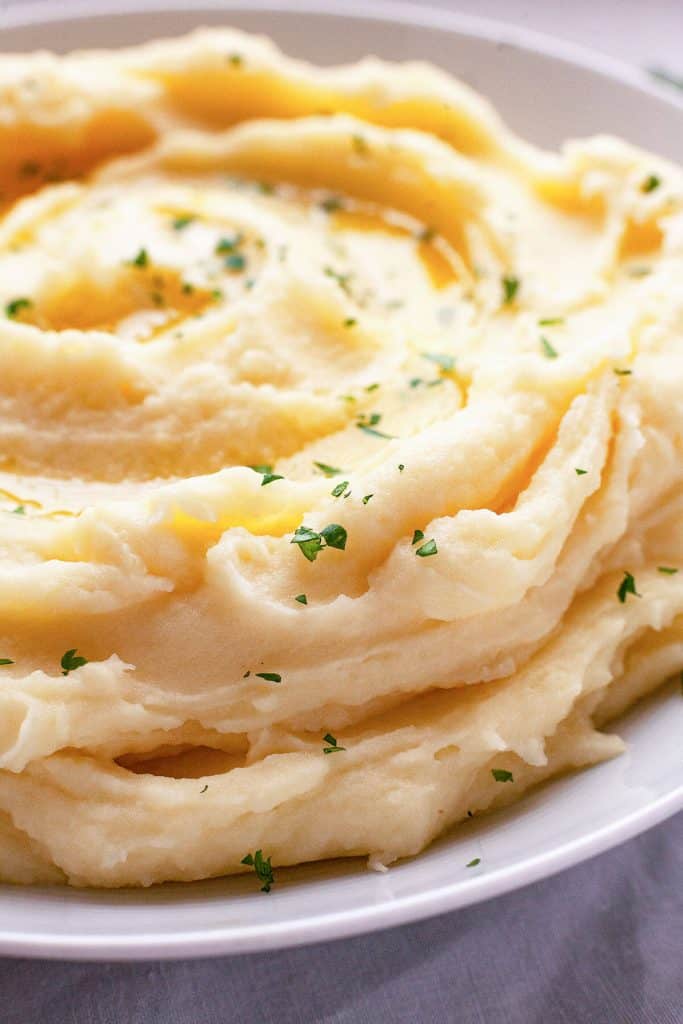
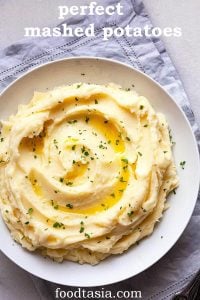
Steamed or boiled? Ricer or masher? Milk or cream? I made batch after batch of mashed potatoes to find out, and the good news is they’re really hard to mess up. These are creamy, buttery and SO easy, with every tip I learned along the way!

I’ve been experimenting in the kitchen again, this time with Mashed Potatoes. I’ve been making Mashed Potatoes for years the way my grandmother taught me. I figured it was time for a deep dive into how to make the best - which necessarily involved lots and lots of batches of Mashed Potatoes! We’re a real meat and potatoes family. Mashed potatoes have to show up on the table at least once a week.
One reader, Geraldine, commented: "I used this excellent reference for making mashed potatoes for Thanksgiving this year. I've never made mashed potatoes before so this was a huge help and my mashed potatoes came out creamy and smooth - the kids at the dinner especially like them!" ★★★★★
Updated November 2026: I added a table of my test results, quick steam and boil times, hand and stand mixer methods, how to make ahead, reheat, keep warm and freeze them, how many potatoes to make for a crowd, troubleshooting, and a FAQ below the recipe with your most-asked questions.
Jump to Section
Here’s what I tested
- Boiled vs. steamed
- Type of potato
- Potatoes cut in chunks vs. whole potatoes
- Potato ricer vs. food mill vs. masher vs. hand mixer vs. stand mixer (I didn’t have to try the food processor. I’ve already had that fail years ago.)
- Different amounts of butter
- Milk vs. cream
Here’s what I found
In a nutshell, it’s pretty hard to mess up mashed potatoes (Unless you put them in the food processor or use the wrong potato). In side by side testing, there wasn’t a drastic difference between any of the tests. They all made a wonderful mashed potato.
| Test | What I found |
|---|---|
| Steamed vs boiled | Both good, and the difference was small. I prefer steaming: no draining, no waterlogging, easy to check. For a big batch, boiling is easier. Fitting all those potatoes into a steamer would be difficult! |
| Russet vs Yukon Gold | Russets (or Idaho) are starchy and fluffy; Yukon Golds are buttery. Use both for the best of both worlds. A waxy, non-starchy potato was one of only two fails. |
| Chunks vs whole | Even chunks cook faster and evenly. Big whole potatoes get mushy outside before the middle is tender. |
| Ricer vs food mill vs masher vs hand and stand mixers | All good! The food mill was the smoothest (even smoother than the ricer, which surprised me). The ricer is the lightest and fluffiest, the masher a little denser, and the hand and stand mixers are great if you don’t overdo them. The food processor makes them gluey. |
| Butter | More butter = richer and creamier. I use about 6 tablespoons for 2 pounds. |
| Milk vs cream | I use whole milk; half and half or cream make them even richer and more luxurious. |
Steaming vs. Boiling
I preferred steaming the potatoes instead of boiling them. Is boiling bad? Not at all. That’s how I made potatoes for years and in the side by side testing, there wasn’t a great difference. Cook’s Illustrated uses both methods so I’m sure they’re both pretty good. Serious Eats boils theirs.
I liked steaming for its ease. No draining. No drying the potatoes. They’re easy to check for doneness. There’s no risk of the potatoes turning to mush in the water.
That being said, not everyone has a steamer or wants to fidget with a colander in a pan. Boiling the potatoes is a perfectly fine option. I’ve given tips below on how to avoid waterlogged boiled potatoes. For a big batch, though, boiling is easier. Fitting all those potatoes into a steamer would be difficult!
Potato ricer vs. food mill vs. hand masher vs. hand or stand mixer
Once again, the difference between the methods wasn’t drastic. All resulted in delicious mashed potatoes. I think the best method will depend on how you like your potatoes. I discuss the differences below.
The Best Potatoes for Mashed Potatoes
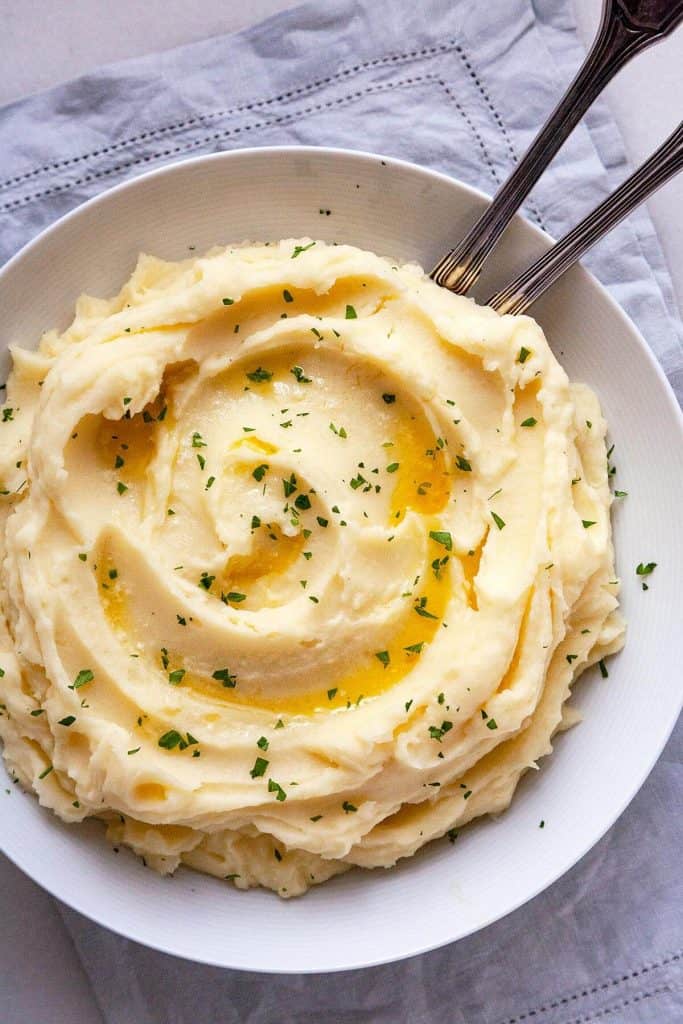
The best kind of potatoes for mashed potatoes are starchy potatoes, such as Russet or Idaho potatoes, or buttery Yukon Golds. Russets make light, fluffy mashed potatoes, while Yukon Golds give you a creamier texture and a naturally buttery flavor. You can use a combination of the two for the best of both worlds.
You can peel the potatoes or leave the peels on for a more rustic texture.
How to cook the potatoes
⏰ Quick answer: cut the potatoes into 1-inch chunks. Steam them for 20 to 30 minutes, or boil them for 10 to 15 minutes once the water comes to a boil. They’re done when the tip of a paring knife slides in with no resistance.
There are several different views – some strong – on how to cook the potatoes. The ultimate goal is to cook the potatoes evenly, without them getting waterlogged.
Cut the potatoes
Cut the potatoes into evenly sized chunks for even, quicker cooking. Large, whole potatoes may cook unevenly, with the outside getting mushy before the inside is tender.
Steam the potatoes
Steaming the potatoes prevents them from getting waterlogged and mushy. The potatoes also don’t lose any nutrients or flavor in the cooking water. There’s no draining necessary and checking for doneness is quick and simple.
Boil the potatoes
If you prefer to boil the potatoes, keep these things in mind:
Don’t overcook. Over cooking the potatoes makes them waterlogged and mushy. When a knife can be inserted easily with no resistance, they are done.
Dry the potatoes. After draining the potatoes - drain them well - return them to the pan and put over low heat to evaporate any excess moisture for about a minute. Shake the pan occasionally so they don’t scorch.
What’s the best way to mash potatoes
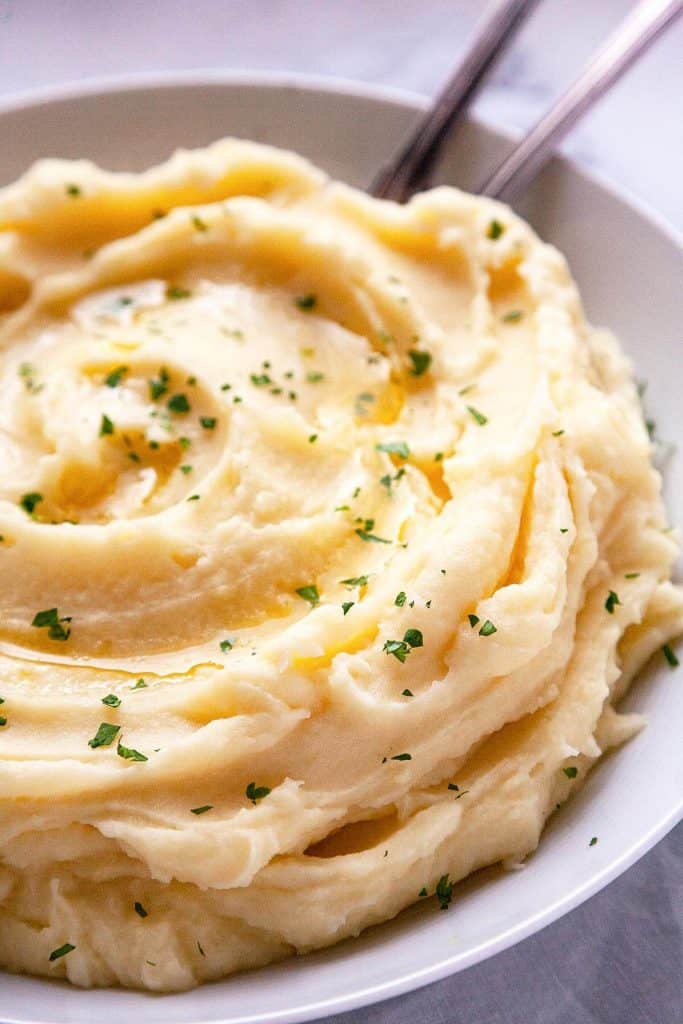
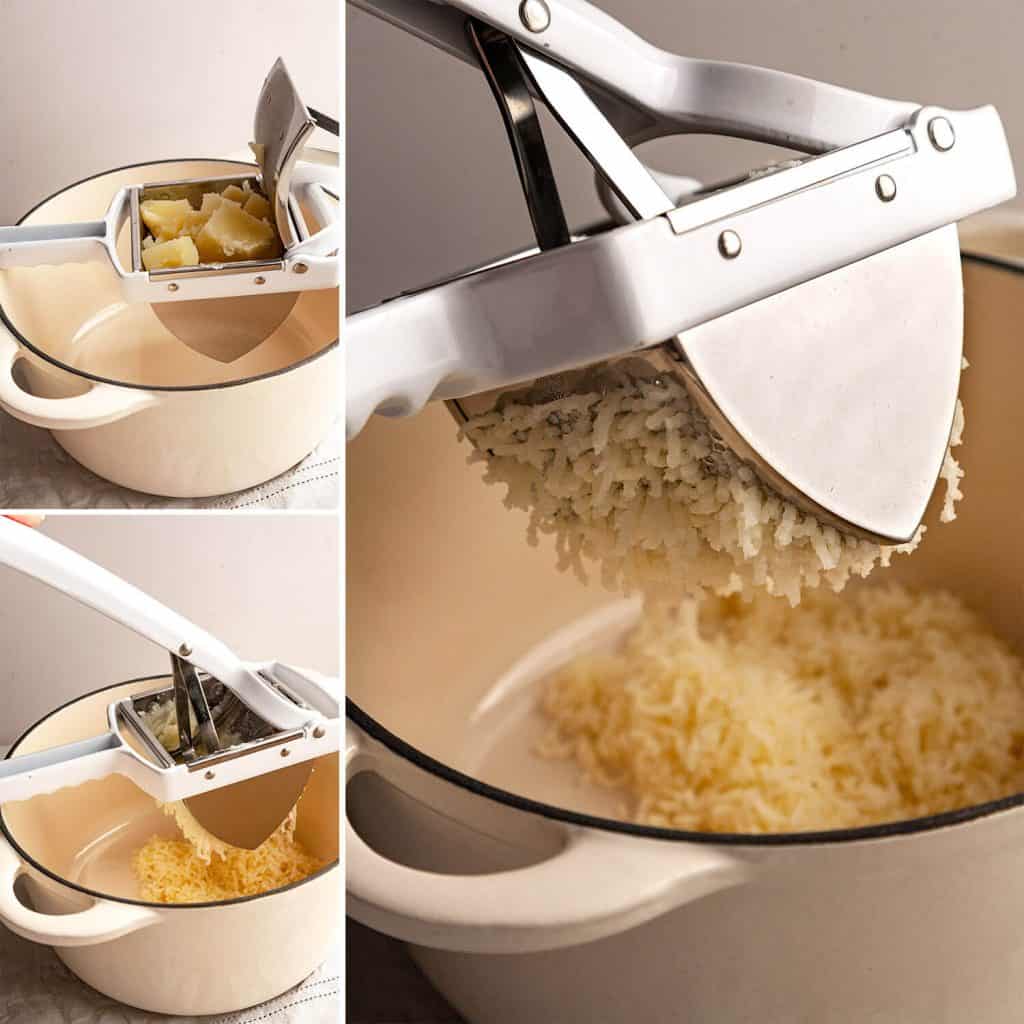
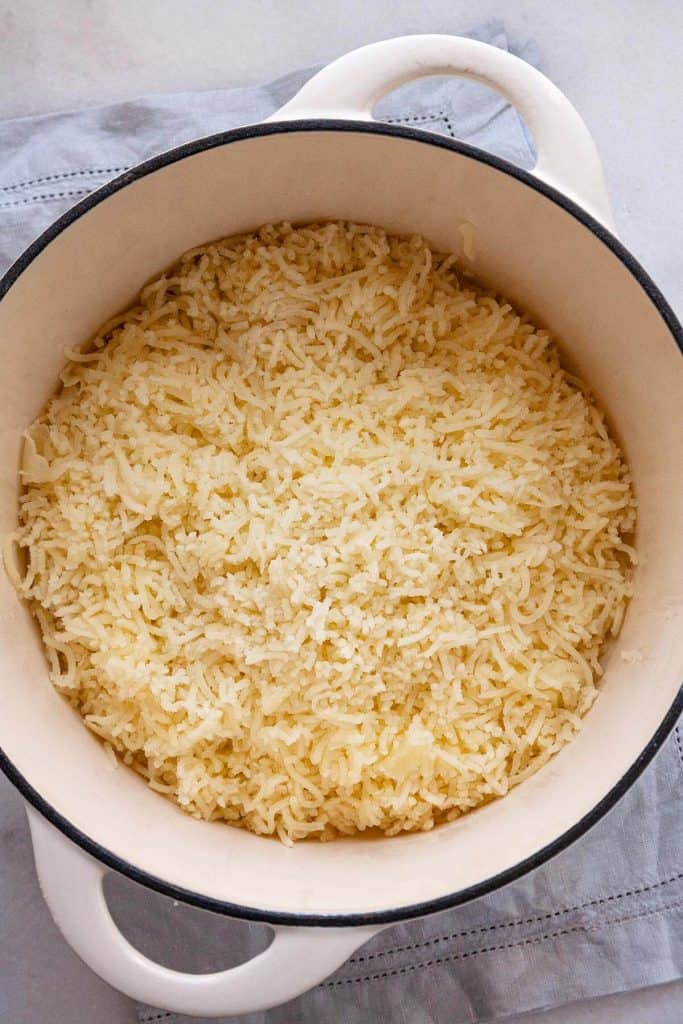
Ricer: Ricing the potatoes makes them smooth, light, and ultra-fluffy. Although they can be a bit grainy, a ricer provides the gentlest touch for the fluffiest mash.
Food mill: Passing the potatoes through a food mill makes them ultra-smooth with no graininess, and almost as fluffy as the ricer.
With a hand masher: For creamy smooth potatoes that are a little denser than riced potatoes. Use a potato masher with a fine-grid, stainless steel mashing plate to yield smooth mashed potatoes.
Hand or stand mixer: If you don’t have a ricer, food mill, or hand masher, you can use an electric hand mixer or a stand mixer, but use it with care. Over working the potatoes makes them gluey.
Avoid using a blender or food processor. These are way too aggressive and can make your potatoes gluey and gummy.
Ingredients
- Potatoes: Russet potatoes or Yukon Golds. Or a combination of the two.
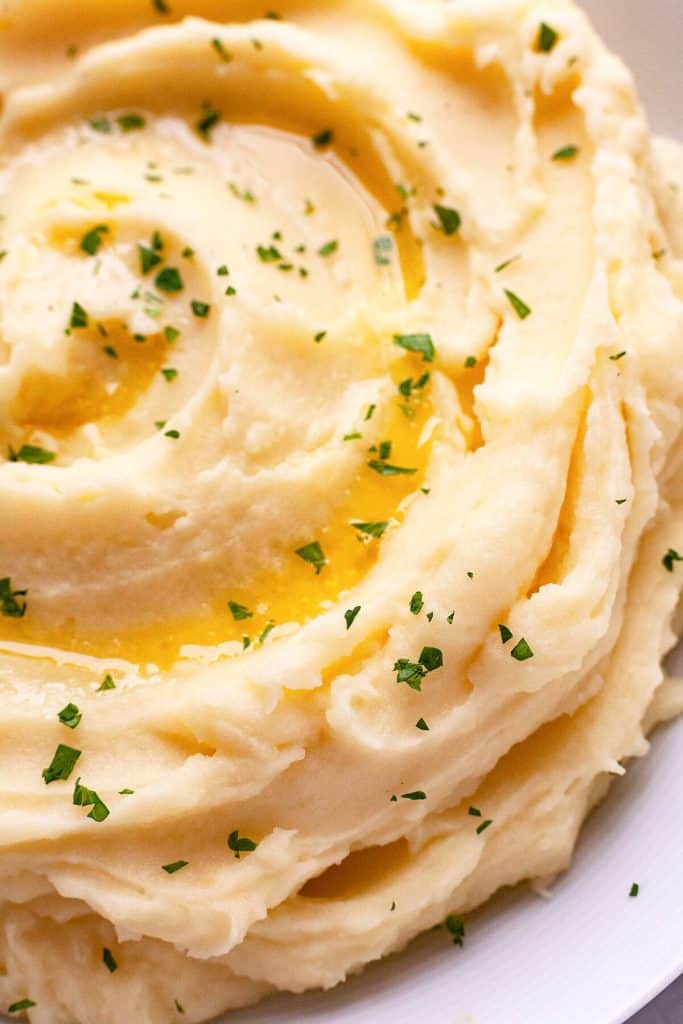
- Butter: The more butter you use, the creamier and richer the potatoes will be. I use 3 tablespoons per pound of potatoes.
- Milk: I use whole cow’s milk in my mashed potatoes, but for extra rich and creamy potatoes you can use half and half or heavy cream. Warm it first so the potatoes stay hot.
- Garlic: It’s optional, but I love the flavor a couple of cloves of garlic adds to the potatoes.
- Salt
How to make Mashed Potatoes
Cut the potatoes into evenly sized, one inch chunks.
To steam the potatoes:
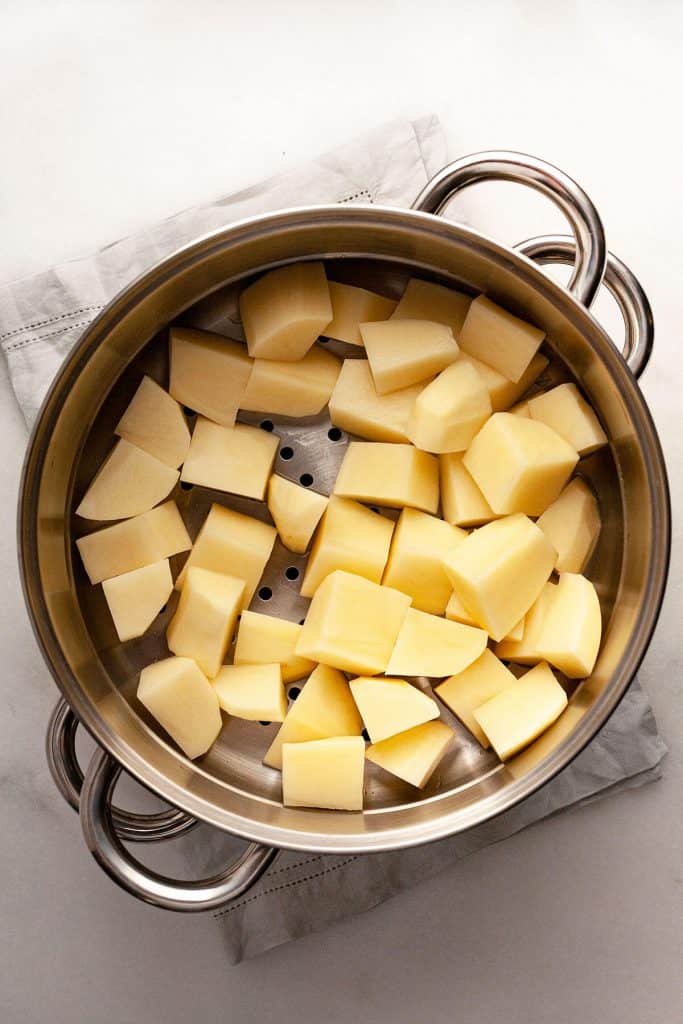
Place a steamer insert or snugly fitting colander into a large pot or Dutch oven. Add enough water for it to barely reach bottom of the insert. Put the potatoes and optional garlic in the steamer insert and cover with a snugly fitting lid. Heat over high heat until the water is boiling, then reduce the heat to medium high and cook until the potatoes are soft and tip of paring knife inserted into potato meets no resistance, about 20 to 30 minutes.
To boil the potatoes:
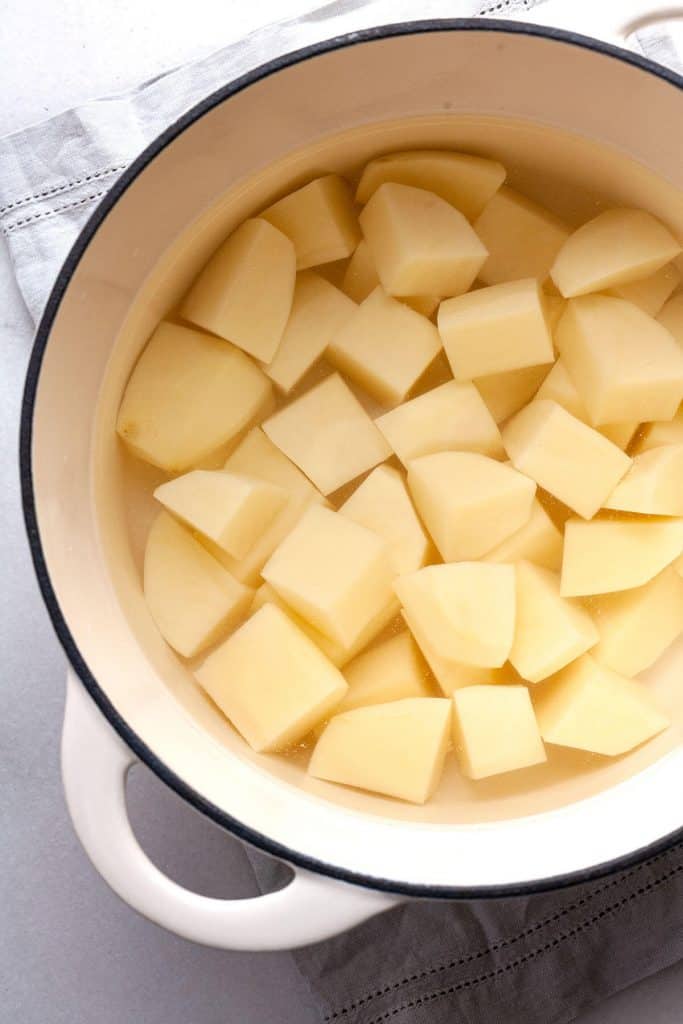
Put the potatoes in a pan and cover with enough cold water to cover them by 1 inch. Add salt and optional garlic. Bring to a boil over high heat. Reduce the heat to medium-high and cook until the potatoes are soft and tip of paring knife inserted into potato meets no resistance, about 10 to 15 minutes.
Carefully drain all the water then return the potatoes to the pan. Heat over low-heat until the excess water is evaporated, about one minute. Gently shake the pan occasionally so the potatoes don’t scorch.
Mash the potatoes
To press the potatoes through a ricer or food mill:
Set food mill or ricer over now empty but still warm saucepan. Working in batches, transfer potatoes (and garlic, if using) to ricer or food mill. Rice or process the potatoes through to the saucepan. Stir in butter and salt with wooden spoon until incorporated. Gently stir in warm milk, little by little, until it reaches the desired consistency. Check the seasoning. Salt and pepper to taste.
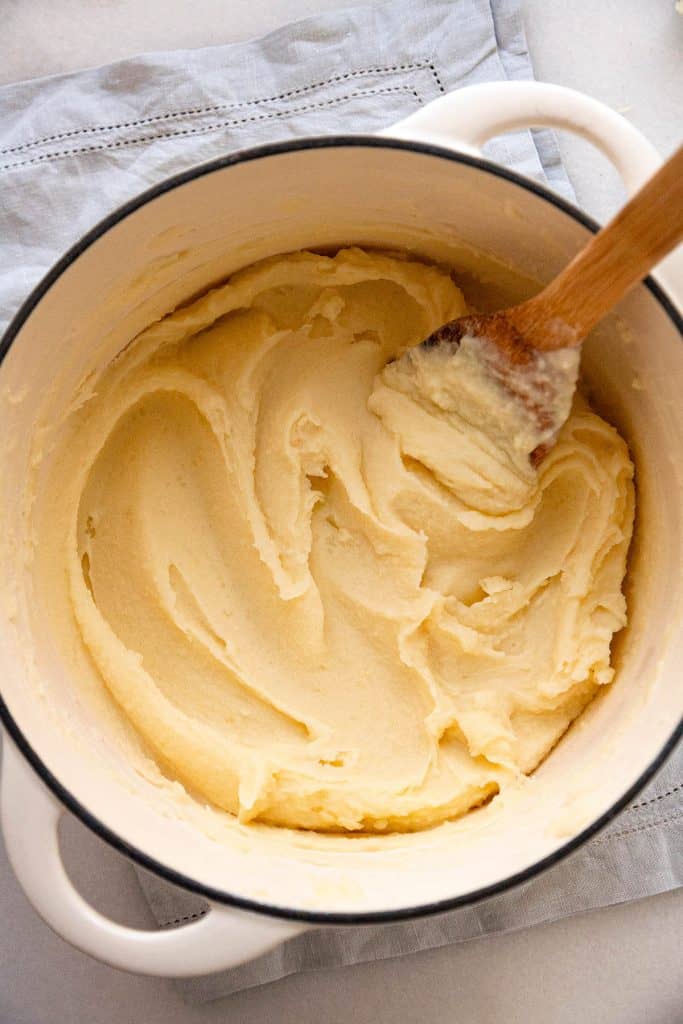
To mash the potatoes with a hand masher:
Return the potatoes (and garlic, if using) to the warm saucepan. Add butter and salt and begin mashing with a hand masher. Pour in the warm milk little by little while continuing to mash until it reaches the desired consistency without overworking the potatoes. Check the seasoning. Salt and pepper to taste.
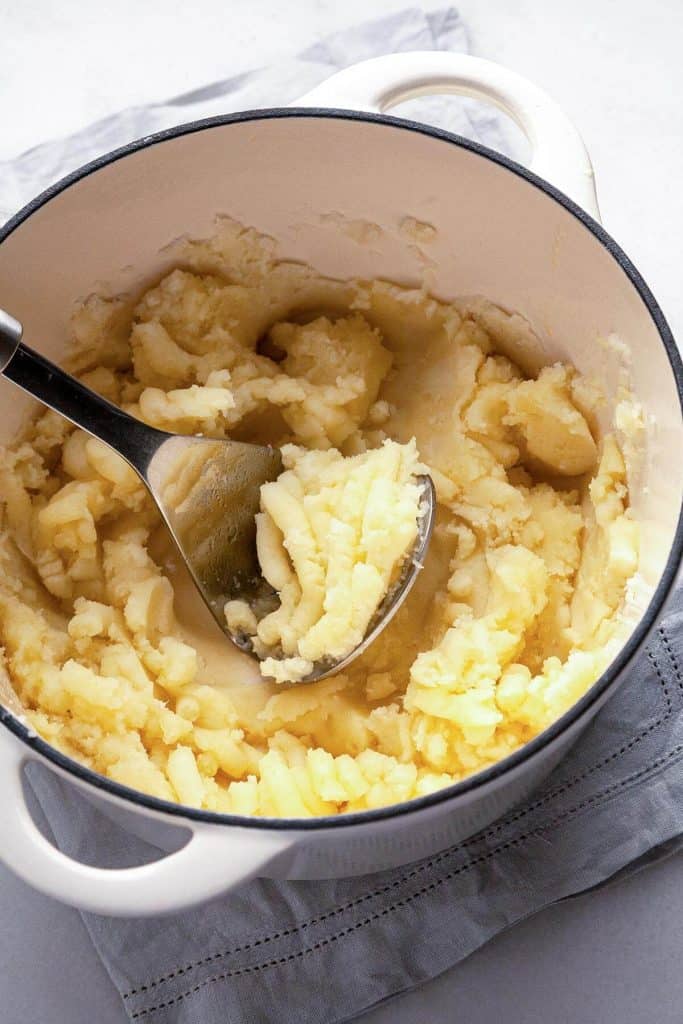
To mash the potatoes with an electric hand mixer:
Place the hot potatoes and cooked garlic, if using, in a large mixing bowl. Add the melted butter and salt. With the mixer turned off, use the beaters to break up the largest pieces. Turn the mixer to low and mix briefly, moving the beaters around the bowl. Once the potatoes are mostly mashed, add the warm milk a little at a time until they’re as creamy as you like. Stop mixing as soon as the milk is incorporated. If a few lumps remain, press them against the side of the bowl with a fork. Taste and season with salt and pepper.
To mash the potatoes with a stand mixer:
Fit the stand mixer with the flat paddle attachment. Add the hot potatoes, cooked garlic (if using), melted butter, and salt to the mixer bowl. Mix on low just until the potatoes are broken up. With the mixer still on low, gradually pour in the warm milk, stopping as soon as the potatoes reach your desired consistency. Scrape down the sides of the bowl and give the potatoes a final fold with a spatula. Taste and season with salt and pepper.
How to make mashed potatoes ahead
You can make these mashed potatoes up to 2 days ahead. Transfer them to a shallow container, cover, and refrigerate within 2 hours of cooking.
I usually use whole milk, but if you’re making the potatoes up to 2 days ahead, I recommend using heavy cream in place of the milk.
When America’s Test Kitchen compared heavy cream and half-and-half, they found that the potatoes made with cream tasted richer and had a less grainy texture after an overnight chill and reheat. Half-and-half also works if you prefer a lighter mash.
The potatoes will firm up in the fridge and soften again as they warm. Start with just a splash of milk, half-and-half, or heavy cream when reheating. Once the potatoes are hot, gently fold in more, a tablespoon at a time, until they’re as creamy as you like.
The cut potatoes can be held in cold water for up to four
hours before cooking.
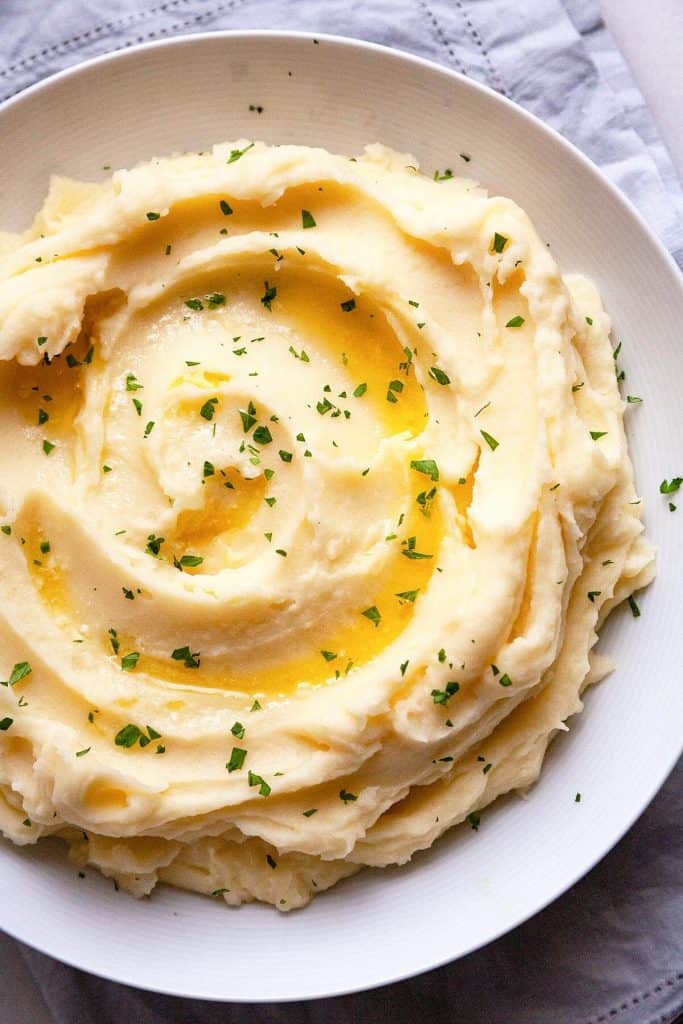
How to reheat mashed potatoes
The microwave works well for the whole batch, especially when the Thanksgiving turkey is taking up the oven. If you have oven space, a covered baking dish is an easy way to warm the potatoes right in the dish you’ll serve them in. With any method, reheat refrigerated mashed potatoes to 165°F (74°C) throughout.
In the microwave. Spoon the chilled potatoes into a wide microwave-safe bowl and drizzle with a splash of milk or cream. Cover with a microwave-safe plate set slightly askew so steam can escape. You can also stretch microwave-safe plastic wrap over the bowl, keeping it above the potatoes, and poke a few small holes in the top. For this 2-pound recipe, start with 3 minutes at 75% power. Gently fold the hotter potatoes around the edges into the center, cover again, and continue heating in 1-minute intervals. Let stand for a minute, then check the temperature in a few spots. For a single serving, use 30-second intervals.
Making a bigger batch? America’s Test Kitchen reheats its make-ahead mashed potatoes, made with 5 pounds of russets and 3 cups of heavy cream, in one vented bowl for about 14 minutes, stirring halfway through. That’s a helpful guide if you’re cooking for a crowd. The timing will vary with your microwave and the depth of the potatoes.
In the oven. Heat the oven to 350°F (175°C). Spread the potatoes in a shallow baking dish. For the full 2-pound recipe, drizzle about 2 tablespoons of milk or cream over the top and dot with butter if you like. Cover tightly with foil and bake for about 30 minutes, gently stirring halfway through and covering again. Check the center before serving. A deeper dish may need more time.
On the stovetop. Warm 2 tablespoons of milk or cream in a heavy-bottomed saucepan over medium-low heat. Add the potatoes in spoonfuls and fold gently with a spatula as they warm, scraping the bottom and corners to prevent sticking. Start checking the temperature after 8–10 minutes.
In a double boiler. Bring 1–2 inches of water to a simmer in a saucepan. Place the potatoes and a splash of milk or cream in a heatproof bowl that fits over the pan, with the bottom of the bowl above the water. Cover and heat for about 15–25 minutes, folding the potatoes a few times so the center warms evenly.
Sous vide. Preheat the water bath to 180°F (82°C). Divide the chilled potatoes between two heat-safe sous vide bags, press them into thin, even layers, and seal. Submerge the bags and start checking after 30 minutes. When the potatoes reach 165°F in the center, transfer them to a serving bowl and fold in a splash of warm milk or cream if needed.
How to keep mashed potatoes warm in a slow cooker
A slow cooker is handy for keeping mashed potatoes warm while you finish dinner. Start with hot potatoes. If they’re freshly made, transfer them straight to a preheated slow cooker. If they’ve been refrigerated, reheat them first in the microwave, on the stovetop, or in the oven until they reach 165°F. Cover and use the Warm setting, checking that the potatoes stay at 140°F (60°C) or above until serving.
Why reheat them first? The USDA advises against reheating refrigerated leftovers in a slow cooker, even on High. A cold batch can spend too long between 40°F and 140°F, the range in which bacteria multiply rapidly, while the center gradually warms. Reheating the potatoes first gets the whole batch hot before the slow cooker takes over.
Can you freeze mashed potatoes?
Yes, mashed potatoes can be frozen for up to 3 months for best quality. Once chilled, pack them into an airtight freezer container or press them flat in a freezer bag. For individual portions, scoop 1-cup mounds onto a parchment-lined baking sheet, flatten slightly, and freeze until firm. Transfer the frozen portions to a freezer bag so you can take out just what you need.
One reader, Neil, commented: "I must admit I make my mashed potatoes for Christmas Day about 3 months before. I find that when I take them out of the freezer on Christmas Day, and reheat them gently in a saucepan they're even more delicious than when I originally cooked them."
To reheat a whole batch, thaw overnight in the refrigerator, then use the covered oven method above. Thawed potatoes can look watery at first, so hold off on adding milk or cream. Gently fold the liquid back in as the potatoes heat, then adjust the consistency once they’re hot.
To reheat one frozen portion, place a 1-cup portion in a microwave-safe bowl and cover with a microwave-safe plate, leaving a small gap for steam. Microwave straight from frozen at 50% power for about 5 minutes, stirring gently once the potatoes soften. Let stand for a minute, then check the center. Continue in 30-second intervals as needed until the potatoes reach 165°F throughout.
🦃 How many potatoes for a crowd?
Plan on about ½ pound of potatoes per person. That’s how this recipe works out: 2 pounds serves 4. Tap 2x or 3x on the recipe card and everything scales.
- 4 people: 2 pounds (1x)
- 8 people: 4 pounds (2x)
- 12 people: 6 pounds (3x)
- 20 people: 10 pounds (type 20 in the servings box)
For a big batch, boil the potatoes instead of steaming them. Fitting all those potatoes into a steamer would be difficult!
Mashed potato troubleshooting
Gluey or gummy? They were overworked. A food processor or blender is the worst offender (I tried it. Never again!). A hand or stand mixer is fine, just stop as soon as they’re smooth.
Watery? Usually boiled potatoes that went too long. Pull them as soon as a knife slides in, drain really well, and let the extra water steam off over low heat for about a minute. (Or steam them, and there’s no water to soak up!)
Lumpy? The chunks were different sizes or not quite cooked. Cut even 1-inch pieces and cook until a knife meets no resistance. A ricer or food mill gets every last lump.
Bland? Salt! I use 6g of salt per quart in the cooking water (1 teaspoon table salt, go by weight for kosher salt).
During/after mashing, with unsalted butter, start with ½ teaspoon table salt for potatoes boiled in salted water, or ¾ teaspoon for steamed potatoes. Taste after adding the milk and adjust as needed. If using salted butter, taste before adding salt.Taste after the butter and milk go in and add a pinch at a time.
Too thick after reheating? Stir in a little warm milk and butter until they loosen up.
🦃 What to serve with them
Mashed potatoes are the heart of the Thanksgiving plate! Pile them next to my spatchcock turkey, classic Thanksgiving stuffing, green bean casserole and cranberry orange relish. Add the sweet potato casserole with the crunchy pecan streusel, cornbread casserole, homemade creamed corn and a basket of sweet potato rolls, and you’re set. Mix up some homemade poultry seasoning for the turkey while you’re at it!
Saving room for dessert? Southern sweet potato pie, pumpkin pie and pumpkin crisp are all on our table.
Recipe
Perfect Mashed Potatoes
Ingredients
- 2 pounds potatoes (Russet or Yukon Gold) 900g
- 4 - 8 tablespoons butter (melted) 57-113g
- ½ - ⅔ cup milk, warmed (or half and half or cream), as needed 114-151g
- Salt and pepper to taste
- 2 cloves garlic optional
Optional garnish:
- Pats of butter
- Chopped parsley
Instructions
- Cut the potatoes (2 pounds) into evenly sized, one inch chunks.
To steam the potatoes:
- Place a steamer insert or snugly fitting colander into a large pot or Dutch oven. Add enough water for it to barely reach bottom of the insert. Put the potatoes and optional garlic (2 cloves) in the steamer insert and cover with a snugly fitting lid. Heat over high heat until the water is boiling, then reduce the heat to medium high and cook until the potatoes are soft and tip of paring knife inserted into potato meets no resistance, about 20 to 30 minutes.
To boil the potatoes:
- Put the potatoes in a pan and cover with enough cold water to cover them by 1 inch. Add salt (about 1 teaspoon table salt per quart of water) and optional garlic (2 cloves). Bring to a boil over high heat. Reduce the heat to medium-high and cook until the potatoes are soft and tip of paring knife inserted into potato meets no resistance, about 10 to 15 minutes.
- Carefully drain all the water then return the potatoes to the pan. Heat over low-heat until the excess water is evaporated, about one minute. Gently shake the pan occasionally so the potatoes don’t scorch.
To press the potatoes through a ricer or food mill:
- Set food mill or ricer over now empty but still warm saucepan. Working in batches, transfer potatoes (and garlic, if using) to ricer or food mill. Rice or process the potatoes through to the saucepan. Stir in melted butter (4 to 8 tablespoons) and salt with wooden spoon until incorporated. Gently stir in warm milk (½ to ⅔ cup), little by little, until it reaches the desired consistency. Check the seasoning. Salt and pepper to taste.
To mash the potatoes with a hand masher:
- Return the potatoes (and garlic, if using) to the warm saucepan. Add melted butter (4 to 8 tablespoons) and salt and begin mashing. Pour in the warm milk (½ to ⅔ cup) little by little while continuing to mash until it reaches the desired consistency without overworking the potatoes. Check the seasoning. Salt and pepper to taste.
To mash the potatoes with an electric hand mixer:
- Place the hot potatoes and cooked garlic, if using, in a large mixing bowl. Add the melted butter (4 to 8 tablespoons) and salt. With the mixer turned off, use the beaters to break up the largest pieces. Turn the mixer to low and mix briefly, moving the beaters around the bowl. Once the potatoes are mostly mashed, add the warm milk (½ to ⅔ cup) a little at a time until they're as creamy as you like. Stop mixing as soon as the milk is incorporated. If a few lumps remain, press them against the side of the bowl with a fork. Taste and season with salt and pepper.
To mash the potatoes with a stand mixer:
- Fit the stand mixer with the flat paddle attachment. Add the hot potatoes, cooked garlic (if using), melted butter (4 to 8 tablespoons), and salt to the mixer bowl. Mix on low just until the potatoes are broken up. With the mixer still on low, gradually pour in the warm milk (½ to ⅔ cup), stopping as soon as the potatoes reach your desired consistency. Scrape down the sides of the bowl and give the potatoes a final fold with a spatula. Taste and season with salt and pepper.
Notes
- I’ve given a range of 4 to 8 tablespoons of butter. More butter makes a richer, creamier mashed potato. I use about 6 tablespoons.
- I use milk, however for a richer, creamier mashed potato, half and half or cream can be substituted.
- Making them ahead of time? Using all cream keeps them creamier and smoother.
- Feeding a crowd: plan on about ½ pound of potatoes per person. Use the 2x or 3x buttons and everything scales.
Nutrition
FAQ
About 10 to 15 minutes for 1-inch chunks, counting from when the water boils. Start them in cold, salted water covered by an inch, then turn the heat to medium-high. They’re done when a paring knife slides in with no resistance. (Whole potatoes take longer and cook unevenly, so cut them first!)
20 to 30 minutes for 1-inch chunks. Bring the water to a boil under a covered steamer insert, turn it down to medium-high, and steam until a knife slides right in. It’s my favorite way: no draining and no soggy potatoes.
Both make great mashed potatoes! I tested them side by side and the difference was small. I prefer steaming because there’s no draining, they can’t get waterlogged, and they’re easy to check. For a big batch, though, boiling is easier. Fitting all those potatoes into a steamer would be difficult! If you boil, drain well and let them dry over low heat for a minute.
Yes, I've made them up to 2 days ahead. They'll be creamier if you use all cream instead of milk or half and half. Transfer them to a shallow container, cover, and refrigerate within 2 hours of cooking. They firm up in the fridge, so start with a splash of milk or cream when you reheat, then fold in more once they’re hot. You can also cut the raw potatoes up to 4 hours ahead and keep them covered in cold water.
Yes, for up to 3 months. Pack them into an airtight container or press them flat in a freezer bag. Thaw overnight in the fridge and reheat covered in the oven. Thawed potatoes can look watery at first, so hold off on adding milk until they’re hot. One reader, Neil, freezes his about 3 months ahead for Christmas.
Use a slow cooker on Warm, but start with hot potatoes and keep them at 140°F or above. Don’t reheat cold mashed potatoes in the slow cooker: the USDA advises against it, because a cold batch spends too long warming up. Reheat them first in the microwave, oven or on the stovetop to 165°F.
The microwave, for a whole batch: start with 3 minutes at 75% power for this 2-pound recipe, fold the hot edges into the center, then keep going in 1-minute bursts. If you have oven space, cover them in a baking dish with about 2 tablespoons of milk or cream and bake at 350°F for about 30 minutes. Either way, heat them to 165°F.
About ½ pound per person. This recipe uses 2 pounds for 4 servings, so 6 pounds feeds 12. Tap 3x on the recipe card and everything scales.
No! I tried it, and the blades overwork the potatoes and turn them gluey. Same goes for a blender. Use a ricer, food mill or hand masher, or a hand or stand mixer if you stop as soon as they’re smooth.
They were overworked. A food processor or blender is the usual culprit, but a hand or stand mixer can do it too if it runs too long. Mash gently and stop as soon as they’re smooth. A ricer or food mill is the gentlest.
Both! I tested them: russets (or Idaho) make a fluffier mash, and Yukon Golds are buttery and creamy. Use half of each for the best of both. Skip waxy potatoes, like red or new potatoes. In my tests, a waxy, non-starchy potato was one of only two fails.
Either one! I use whole milk; half and half or heavy cream make them even richer. Warm it first so the potatoes stay hot. Add it a little at a time until they’re as creamy as you like.
Cold. Cover them with cold water by an inch, add salt, then bring it all to a boil together so the chunks cook evenly. That’s how my recipe does it. I didn’t test this one side by side.
No. Leave the skins on for a more rustic mash. (I fell in love with skin-on mashed potatoes at my favorite steak restaurant!) Peel them for a smooth mash.
If you make these for Thanksgiving, leave a star rating and a comment below. It helps other cooks find them!
Enjoy, friends!
Follow me on INSTAGRAM and PINTEREST for all the latest content and recipes!
Subscribe to FOODTASIA’S NEWSLETTER to receive fresh recipes straight to your inbox.
You might also like:


Geraldine | Green Valley Kitchen says
I used this excellent reference for making mashed potatoes for Thanksgiving this year. I've never made mashed potatoes before so this was a huge help and my mashed potatoes came out creamy and smooth - the kids at the dinner especially like them! I added some sour cream to mine for a bit of tangy taste. Thanks for the guide, Kelly!
Kelly says
I'm so happy it was helpful, Geraldine! The sour cream must have added wonderful flavor. Thanks so much!
Valentina says
Talk about "tried and true!" You are so thorough -- I love it. And your results are flawless. I'm a fan of food mill -- love how incredibly smooth they get. (The ricer, too.) Another winning recipe, Kelly. 🙂 ~Valentina
Kelly says
I was surprised that the food mill got them a little smoother than the ricer. They seem to be very similar physical actions. Thanks so much, Valentina!
mjskitchen says
Who knew making mashed potatoes could be so versatile. Personally, I don't like boiling them because of the water content of the cooked potatoes, Have never tried steaming, but sounds interesting. I actually microwave my potatoes and leave most of he peeking on, I guess one would call that rustic. 🙂 A friend of mine just got a ricer and swears by it. Maybe I should start rethinking my mashed potatoes. Yours look perfect. I just want to take a fork and starting eating. Great post!
Kelly says
MJ, all the different ways I tried the mashed potatoes were delicious - with the exception of the food processor and using the wrong potato. It's nice to know there are many ways to make great mashed potatoes. I love the rustic mashed potatoes with skin on. Learned that at my favorite steak restaurant! Thanks so much!
Neil says
Stunning looking mashed potatoes Kelly! I must admit I make my mashed potatoes for Christmas Day about 3 months before. I find that when I take them out of the freezer on Christmas Day, and reheat them gently in a saucepan they're even more delicious than when I originally cooked them. I have no idea why! Maybe the freezing does something to them?
Kelly says
Neil, that's a fabulous tip and quite the time saver for the holiday dinner! I still have mashed potatoes in the freezer from all the test batches. I'll be sure to heat them that way! Thanks so much!
Andrea says
Dear Kelly - first off, I hope you and your family had a wonderful Thanksgiving! From the looks of the amazing dishes that you posted, I don't doubt that you had the most wonderful spread of delicious foods!
Your mashed potatoes look divine - so many wonderful tips and insightful information that you poured into this post! Respect! And I feel inspired to run off into the kitchen and make some right now. Btw the 'potato ricer' method is rather popular with cooks around here and oven-baked potatoes (on a bed of coarse sea salt) for a maximum of flavor. So many different methods, glad you sorted them out for us!
Kelly says
Thank you so much, Andrea, for your kind words. Oven baked potatoes make wonderful mashed potatoes. And thinking of that bed of coarse sea salt is going to make me run into the kitchen and bake some up!
Kelly @ Kelly Lynns Sweets and Treats says
LOVE, love, love all the research you did into making the BEST mashed potatoes! Totally loved reading this post. I watch all those cooking shows and I always yell NOOOOOO at the television when one of the chefs goes to make their mashed potatoes in the blender or food processor. I guess next year I have no excuse to make the instant mashed potatoes for Thanksgiving like I did this year hahaha. Love this recipe!
Kelly says
Kelly, we grew up on the instant potatoes and stove top stuffing! It sure is easy to put together at the last minute! Happy Thanksgiving!
Susan says
This is probably one of the only times of the year that I make mashed potatoes. Put me in the ricer camp! I love how they turn out.
Kelly says
Susan, we're a real meat and potatoes family. Mashed potatoes have to show up on the table at least once a week. The ricer makes them so light and fluffy! Thanks so much!
Mimi says
Wow. These look beautiful. I never even thought about steaming potatoes. I combined fingerlings and sweet potatoes for my mashed potatoes yesterday. Lots of butter and creme fraiche. I think as long as there’s butter and cream you’re good! I’m too lazy to rice, but that texture is so wonderful.
Kelly says
The fingerling and sweet potato mash sounds wonderful, Mimi! I would love the crème fraiche in mashed potatoes!
Easyfoodsmith says
They look amazing - smooth, flavorsome, fluffy. So delicious!!
Kelly says
Thanks so much, Taruna!
David Scott Allen says
Hi Kelly - I also love your comparison posts! They really help us make better decisions. Your favorite method is just like my aunt’s - steamed, riced, mashed. And it will be my method from here on! Hap Thanksgiving!
Kelly says
Thanks so much, David! Hope you had a wonderful Thanksgiving!
Katherine | Love In My Oven says
I've often wondered if I'm doing mashed potatoes "the right way". From all your testing, it looks like it's pretty hard to mess up, though! I'm glad you did the testing for me. I would definitely need my potatoes with some cream and a lot of butter! Yum!
Kelly says
So creamy and delicious! Thanks so much, Katherine!
Liz says
Great tips, Kelly! My hubby and sons love mashed potatoes but I just wing it when it comes to cooking and mashing. Thanks for all your tips. I do dry out my potatoes on the stovetop a bit before mashing, but you've given me some other great ideas.Happy Thanksgiving!
Kelly says
It was fun comparing the different methods and comparing them to my grandmother's way. One thing that surprised me is that I thought I liked light and fluffy potatoes, but it turns out I like the denser ones better. Thanks so much, Liz!
John / Kitchen Riffs says
Great post! Love the research you've done. We actually use a stand mixer, but you're right that with a mixer you have to be really careful. Still, if you're making potatoes for a crowd -- we're talking 5 pounds of potatoes or more -- it's the easiest way. Thanks for this. And Happy Thanksgiving!
Kelly says
The electric mixer has always been my go to method. It's the way my grandmother taught me. I was happy to discover that it gives great results as long as you don't overdo it. Ease and convenience definitely plays a big part in which method I would choose, especially when the differences between the methods are so small. Thanks so much, John!
Marissa says
What a project to try so many different methods! Thank you for sharing them with us!! I’m with you on steaming... Your mashed potatoes look creamy and perfect!!
I hope you and your family have a wonderful Thanksgiving! xo
Kelly says
Marissa, it was definitely a project! I love doing side by side taste tests. That's when the fine differences will show. Sometimes I'm disappointed when the differences aren't glaringly obvious so I can say that such and such method is clearly the best. But in the end, I think it's cool to have good options, then to choose based on convenience. Thanks so much and hope you had a lovely Thanksgiving!
Dawn - Girl Heart Food says
I love mash and these look super duper creamy! Can't go wrong with the addition of cream and butter!
Kelly says
Thanks so much, Dawn!
Haylie / Our Balanced Bowl says
Kelly, what a thoroughly detailed, well thought out post. I learned SO much about the different methods. You are truly amazing! I want a big bowl of these with extra butter tonight! YUM!
Kelly says
Aw, thanks so much, Haylie! I was surprised that the ricer made them a little grainy and the food mill wasn't. I was also surprised to discover that while light and fluffy sounds awesome, I actually preferred the slightly more dense hand mashed potatoes (with the small hole masher). Have a Happy Thanksgiving!
Cheyanne @ No Spoon Necessary says
Oh wow! You did a TON of research and testing for these, Kelly! This is such an informative post!!! And, it looks like you truly have the PERFECT mashed potatoes! These look so heavenly - fluffy, butter and totally creamy-dreamy!! I like to steam my potatoes too (YAY!), but it's good to know there isn't a huge difference if I decide to get crazy and boil them one day. 😉 Cheers and warm wishes for a wonderful Thanksgiving!
Pinned!
Kelly says
Chey, I love how the steamed potatoes aren't water logged and mushy, like can happen when you boil them (especially if you over boil them). All the more space to absorb the butter and cream! Thanks so much and have a Happy Thanksgiving!
Melanie says
These look so creamy and absolutely delicious! Now I´m craving mashed potatoes And I really love your photos. Happy Thanksgiving!
Kelly says
Melanie, I adore mashed potatoes so it was a lot of fun testing all the different methods and seeing (and tasting!) the differences. Thanks so much and hope you have a wonderful Thanksgiving!
Kathy @ Beyond the Chicken Coop says
Wow! What extensive research you've done for mashed potatoes. I've never tried steaming them before, but I'm going to need to give it a try. I love how creamy these are!
Kelly says
Kathy, it's a method I picked up on Cook's Illustrated. They actually rinse their potatoes off half way through cooking to rinse off any excess starch. I skip that step with great results. Thanks so much and Happy Thanksgiving!
David @ Spiced says
Oh man, you're back at it with one of your awesome side-by-side comparison posts, Kelly! I love these posts...I always learn so much. First thing I learned here: mixing the types of potatoes together. *mind blown* I always mix the types of apples when I bake an apple pie, but I've never mixed potato types. Totally doing that from now on! Also, this post encouraged me to pull out the food mill this year. (Also, I love using the slow cooker for cooking the potatoes. It's one less thing to worry about when it comes to timing Thanksgiving dinner!) Speaking of Thanksgiving, I hope you and your family have a wonderful holiday!
Kelly says
David, mixing the potatoes is a great idea and a tip I picked up from the New York Times. It's hard to choose between Russets and Yukon Golds. Using a combination of the two gives the best of both worlds. I love using the slow cooker for making mashed potatoes. Hoping to do a post for that in the future! Thanks so much and Happy Thanksgiving to you and your family!
Cookie Monster says
lord have mercy, ummmmm umm
Kelly says
Haha! Thanks so much, Cookie Monster!
angiesrecipes says
That looks incredibly creamy and packed full of flavours, Kelly.
Kelly says
So creamy and velvety smooth! We love them! Thanks so much, Angie!
marcie says
I could get lost in those buttery swirls. 🙂 I actually make my mashed potatoes in the Instant Pot all the time now, which is technically steaming them. I think they come out so much better! This is such a handy guide Kelly.
Kelly says
Such a great idea to make them in the Instant Pot, Marcie! Thanks so much!
sherry says
these look so smooth and creamy kelly. we actually had mashed potato last night. hubby makes them. his secret is lashings of cream and butter! sooo good. you are so dedicated to try these so many ways. good stuff.
Kelly says
They sound heavenly, Sherry! Experimenting with recipes in the kitchen has long been a love of mine. Especially the side by side taste test. You should see my freezer - filled with individually wrapped servings of my experiments! Thanks so much!
Mary Ann | The Beach House Kitchen says
I want to grab a fork and dig in Kelly! These mashed potatoes look delicious! Perfect for the holidays ahead!
Kelly says
Can't have a holiday dinner without mashed potatoes on the table! Thanks so much, Mary Ann!