Foodtasia

  • Recipes
  • Subscribe
  • About
menu icon
go to homepage
  • Recipes
  • Subscribe
  • About
    • Facebook
    • Instagram
    • Pinterest
  • search icon
    Homepage link
    • Recipes
    • Subscribe
    • About
    • Facebook
    • Instagram
    • Pinterest
  • ร—
    Foodtasia

    How to Can Tomatoes: Step-by-Step Guide for Preservation

    August 30, 2023 by Kelly 4 Comments

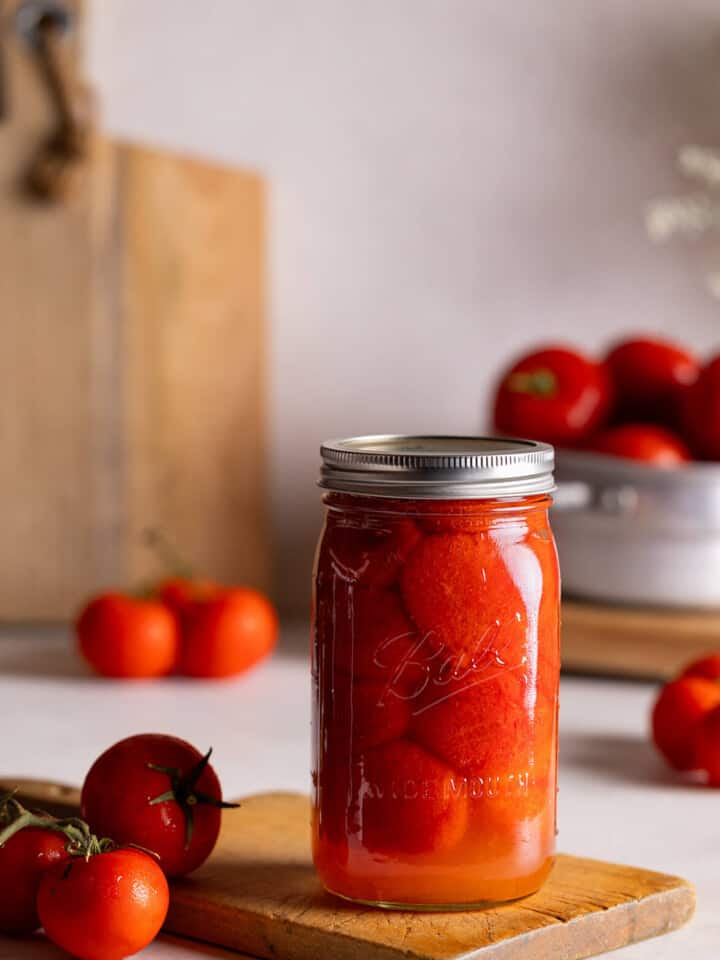
    jar of canned whole tomatoes

    Learn how to can tomatoes safely and easily with step-by-step directions. If you have an abundance of homegrown tomatoes, itโ€™s a great way to enjoy the essence of summer all year long!

    jar of canned whole tomatoes

    Weโ€™ll be covering canning tomatoes in a water bath canner using any of the following methods:

    • Whole or halved tomatoes packed in water (raw pack and hot pack)
    • Whole or halved tomatoes packed in tomato juice (raw pack and hot pack)
    • Whole or halved tomatoes packed raw without added liquid
    • Crushed tomatoes with no added liquid

    Jump to Section

    • What are the best tomatoes for canning?
    • How many tomatoes do I need?
    • Do Tomatoes Need to Be Canned with Added Acid?
    • Do I have to add salt when canning tomatoes?
    • Equipment for Canning Tomatoes
    • Hot Packing vs Raw Packing (Cold Pack)
    • How to Can Tomatoes
    • Ensuring safe canned foods
    • Frequently Asked Questions
    • How to use canned tomatoes
    • Recipe
    • How to Can Tomatoes: Step-by-Step Guide for Preservation

    What are the best tomatoes for canning?

    You can choose any variety of tomatoes for water bath canning, just be sure to select only ones that are disease-free, firm, and preferably vine-ripened.

    Do not can damaged tomatoes or those from dead or frost-killed vines. They may contain harmful pathogens.

    whole, fresh tomatoes on a wooden table

    How many tomatoes do I need?

    You will need about 21 pounds of tomatoes to can 7 quarts. Each quart takes about 3 pounds.

    Do Tomatoes Need to Be Canned with Added Acid?

    Tomatoes are comparatively low in acidity, and so acid must be added for safe canning. Add acid directly to the jars when filling with tomatoes.

    Bottled lemon juice is the recommended ingredient to ensure a safe, consistent acidity. Use 2 tablespoons per quart or 1 tablespoon per pint. Why bottled lemon juice? Fresh lemon juice can vary in acidity so itโ€™s not recommended.

    Citric acid can be used instead of bottled lemon juice.  Use ยฝ teaspoon per quart or ยผ teaspoon per pint. However, its flavor may be more pronounced than that of lemon juice.

    Four tablespoons of a 5 percent acidity vinegar per quart (2 tablespoons per pint) may be used instead of lemon juice or citric acid. However, vinegar may cause undesirable flavor changes.

    You can add sugar to offset acid taste, if desired.

    Do I have to add salt when canning tomatoes?

    Adding salt is purely optional and is not necessary for safe canning. You can, however, add salt to taste to the jars (about a teaspoon per jar). If you do use salt, use pickling or canning salt which is pure salt with no additives rather than regular table salt.

    Equipment for Canning Tomatoes

    • Water Bath Canner - A water bath canner is a big pot with a rack inside. A 21.5-quart pot holds 7-quart size jars. If you donโ€™t have a water bath canner, you can use a large stock pot with a rack on the bottom to prevent the jars from touching the bottom of the pan.
    • Wide Funnel - a wide funnel allows you to get the tomatoes into the jar while keeping the rim of the jar clean. If the rim is not very clean, the lids may not form a tight seal.
    • Glass canning jars - When selecting your canning jars, ensure they are specifically designed for canning and are free of any cracks or imperfections, including in the rim. Inspect the mason jars carefully and discard any damaged ones.
    • Canning lids and bands - Canning lids are essential to ensure a proper seal, preserving the freshness and safety of your canned tomatoes. Prior to using the canning lids, wash them in hot, soapy water, and rinse thoroughly. It is recommended to use new lids each time you can, as they may not provide a proper seal if reused. Bands are used to secure the lids in place during canning and can be reused as long as they are not damaged.
    • Jar lifter - A jar lifter helps you to safely remove the hot jars from the pan.
    • Damp cloth - to wipe jar rims

    Hot Packing vs Raw Packing (Cold Pack)

    Before jars and cans can be processed, they have to be filled through either the raw (cold) pack or hot pack method.

    Raw (Cold) Packing

    According to the USDA, Raw-packing is the practice of filling jars tightly with freshly prepared, but unheated food. Such foods, especially fruit, will float in the jars. The entrapped air in and around the food may cause discoloration within 2 to 3 months of storage. Raw-packing is more suitable for vegetables processed in a pressure canner.

    Hot Packing

    Hot-packing is the practice of heating freshly prepared food to boiling, simmering it 2 to 5 minutes, and promptly filling jars loosely with the boiled food.

    Whether food has been hot-packed or raw-packed, the juice, syrup, or water to be added to the foods should also be heated to boiling before adding it to the jars. This practice helps to remove air from food tissues, shrinks food, helps keep the food from floating in the jars, increases vacuum in sealed jars, and improves shelf life. Preshrinking food permits filling more food into each jar.

    Hot-packing is the best way to remove air and is the preferred pack style for foods processed in a boiling-water canner. At first, the color of hot-packed foods may appear no better than that of raw-packed foods, but within a short storage period, both color and flavor of hot-packed foods will be superior.

    How to Can Tomatoes

    Step 1: Wash the jars, however it is NOT necessary to sterilize them

    According to the National Center for Home Food Preservation, it is NOT necessary to sterilize the jars before canning if the processing time is 10 minutes or more. It doesn't hurt your product to do it anyway, but it does require additional time and energy and is unnecessary.

    You should always clean jars just prior to filling them when canning. Wash jars in a dishwasher or by hand, using detergent and rinsing well. Clean jars should then be kept warm prior to filling. You can leave them in the closed dishwasher after the cycle, or use your canner as it is preheating, or create a separate water bath in a large pot of water that will keep the jars both clean and warm.

    Step 2: Begin preheating water in the canner

    Bring water to a simmer in either the canner or in a separate pan.

    Step 3: Wash the Tomatoes

    Before canning, wash the tomatoes thoroughly in order to remove any dirt, debris, or chemicals that might be present on the skin. Rinse the tomatoes under cold water while gently rubbing the surface.

    Step 4: Remove the Tomato Skins
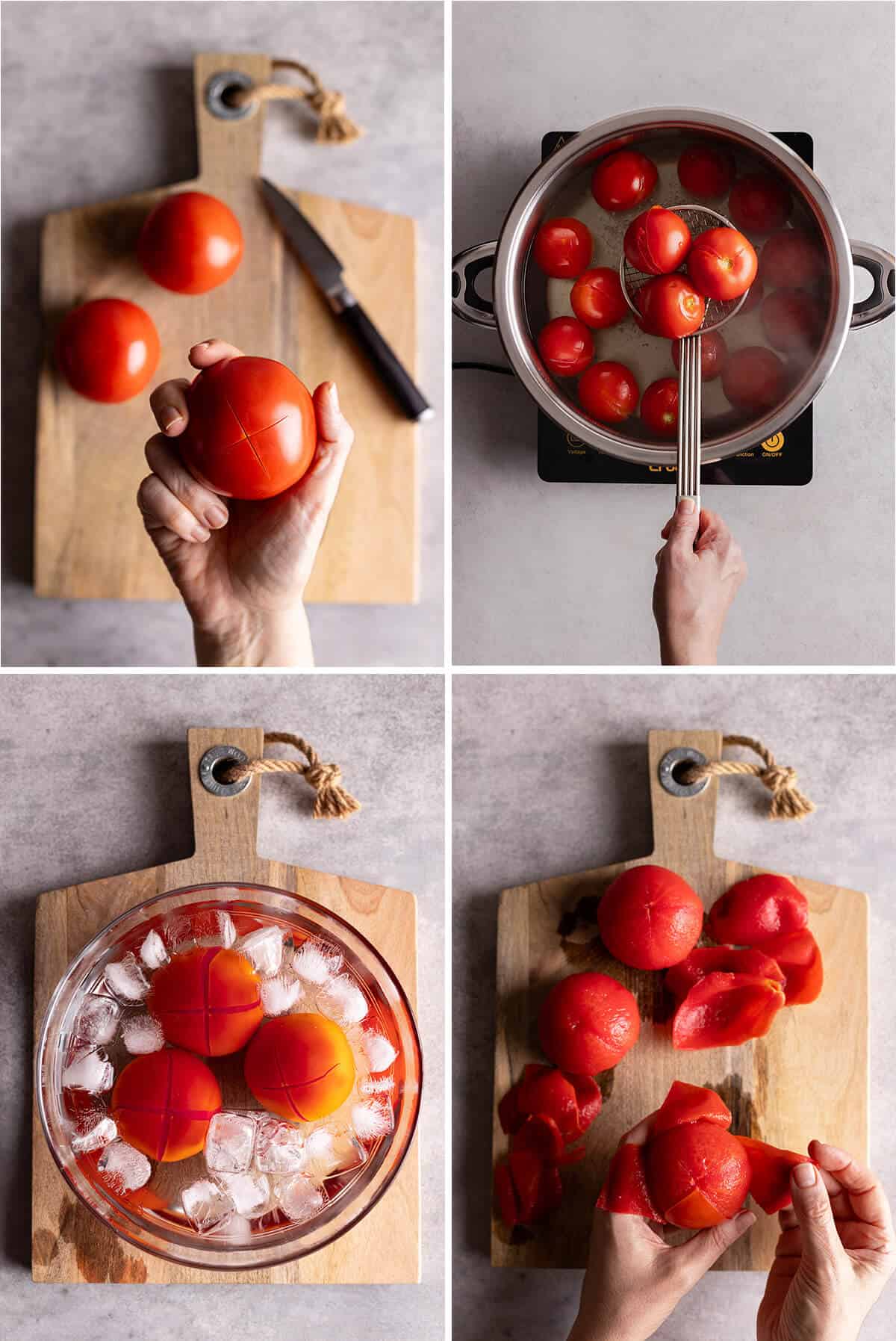
    steps showing how to peel tomatoes by blanching

    To peel the tomatoes, follow these easy steps:

    1. Bring a pot of water to a rolling boil.
    2. Cut an โ€œXโ€ in the bottom of each tomato, just deep enough to penetrate the skin.
    3. Prepare a bowl of water with ice.
    1. Dip the tomatoes in the boiling water for about 60 seconds until the skins split.
    2. Immediately transfer the tomatoes to a bowl of cold water to prevent overcooking.
    3. Once the tomatoes are cool enough to handle, slip off the skins
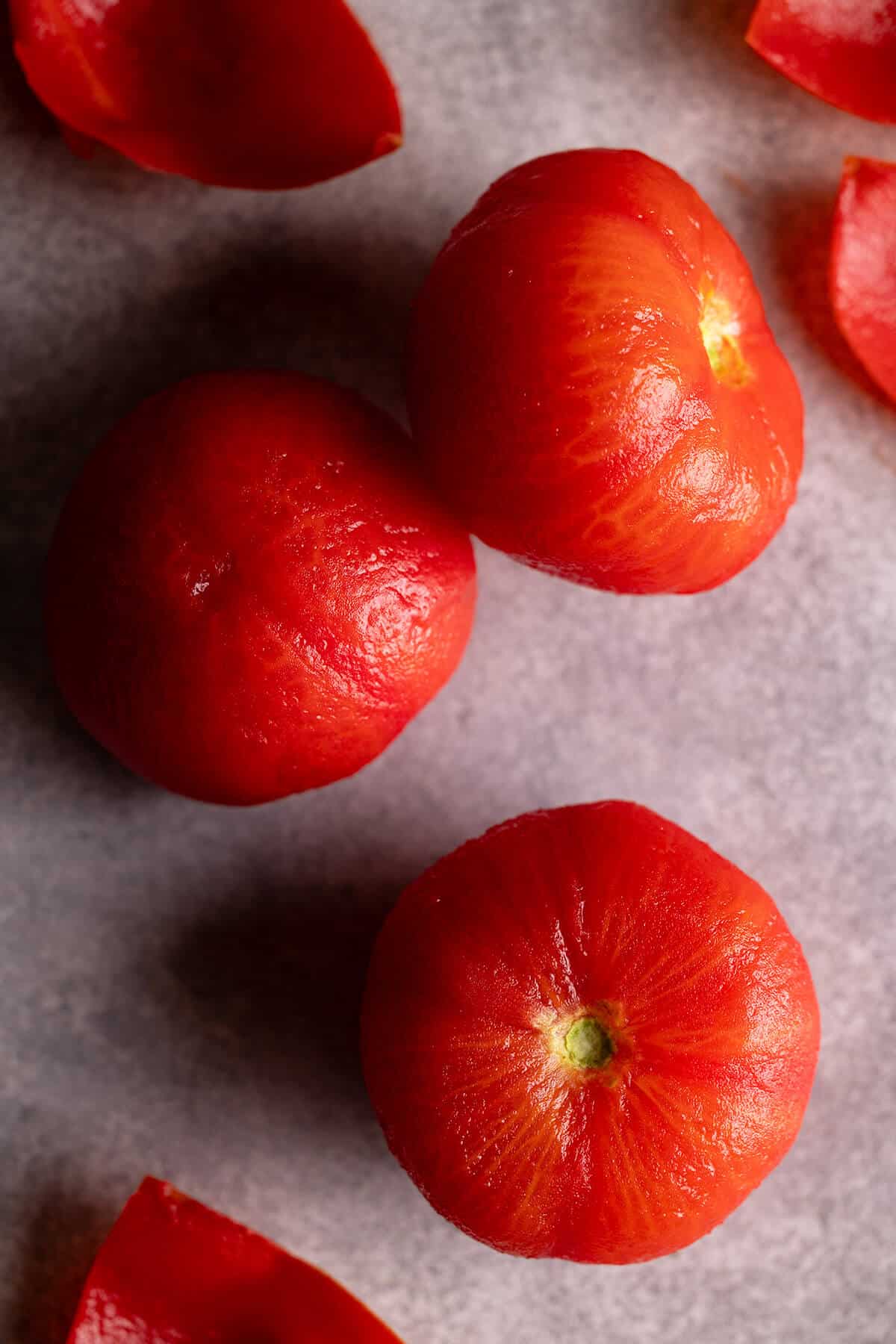
    peeled tomatoes

    Step 5: Packing the Tomatoes and Processing Times

    You can pack the tomatoes in any of the following methods:

    Whole or halved tomatoes packed in water - raw pack or hot pack

    • Leave tomatoes whole or halve them
    • Add bottled lemon juice or citric acid to jars (can be added before or after tomatoes)
    • Add 1 teaspoon of salt per quart to the jars, if desired
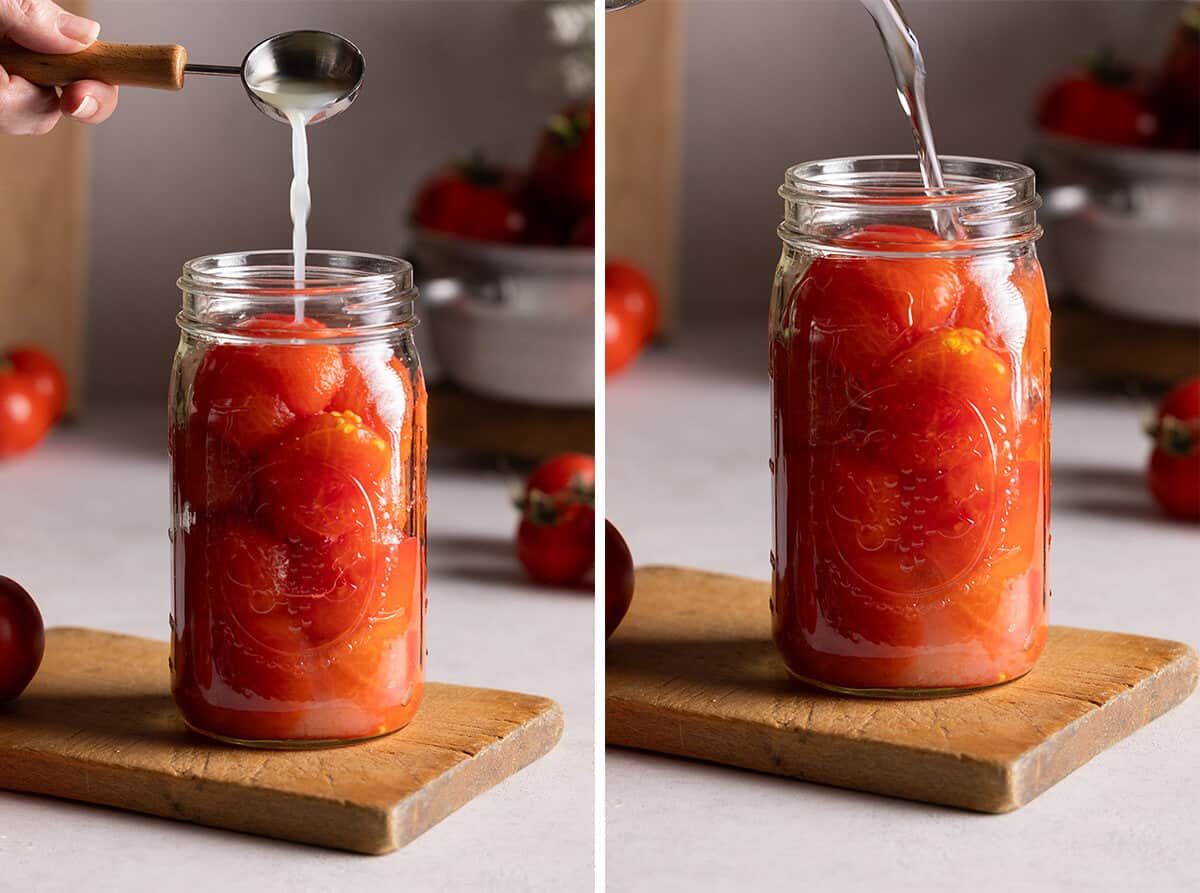
    • Raw pack -- Heat water, for packing tomatoes, to boiling. Fill hot jars with prepared raw tomatoes, leaving ยฝ-inch headspace. Cover tomatoes in the jars with boiling water, leaving ยฝ-inch headspace.
    • Hot pack -- Put prepared tomatoes in a large saucepan and add enough water to completely cover them. Boil tomatoes gently for 5 minutes. Fill hot jars with hot tomatoes leaving ยฝ-inch headspace. Add cooking liquid to the jars to cover the tomatoes, leaving ยฝ-inch headspace.
    Pouring lemon juice and boiling water into a jar of tomatoes
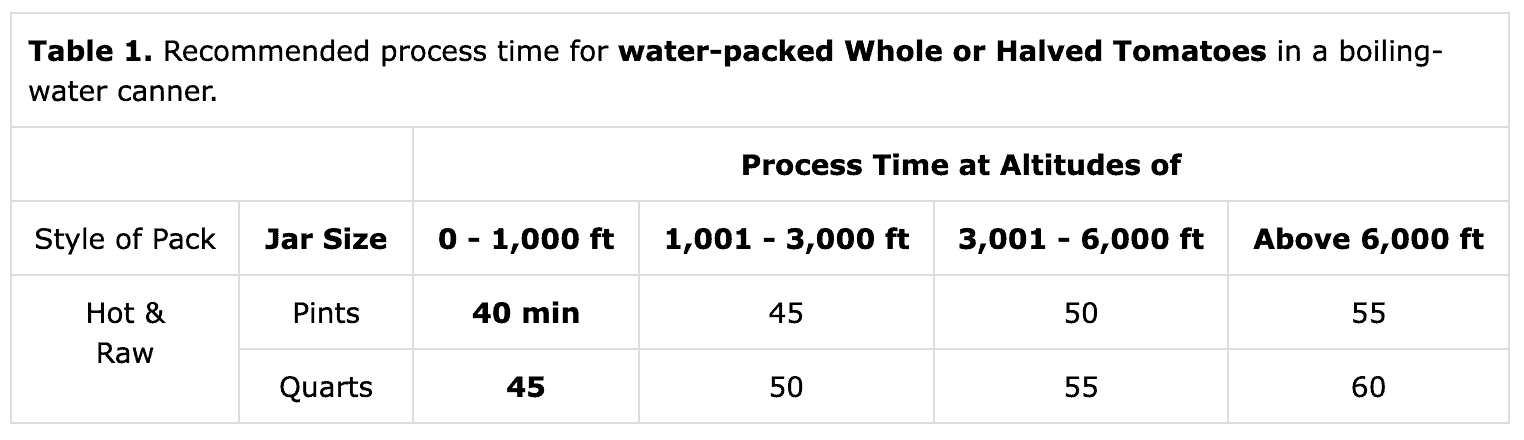
    Water-packed Whole tomatoes - Raw Pack
    Source: National Center for Home Food Preservation

    Whole or halved tomatoes packed in tomato juice - raw pack or hot pack

    • Leave tomatoes whole or halve them
    • Add bottled lemon juice or citric acid to jars (can be added before or after tomatoes)
    • Add 1 teaspoon of salt per quart to the jars, if desired
    • Raw pack โ€“ Heat tomato juice in a saucepan. Fill jars with raw tomatoes, leaving ยฝ-inch headspace. Cover tomatoes in the jars with hot tomato juice, leaving ยฝ-inch headspace.
    • Hot pack โ€“ Put tomatoes in a large saucepan and add enough tomato juice to completely cover them. Boil tomatoes and juice gently for 5 minutes. Fill jars with hot tomatoes, leaving ยฝ-inch headspace. Add hot tomato juice to the jars to cover the tomatoes, leaving ยฝ-inch headspace.
    Source: National Center for Home Food Preservation

    Whole or halved tomatoes packed raw without added liquid

    • Leave tomatoes whole or halve them
    • Add bottled lemon juice or citric acid to jars (can be added before or after tomatoes)
    • Add 1 teaspoon of salt per quart to the jars, if desired
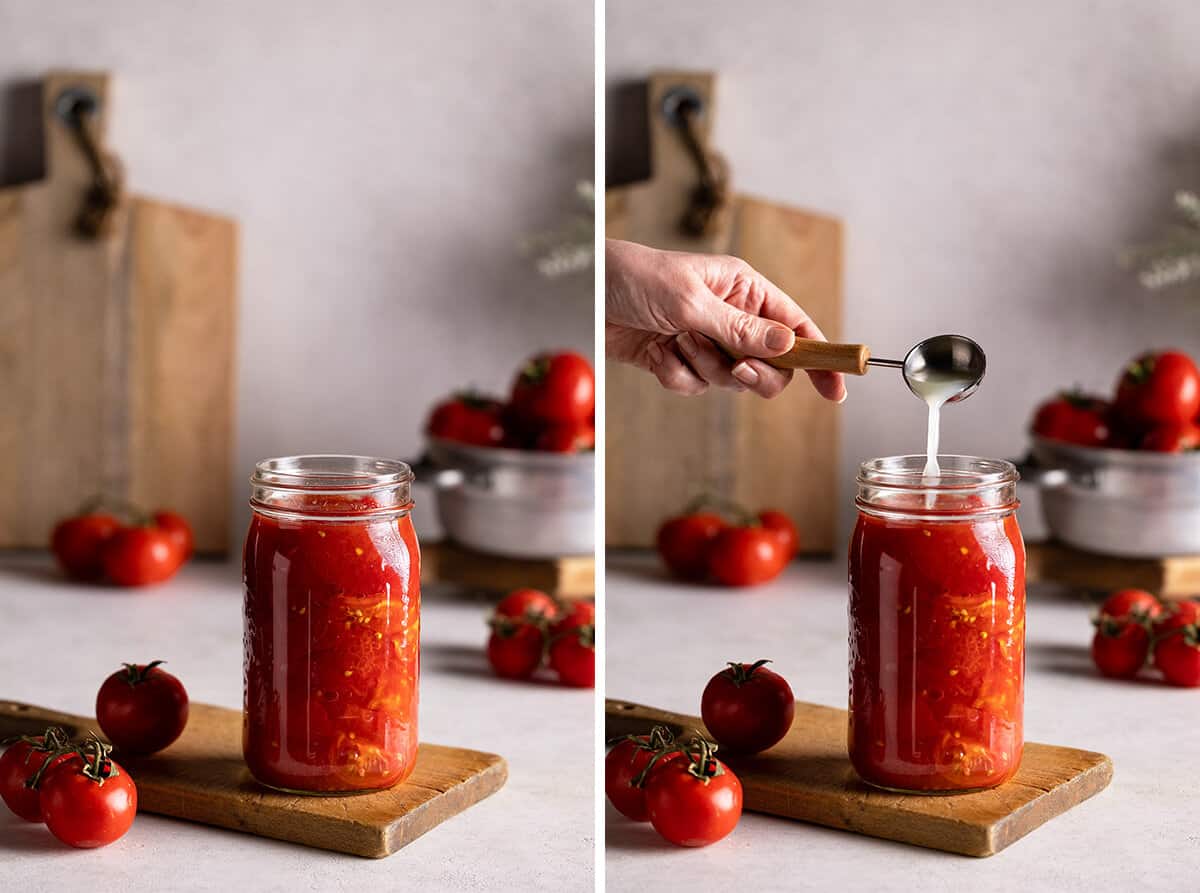
    • Fill jars with raw tomatoes, leaving ยฝ-inch headspace. Press tomatoes in the jars until spaces between them fill with juice. Leave ยฝ-inch headspace. 
    Source: National Center for Home Food Preservation
    steps in canning tomatoes with no added liquid
    Tomatoes packed raw with no added liquid

    Crushed tomatoes with no added liquid

    • Remove cores and quarter
    • Heat one-sixth of the quarters quickly in a large pot, crushing them with a wooden mallet or spoon as they are added to the pot. This will exude juice. Continue heating the tomatoes, stirring to prevent burning. Once the tomatoes are boiling, gradually add remaining quartered tomatoes, stirring constantly These remaining tomatoes do not need to be crushed. They will soften with heating and stirring. Continue until all tomatoes are added. Then boil gently 5 minutes. 
    • Add bottled lemon juice or citric acid to jars 
    • Add 1 teaspoon of salt per quart to the jars, if desired
    • Fill jars immediately with hot tomatoes, leaving ยฝ-inch headspace.
    Canned Tomatoes Processing Time Chart - crushed tomatoes
    Source: National Center for Home Food Preservation
    steps for canning stewed tomatoes

    Step 6: Seal the jars

    • Insert a clean table knife or chopstick into a jar and run it around the perimeter to dislodge any air bubbles. Add a bit more tomato if necessary to maintain ยฝ inch of headroom.
    • Use a cloth and wipe the rims of the jars, being sure they are clean and dry. Remove any tomato residue that may be there.  If there is even a slight bit of tomato juice on the rim, the lids may not seal properly.
    • Set the lids on the jars and screw on the rings, screwing until just finger-tight, tightening them gently but securely with the tips of your fingers, not forcefully with your entire hand.
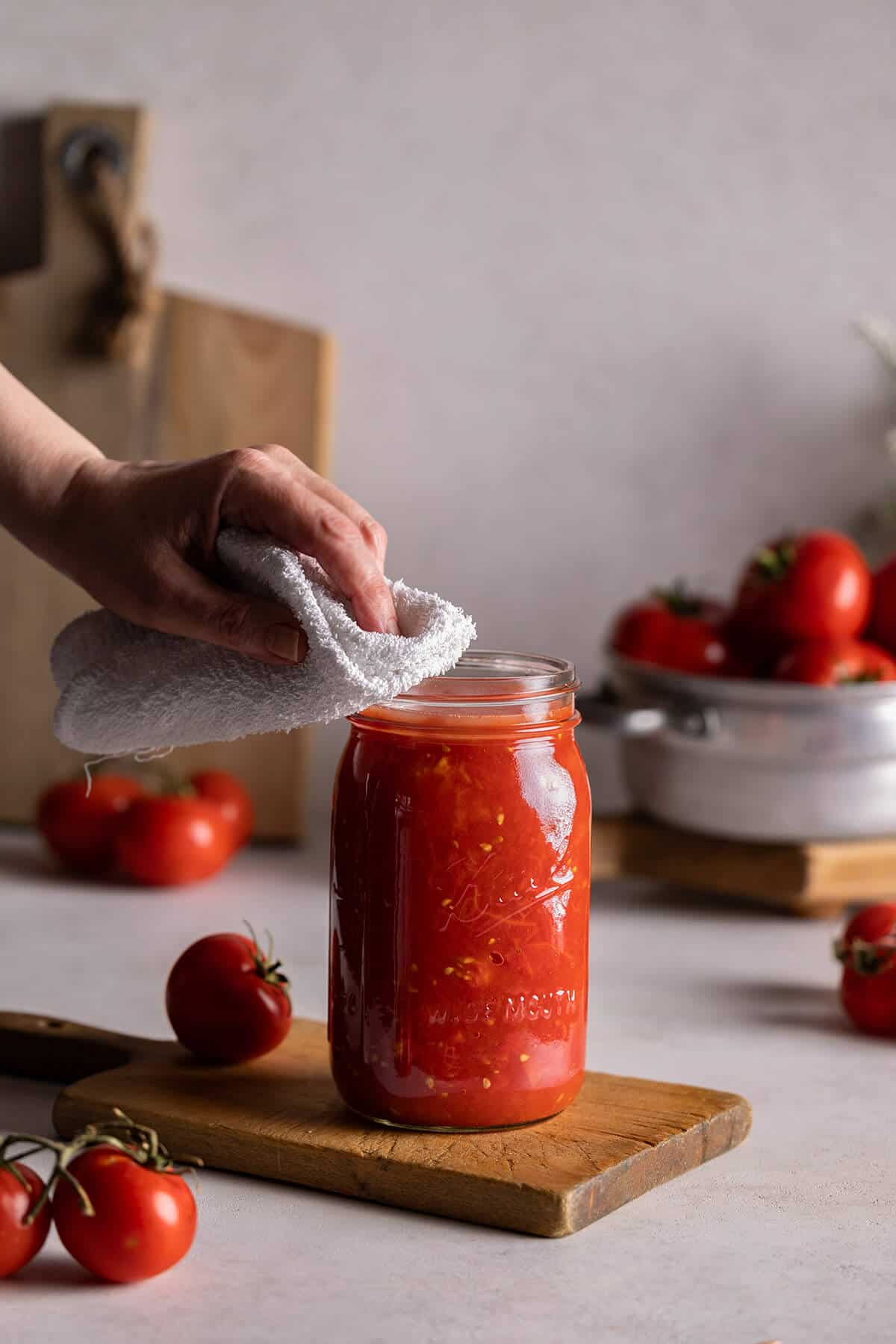
    wiping the rim on a jar of tomatoes
    Crushed tomatoes

    Step 7: Process the tomatoes

    • Lower the jars into the hot water in the canner, making sure that they donโ€™t touch. Add more hot water to cover the jars by at least 1 inch.
    • Boil the jars. Bring to a gentle boil; adjust the heat and process the jars for the time indicated on the chart. The water MUST cover the jars and MUST continue boiling at all times. (I keep another pan of water simmering on the stove for this.) If the water stops boiling, the timing has to start over again once it comes back to a boil.
    • Cool the jars. Turn off the heat and let the jars sit in the water for 5 minutes. Transfer the jars with a jar lifter to a kitchen towel or rack set over a kitchen towel and cool completely, about 12-24 hours.
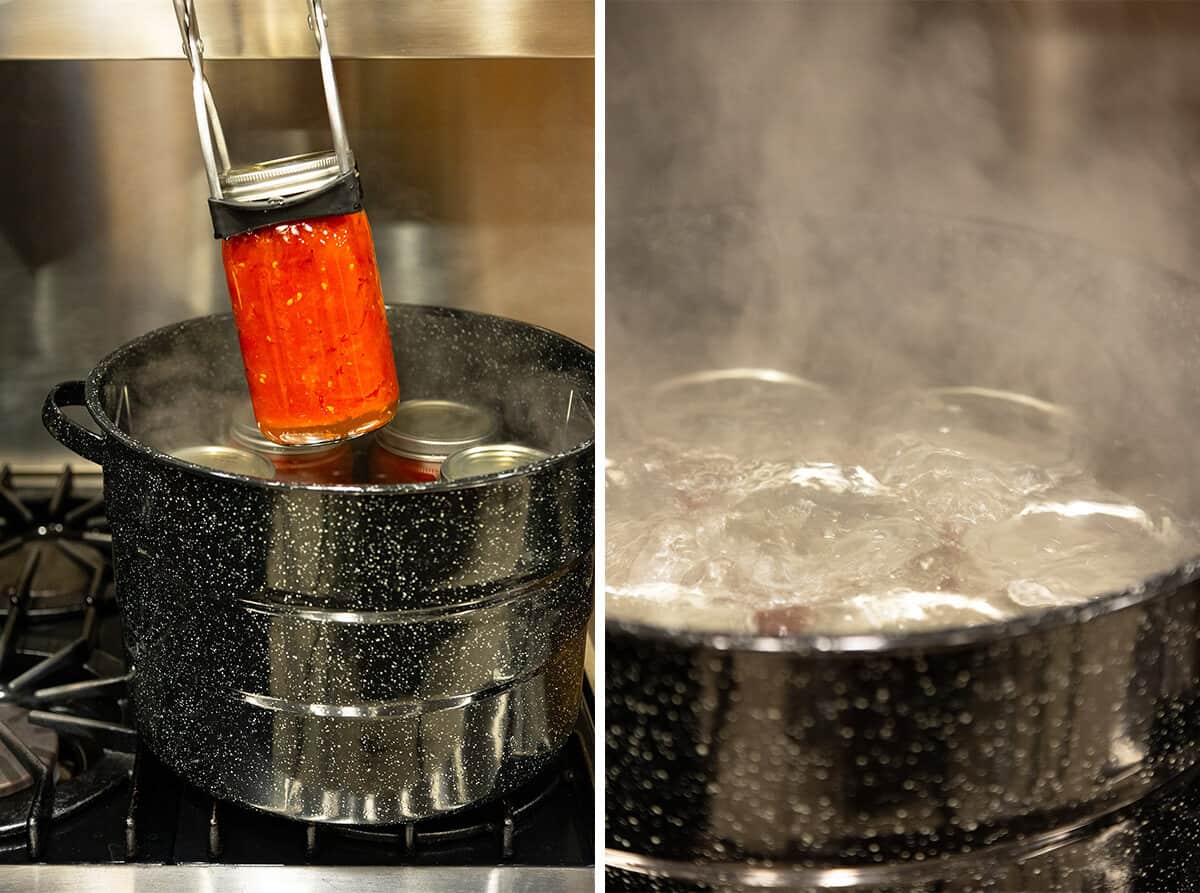
    processing cans of tomatoes in a water bath canner

    Step 8: Test the Jar Seals

    It's important to double-check the seals once your jars have cooled. If your jars aren't completely sealed, they won't be safe to eat later.

    After cooling jars for 12 to 24 hours, remove the screw bands and test seals with one of the following options:

    • Option 1. Press the middle of the lid with a finger or thumb. If the lid springs up when you release your finger, the lid is unsealed.
    • Option 2.  Tap the lid with the bottom of a teaspoon. If it makes a dull sound, the lid is not sealed. If food is in contact with the underside of the lid, it will also cause a dull sound. If the jar is sealed correctly, it will make a ringing, high-pitched sound.
    • Option 3.  Hold the jar at eye level and look across the lid. The lid should be concave (curved down slightly in the center). If center of the lid is either flat or bulging, it may not be sealed.

    Unsealed jars should be stored in the refrigerator and used within three days, or you can reprocess the tomatoes within 24 hours.

    jar of canned whole tomatoes
    Canned whole tomatoes, raw pack

    Step 9: Label

    Remove bands and wash outside of jars in warm soapy water. Dry jars and label each jar with contents and date.

    Storing Canned Tomatoes

    When storing your canned tomato jars, consider the following:

    • Choose a cool, dark, and dry storage area away from direct sunlight, as it can affect the quality and shelf life of the canned tomatoes.
    • Keep the jars away from heat sources like stoves, ovens, or heating vents.
    • Store jars on sturdy shelves or in cabinets, preferably in a single layer, so you can easily access and monitor them.
    • Maintain a temperature of 50ยฐF to 70ยฐF (10ยฐC to 21ยฐC) for optimal shelf life.

    By following these guidelines, you can ensure your canned tomatoes remain delicious and safe to eat for 12 to 18 months.

    Ensuring safe canned foods

    The growth of the bacterium Clostridium botulinum in canned food may cause botulismโ€”a deadly form of food poisoning. The most important way of avoiding botulism is following the prescribed methods of canning and using the recommended processing times.

    Identifying and handling spoiled canned food  

    IF IN DOUBT, THROW IT OUT!

    Do not taste food from a jar with an unsealed lid or food that shows signs of spoilage.   You can more easily detect some types of spoilage in jars stored without screw bands. Growth of spoilage bacteria and yeast produces gas which pressurizes the food, swells lids, and breaks jar seals. As each stored jar is selected for use, examine its lid for tightness and vacuum. Lids with concave centers have good seals.

    Next, while holding the jar upright at eye level, rotate the jar and examine its outside surface for streaks of dried food originating at the top of the jar. Look at the contents for rising air bubbles and unnatural color.

    While opening the jar, smell for unnatural odors and look for spurting liquid and cotton-like mold growth (white, blue, black, or green) on the top food surface and underside of lid.

    Spoiled low-acid foods, including tomatoes, may exhibit different kinds of spoilage evidence or very little evidence. Therefore, all suspect containers of spoiled low-acid foods, including tomatoes, should be treated as having produced botulinum toxin and handled carefully.

    Frequently Asked Questions

    Which tomato varieties are best for canning?

    Several tomato varieties are suitable for canning, including Roma, San Marzano, and Amish Paste. These varieties have firm flesh, fewer seeds, and lower water content, making them ideal for preserving. It's essential to select ripe, unblemished tomatoes for best results in canning.

    How is citric acid used when canning tomatoes?

    Citric acid is used to increase the acidity of canned tomatoes, ensuring their safety during storage. When canning tomatoes in quart jars, add ยฝ teaspoon of citric acid crystals or 2 tablespoons of bottled lemon juice to each jar before filling with the tomato product. For pint jars, use half these amounts. Acidification is crucial regardless of the canning method usedโ€”water bath or pressure canningโ€”to prevent the growth of harmful bacteria.

    Should I use wide-mouth or regular canning jars?

    You can use either size. I prefer wide-mouth jars because theyโ€™re easier to get my hand inside them for cleaning. Also, if youโ€™re canning whole tomatoes, wide-mouth jars may make it easier to get the tomatoes in.

    Is it necessary to sterilize jars before canning?
    Jars do not need to be sterilized before canning if they will be filled with food and processed in a boiling water bath canner for 10 minutes or more.

    Do I really need to leave a certain amount of headspace in the jar?
    Yes. Leaving the specified amount of headspace in a jar is important to assure a vacuum seal. If too little headspace is allowed, the food may expand and bubble out when air is being forced out from under the lid during processing. The bubbling food may leave a deposit on the rim of the jar or the seal of the lid and prevent the jar from sealing properly. If too much headspace is allowed, the food at the top is likely to discolor. Also, the jar may not seal properly because there will not be enough processing time to drive all the air out of the jar.

    Can two layers of jars be processed in a canner at one time?
    Yes. Two layers can be processed at one time. Place a small wire rack between the layers so water will circulate around each jar. Make certain the water covers the tops of all jars by 1 inch in a boiling water bath canner.

    Is it okay to reuse jar fittings (lids and bands)?
    Lids should not be used a second time since the sealing compound becomes indented by the first use, preventing another airtight seal. Screw bands may be reused unless they are badly rusted or the top edge is pried up, which would prevent a proper seal.

    What causes jars to break in a canner?
    Breakage can occur for several reasons, including using commercial food jars rather than jars manufactured for home canning, using jars that have hairline cracks, putting jars directly on the bottom of the canner instead of on a rack, putting hot food in cold jars or putting jars of raw or unheated food directly into boiling water in the canner, rather than into hot water. This causes a sudden change in temperature, which is too wide a margin between the temperature of filled jars and water in the canner before processing.

    How do I know if my canned tomatoes are safe to eat?

    If the lid becomes unsealed or if the contents become cloudy, bubbly, moldy or develop an off smell, discard all contents and do not eat.

    How to use canned tomatoes

    You can use canned tomatoes in recipes calling for cans of diced, crushed, or stewed tomatoes. Here are some of my favorites:

    • Lasagna
    • Spaghetti and Meatballs
    • Hungarian Goulash
    • Chili
    • Harira (Moroccan Lamb and Legume Soup)
    • Tomato Mascarpone Pasta

    Recipe

    jar of canned tomatoes

    How to Can Tomatoes: Step-by-Step Guide for Preservation

    Kelly
    Learn how to can tomatoes safely and easily with step-by-step directions. If you have an abundance of homegrown tomatoes, itโ€™s a great way to enjoy the essence of summer all year long!
    5 from 1 vote
    Print Recipe Pin Recipe
    Prep Time 20 minutes mins
    Cook Time 45 minutes mins
    Total Time 1 hour hr 5 minutes mins
    Course Side Dish
    Cuisine American
    Servings 1 quart
    Calories 252 kcal

    Ingredients
      

    • 3 pounds tomatoes approximately, per quart
    • 2 tablespoons Lemon Juice per quart
    • ยฝ - 1 teaspoon salt optional, per quart

    Instructions
     

    For canning whole or halved tomatoes (hot pack method):

    • Begin by filling the canner halfway with water and preheating
    • Blanch and peel the tomatoes
    • Leave tomatoes whole or halve them
    • Put prepared tomatoes in a large saucepan and add just enough water to cover them. Boil tomatoes gently for 5 minutes.
    • Add bottled lemon juice or citric acid to jars
    • Add ยฝ - 1 teaspoon of salt per quart to the jars, if desired
    • Fill jars with tomatoes leaving ยฝ-inch headspace. Add cooking liquid to the jars to cover the tomatoes, leaving ยฝ-inch headspace.
    • Remove air bubbles by running a plastic knife around inside of jar
    • Wipe rim of jars clean. Put on the lids and screw on the bands
    • Place jars in canner and add additional water to cover the jars by 1-2 inches.
    • Cover the pot and bring to a boil.
    • Process the tomatoes for 45 minutes for quarts, adding additional time for your altitude (see below). Start timing once it begins boiling.
    • Transfer the jars with the tongs to a kitchen towel or rack and cool completely, about 12-24 hours.
    • After cooling, check the lids for a proper seal. Press the middle of the lid with a finger or thumb. If the lid springs up when you release your finger, the lid is unsealed.
    • Label the jars with contents and date. Tomatoes keep their optimum quality for 1 year.

    Notes

    *If canning pints, use 1 tablespoon bottled lemon juice
    *Citric acid may be used instead of bottled lemon juice. Use ยฝ teaspoon per quart or ยผ teaspoon per pint
    If you are at a higher altitude, increase the processing time by the following amounts:
    Altitude chart for canning tomatoes

    For whole or halved tomatoes packed in water - raw pack:ย 

    ยทย ย ย ย ย  Leave tomatoes whole or halve them
    ยทย ย ย ย ย  Add bottled lemon juice or citric acid to jarsย 
    ยทย ย ย ย ย  Add 1 teaspoon of salt per quart to the jars, if desired
    ยทย ย ย ย ย  Heat water, for packing tomatoes, to boiling. Fill hot jars with prepared raw tomatoes, leaving ยฝ-inch headspace. Cover tomatoes in the jars with boiling water, leaving ยฝ-inch headspace.

    For whole or halved tomatoes packed in tomato juice - raw pack or hot pack:

    ยทย ย ย ย ย  Leave tomatoes whole or halve them
    ยทย ย ย ย ย  Add bottled lemon juice or citric acid to jarsย 
    ยทย ย ย ย ย  Add 1 teaspoon of salt per quart to the jars, if desired
    ยทย ย ย ย ย  Raw packย โ€“ Heat tomato juice in a saucepan. Fill jars with raw tomatoes, leaving ยฝ-inch headspace. Cover tomatoes in the jars with hot tomato juice, leaving ยฝ-inch headspace.
    ยทย ย ย ย ย  Hot pack โ€“ Put tomatoes in a large saucepan and add enough tomato juice to completely cover them. Boil tomatoes and juice gently for 5 minutes. Fill jars with hot tomatoes, leaving ยฝ-inch headspace. Add hot tomato juice to the jars to cover the tomatoes, leaving ยฝ-inch headspace.

    For whole or halved tomatoes packed raw without added liquid:

    ยทย ย ย ย ย  Leave tomatoes whole or halve them
    ยทย ย ย ย ย  Add bottled lemon juice or citric acid to jarsย 
    ยทย ย ย ย ย  Add 1 teaspoon of salt per quart to the jars, if desired
    ยทย ย ย ย ย  Fill jars with raw tomatoes, leaving ยฝ-inch headspace. Press tomatoes in the jars until spaces between them fill with juice. Leave ยฝ-inch headspace.ย 

    For crushed tomatoes with no added liquid:

    ยทย ย ย ย ย  Remove cores and quarter
    ยทย ย ย ย ย  Heat one-sixth of the quarters quickly in a large pot, crushing them with a wooden mallet or spoon as they are added to the pot. This will exude juice. Continue heating the tomatoes, stirring to prevent burning. Once the tomatoes are boiling, gradually add remaining quartered tomatoes, stirring constantly These remaining tomatoes do not need to be crushed. They will soften with heating and stirring. Continue until all tomatoes are added. Then boil gently 5 minutes.ย 
    ยทย ย ย ย ย  Add bottled lemon juice or citric acid to jarsย 
    ยทย ย ย ย ย  Add 1 teaspoon of salt per quart to the jars, if desired
    ยทย ย ย ย ย  Fill jars immediately with hot tomatoes, leaving ยฝ-inch headspace.
    Canned Tomatoes Processing Time Chart - crushed tomatoes

    Nutrition

    Calories: 252kcalCarbohydrates: 55gProtein: 12gFat: 3gSaturated Fat: 0.4gPolyunsaturated Fat: 1gMonounsaturated Fat: 0.4gSodium: 1231mgPotassium: 3256mgFiber: 16gSugar: 37gVitamin A: 11337IUVitamin C: 198mgCalcium: 139mgIron: 4mg
    Keyword canned tomatoes, canning, how to can, tomatoes
    Tried this recipe?Let us know how it was!

    For more information, refer to the USDA Complete Guide to Home Canning

    Quick and Easy Homemade Banana Milk

    August 10, 2023 by Kelly 4 Comments

    three bottles of banana milk with straws and two bananas.

    Homemade Banana Milk is bursting with the flavor of fresh, sweet bananas. With only 3 ingredients, this popular Korean banana drink is easy to make and so much better than store bought!

    three bottles of banana milk with straws and two bananas.
    [feast_advanced_jump_to]

    🍌 What is Banana Milk?

    Banana milk is a sweet, refreshing drink loved by kids and adults alike, made with just banana, milk, water, and optional sweetener. If you love this sweet banana beverage, try my homemade strawberry milk or for a frostier drink, my banana milkshake!

    🥛 Korean Banana Milk โ€“ Banana Uyu

    Banana flavored milk, a popular Korean drink, was first introduced in South Korea by Binggrae in 1974. At that time, bananas were an expensive commodity, and milk consumption was low among Koreans. The introduction of banana milk aimed to increase the consumption of milk by offering a delicious and affordable alternative to regular milk.

    When banana flavoring was added to the dairy drink, it captured the attention of the South Korean public, resulting in its growing popularity. Today, Binggrae banana milk has become a staple treat in South Korea, enjoyed by millions.

    ❤️ Why youโ€™ll love this recipe

    • Yummy, sweet banana flavor
    • A popular banana drink found in Korean grocery stores
    • Super quick and easy to make
    • All natural ingredients with natural sweetness and no artificial flavors
    • You can control the amount and type of sweetener added โ€“ if any!
    • Kids and adults love it!
    • The perfect recipe to use up overripe bananas
    • Makes a great light breakfast or after-school snack

    📝 Ingredients

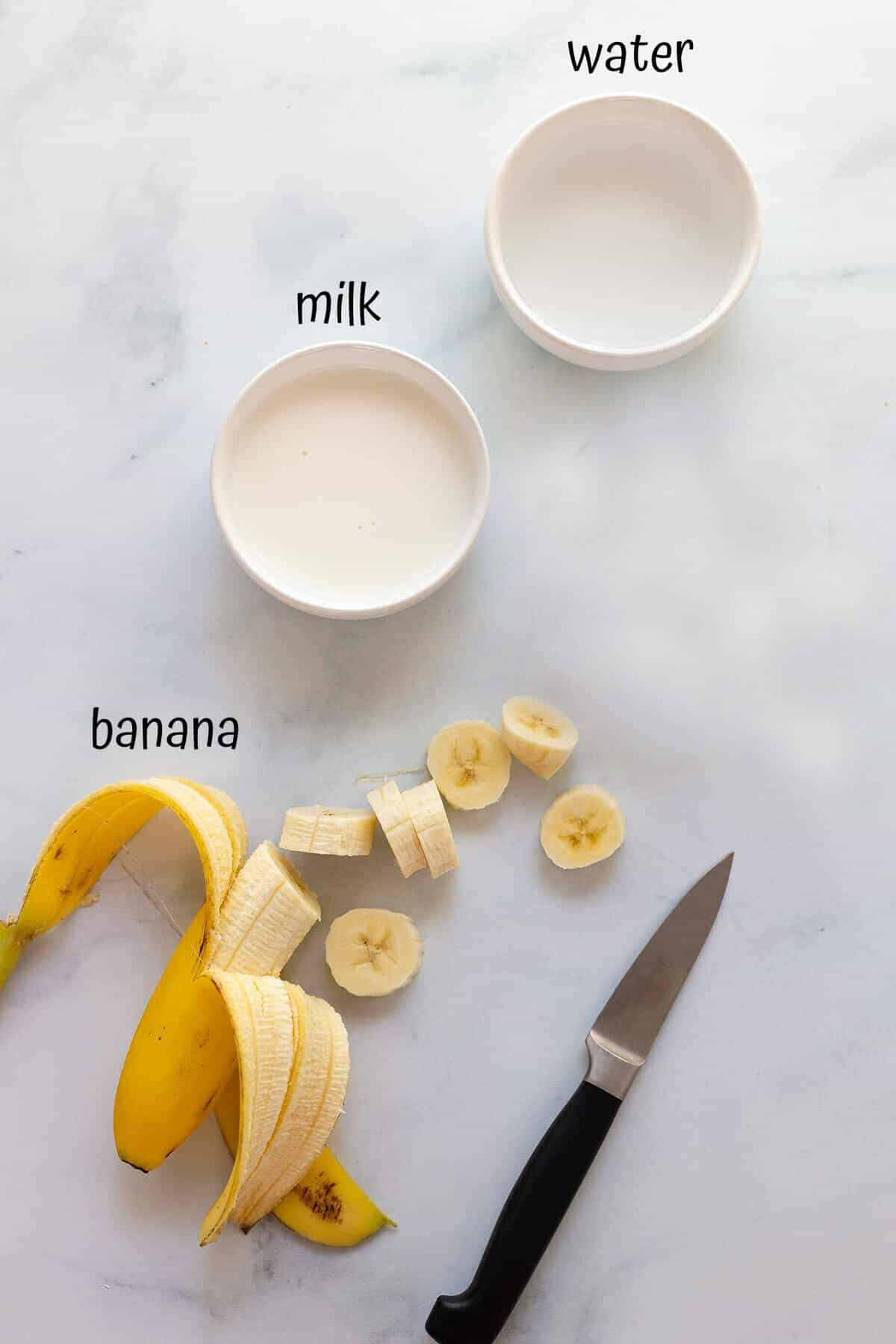
    ingredients for banana milk: banana, milk, and water.
    • Banana: use a ripe, well-speckled banana for the sweetest flavor
    • Milk: You can use any type of milk, dairy or nondairy. For dairy you can use whole milk or skim milk. For a dairy-free beverage try oat milk, soy milk, almond milk, cashew milk, or coconut milk.
    • Water โ€“ A little water gives the drink the perfect consistency. If you prefer, you can use all milk. Using cold water keeps the milk cold and refreshing.
    • Optional Sweetener: For a little added sweetness you can add a spoon of sugar, honey, maple syrup, or sugar substitute.

    (You can find the full measurements and instructions in the printable recipe card at the bottom of the page.)

    👩‍🍳 Variations:

    • Chocolate Banana โ€“ add a tablespoon of cocoa or a spoon or two of chocolate syrup. If using chocolate syrup, omit the sugar
    • Strawberry Banana โ€“ replace half of the banana with an equal volume of strawberries
    • Banana Caramel โ€“ replace the sweetener with a spoon of easy homemade caramel sauce to taste.
    • Spiced Banana โ€“ Add a dash of cinnamon
    • Banana Smoothie - replace the water with milk and add a few ice cubes

    🥄 How to make

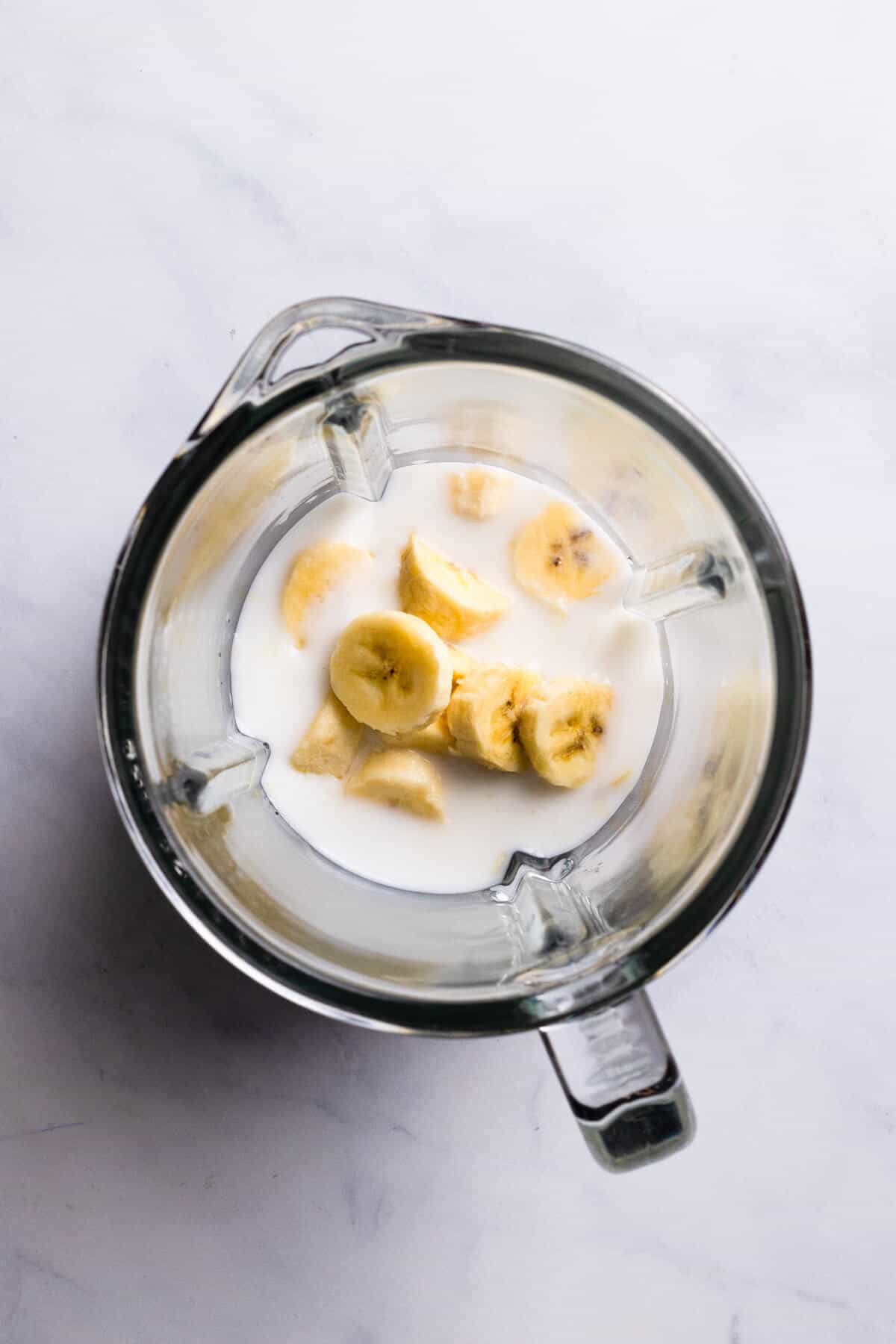
    sliced bananas, milk, and water in a blender jar.

    Step 1: Add the bananas, milk, water, and any optional sweetener to a blender.

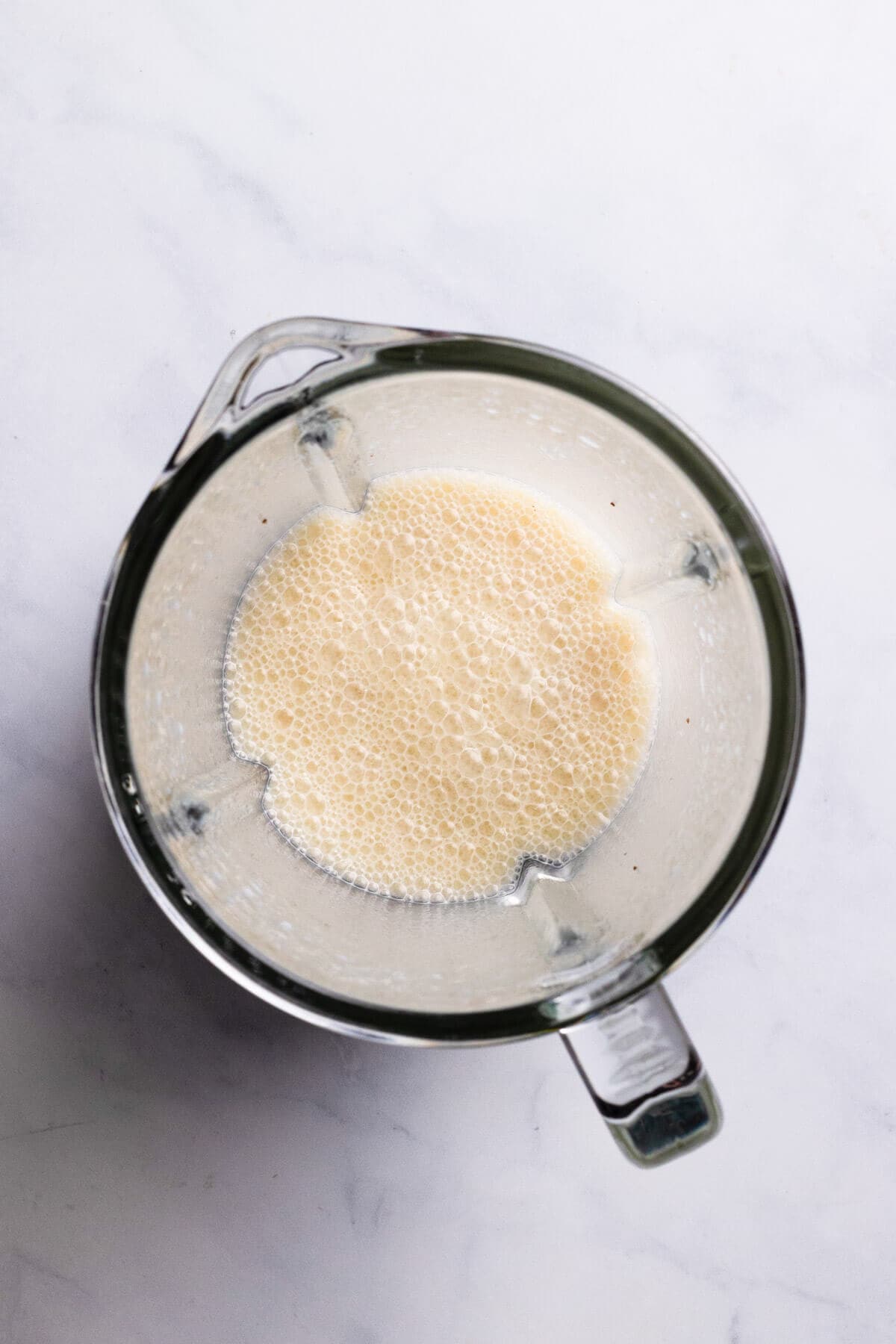
    bananas, milk, and water that have been blended until smooth and frothy in a blender jar.

    Step 2: Blend until smooth and frothy. Serve immediately.

    glass of banana milk with straw

    💡 Tips:

    • Use ripe, spotted bananas for the sweetest flavor.
    • The combination of milk and water gives a silky texture.
    • If you leave out the water and use only milk, you will have a banana smoothie with a thicker texture.
    • Make sure the milk and water are cold. Banana milk tastes best when cold. If you want it even colder, serve it over ice cubes.
    • Using frozen bananas will keep the drink colder, however it may thicken it somewhat.
    • Use a high-speed blender for a smooth, creamy texture.
    • If you donโ€™t have a high-powered blender, you can strain the milk through a fine mesh strainer.
    • Serve immediately โ€“ It will start to separate, and the bananas will begin to oxidize and brown quickly so make it just before you plan to drink it.

    🍽️ Serve With

    Enjoy banana milk over cereal or oatmeal. It's really fantastic over my double chocolate granola or homemade honey almond granola topped with slices of fresh bananas. Or serve it with a super moist banana blondie or a slice of this easy chocolate chip banana bread.

    🧺 Storage

    It is best to drink the milk immediately as it will start to discolor and separate quickly. If you have to store it for later, you can refrigerate it in an airtight container for a day. Shake it well before drinking.

    two glasses of banana milk with straws

    ❓Recipe FAQs

    Is banana milk healthy?

    It's a healthy option since itโ€™s made from milk and banana with no added preservatives. Itโ€™s a good source of nutrition with potassium, calcium, protein, fiber, and vitamins. Using no sugar or an alternative sweetener makes it an even healthier option.

    What kind of sweetener can I use?

    We like sugar in ours, or sugar substitute like allulose, because it doesnโ€™t interfere with the pure taste of the bananas. You could also make it with honey, maple syrup, agave nectar, or any sweetener you prefer.

    What does banana milk taste like?

    It tastes like sweet creamy banana.

    Where to buy banana milk?

    It can be bought in supermarkets and grocery stores. Binggrae Korean original banana milk can be found in Korean and Asian grocery stores such as H-Mart and others.

    🍓More fruity beverages for you to love:

    • two banana milkshakes topped with sprinkles and cherries
      Best Ever Banana Milkshake Recipe
    • bottles of strawberry milk
      Easy Homemade Strawberry Milk for One or Two (2 Ways! + Video)
    • glasses of strawberry juice
      Fresh Strawberry Juice
    • glasses of peach iced tea and peaches
      Peach Iced Tea

    If you tried this homemade banana milk or any other recipe on my website, please leave a 🌟 star rating and let me know how it went in the 📝 comments below. Thanks for visiting!

    📖 Recipe

    Recipe

    two glasses of banana milk with straws

    Easy, Homemade Banana Milk (For One or Two)

    Kelly
    Homemade Banana Milk is bursting with the flavor of fresh, sweet bananas. This easy, 4-ingredient recipe is perfect for one or two servings and so much better than store bought!
    5 from 2 votes
    Print Recipe Pin Recipe
    Prep Time 5 minutes mins
    Total Time 5 minutes mins
    Course Drinks
    Cuisine American
    Servings 2 cups
    Calories 131 kcal

    Ingredients
      

    • 1 ripe banana sliced
    • ยพ cup milk
    • ยฝ cup water
    • 1 tablespoon sugar, maple syrup, or honey (to taste) optional
    • โ…› teaspoon vanilla optional

    Instructions
     

    • Combine bananas, milk, water, and optional sweetener in a blender and blend until smooth.
    • Serve.

    Notes

    • Use ripe, spotted bananas for the sweetest flavor.
    • The combination of milk and water gives a silky texture.
    • For a banana smoothie with a thicker texture, replace the water with more milk and add a few ice cubes.
    • Make sure the milk and water are cold. Banana milk tastes best when cold. If you want it even colder, serve it over ice.
    • Using frozen bananas will keep the drink colder, however it may thicken it somewhat.
    • Use a high-speed blender for a smooth, creamy texture.
    • Serve immediately โ€“ It will start to separate, and the bananas will begin to oxidize and brown quickly so make it just before you plan to drink it.

    Nutrition

    Calories: 131kcalCarbohydrates: 24gProtein: 4gFat: 3gSaturated Fat: 2gPolyunsaturated Fat: 0.1gMonounsaturated Fat: 1gCholesterol: 11mgSodium: 38mgPotassium: 349mgFiber: 2gSugar: 18gVitamin A: 186IUVitamin C: 5mgCalcium: 117mgIron: 0.2mg
    Keyword banana, beverage, drink, milk
    Tried this recipe?Let us know how it was!

    How to Make Peach Syrup (Peach Simple Syrup)

    July 19, 2023 by Kelly 2 Comments

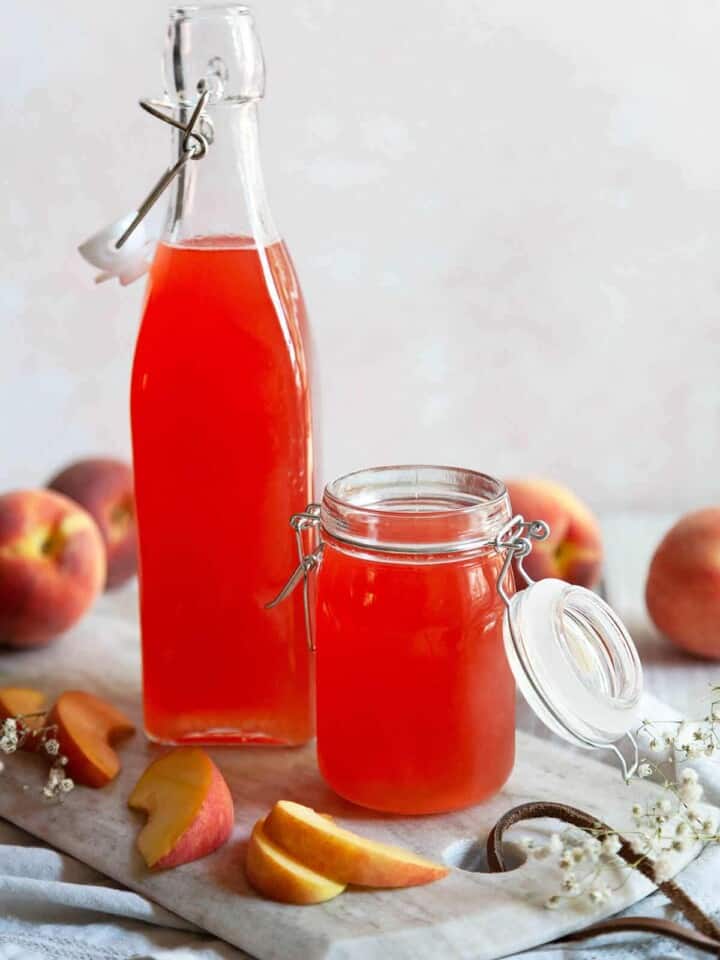
    a bottle and a jar of peach syrup

    How to make Peach Syrup โ€“ a beautiful, pink-hued Peach Simple Syrup recipe thatโ€™s bursting with the flavor of sweet, fresh peaches.

    This easy and simple recipe made with just 3 ingredients and several flavor variations adds tons of peach flavor to your favorite drinks, mocktails, ice tea, and lemonade. Itโ€™s perfect for drizzling over pancakes, waffles, French toast, and ice cream!

    a bottle and a jar of peach syrup
    [feast_advanced_jump_to]

    Jump to Section

    • ❤️ Why youโ€™ll LOVE this peach simple syrup recipe
    • 🍑 What to do with peach syrup
    • ❓What is Simple Syrup
    • 📝 Ingredients
    • 🥄 How to make
    • 🧺 How to Store
    • 👩🏻‍🍳 Variations:
    • Optional Add-ins
    • ❓FAQ
    • Try some of my other flavored simple syrups:
    • Recipe
    • How to Make Peach Syrup (Peach Simple Syrup)

    ❤️ Why youโ€™ll LOVE this peach simple syrup recipe

    • A taste of summer with sweet, peach flavor
    • Super easy to make
    • Made with only 3 simple ingredients
    • All natural โ€“ no chemicals and preservatives
    • A homemade alternative to Torani and Monin peach syrup

    🍑 What to do with peach syrup

    Peach syrup for drinks - You can use this peach simple syrup for tea โ€“ try it in my Peach Iced Tea for the perfect summer refresher! This peach flavor syrup is also perfect for peach lemonade, mocktails, peach soda, and peach Italian soda.

    Flavor breakfast โ€“ Use it as a fruity pancake syrup or drizzled over oatmeal, yogurt, waffles, French toast, or smoothies.

    Add peachy flavor to desserts - Try it on cheesecake, ice cream, cakes, cupcakes, or over some fresh Peach Pie.

    glasses of peach iced tea and peaches

    ❓What is Simple Syrup

    Simple syrup is a liquid sweetener made by dissolving sugar in water. (Traditional simple syrup is made from one part water to one part sugar.) This allows the sweetener to be dispersed evenly throughout the beverage at any temperature. This is particularly helpful when sweetening cold beverages. Ever tried stirring a spoonful of sugar into iced tea?

    📝 Ingredients

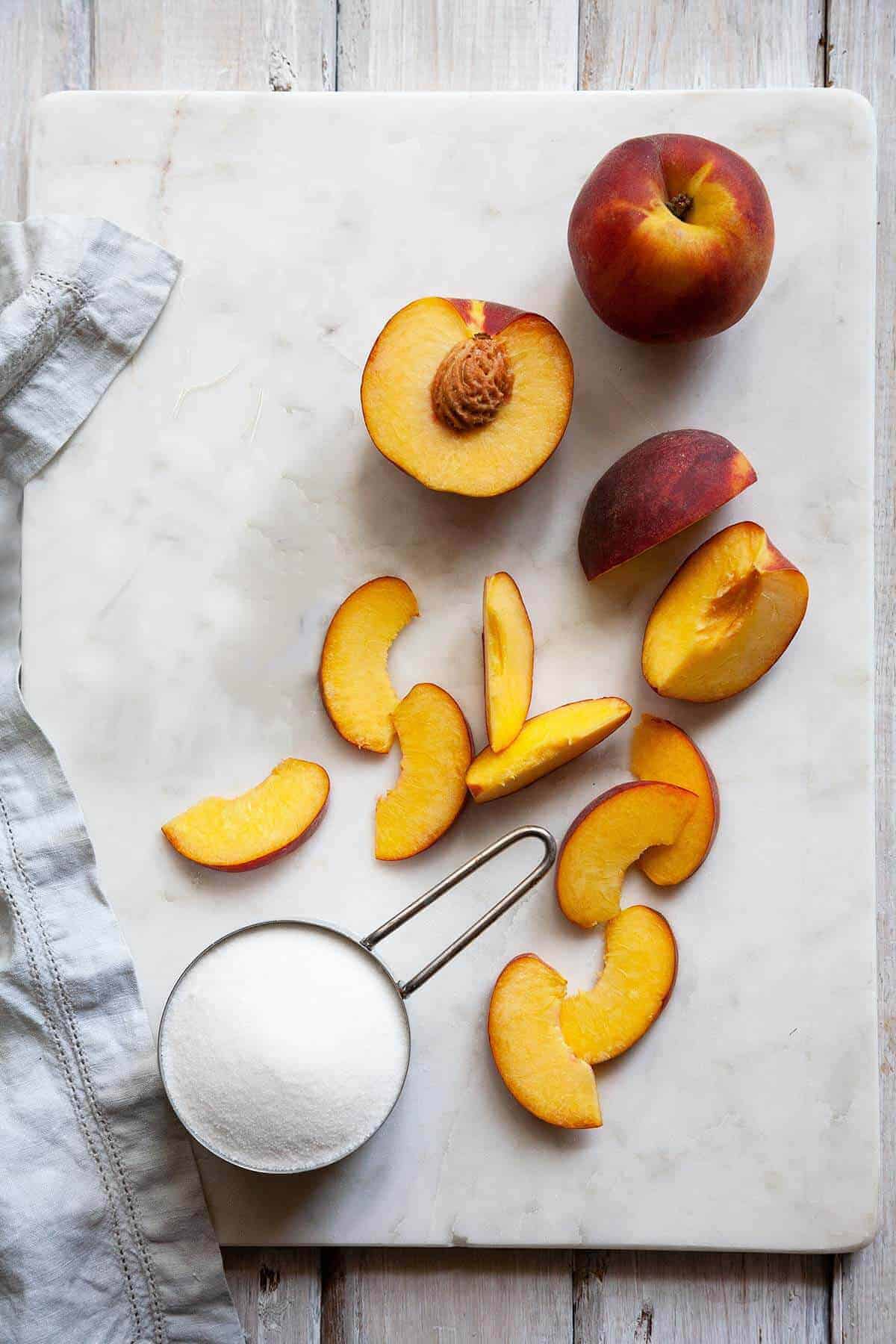
    • Ripe Peaches โ€“ fresh or frozen peaches are sliced then simmered in a simple syrup to make the most amazing peach flavored syrup with a bright pink hue. Be sure to use ripe peaches for the best flavor. And thereโ€™s no need to peel the peaches. Peaches with a deep red skin give the most vibrant color.
    • Sugar and waterโ€“ to make the simple syrup
    peach syrup ingredients: sliced peaches and sugar

    🥄 How to make

    1. To make homemade peach simple syrup, combine sugar, water, and sliced peaches in a medium saucepan. Bring to a boil, over medium-high heat then let simmer on low for 15-20 minutes, stir occasionally, pressing on the peaches with a wooden spoon to break them up.
    sliced peaches, sugar, and water cooking in a pan to make peach syrup
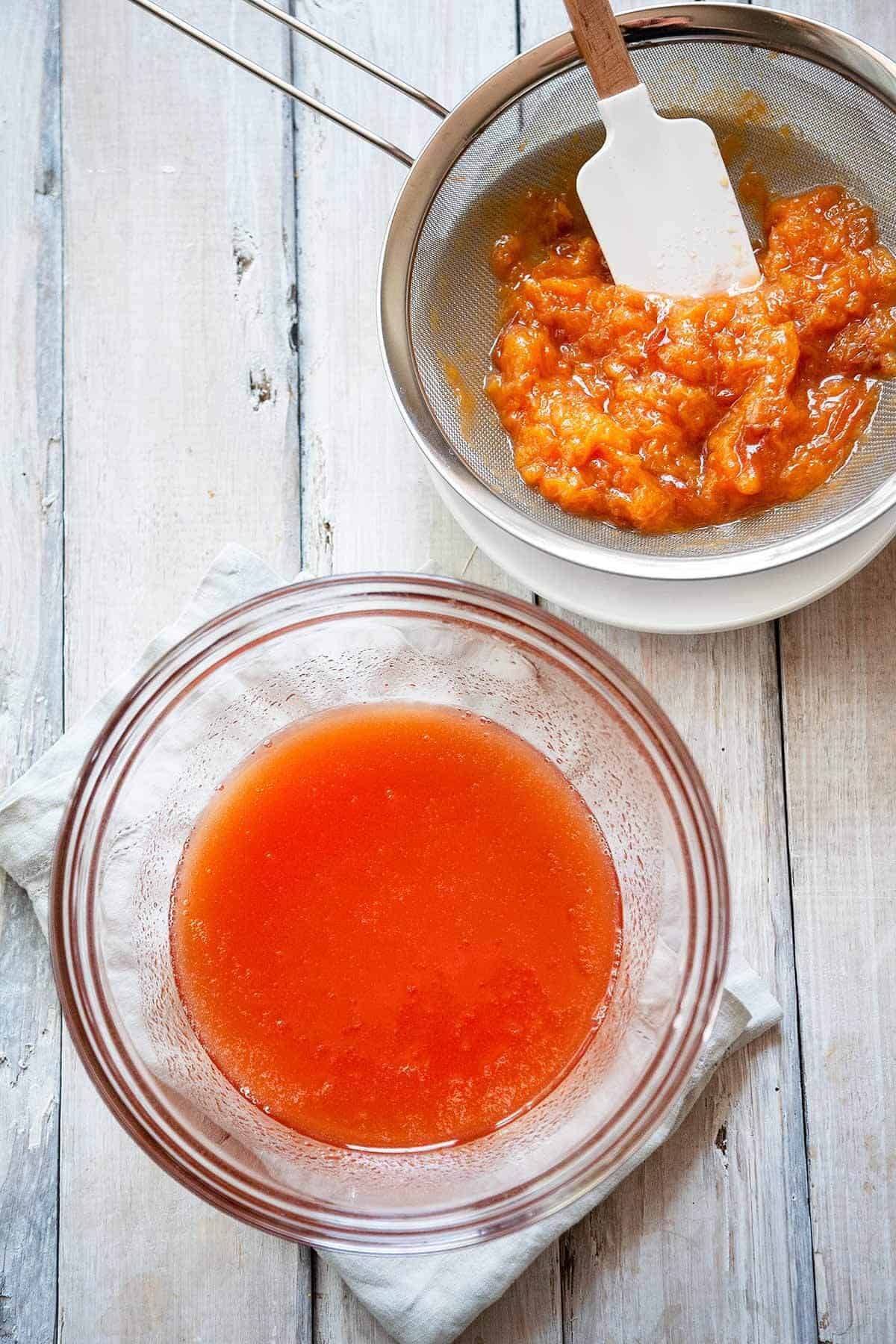
    • Let the peaches and syrup cool, then strain the peach mixture through a fine mesh strainer. Pressing too firmly on the cooked peaches will cause the syrup to be cloudy.
    a bowl of peach syrup and a srainer of leftover peach pulp
    • Pour the peach simple syrup into a bottle or jar and refrigerate until chilled.

    The leftover strained peaches can be reserved to serve over oatmeal, ice cream, or on top of a goat cheese crostini (my fave!)

    Optional: for a thicker, sauce-like syrup that isnโ€™t strained of pulp, you can keep the peaches in the syrup and use a blender or immersion blender to blend until smooth.

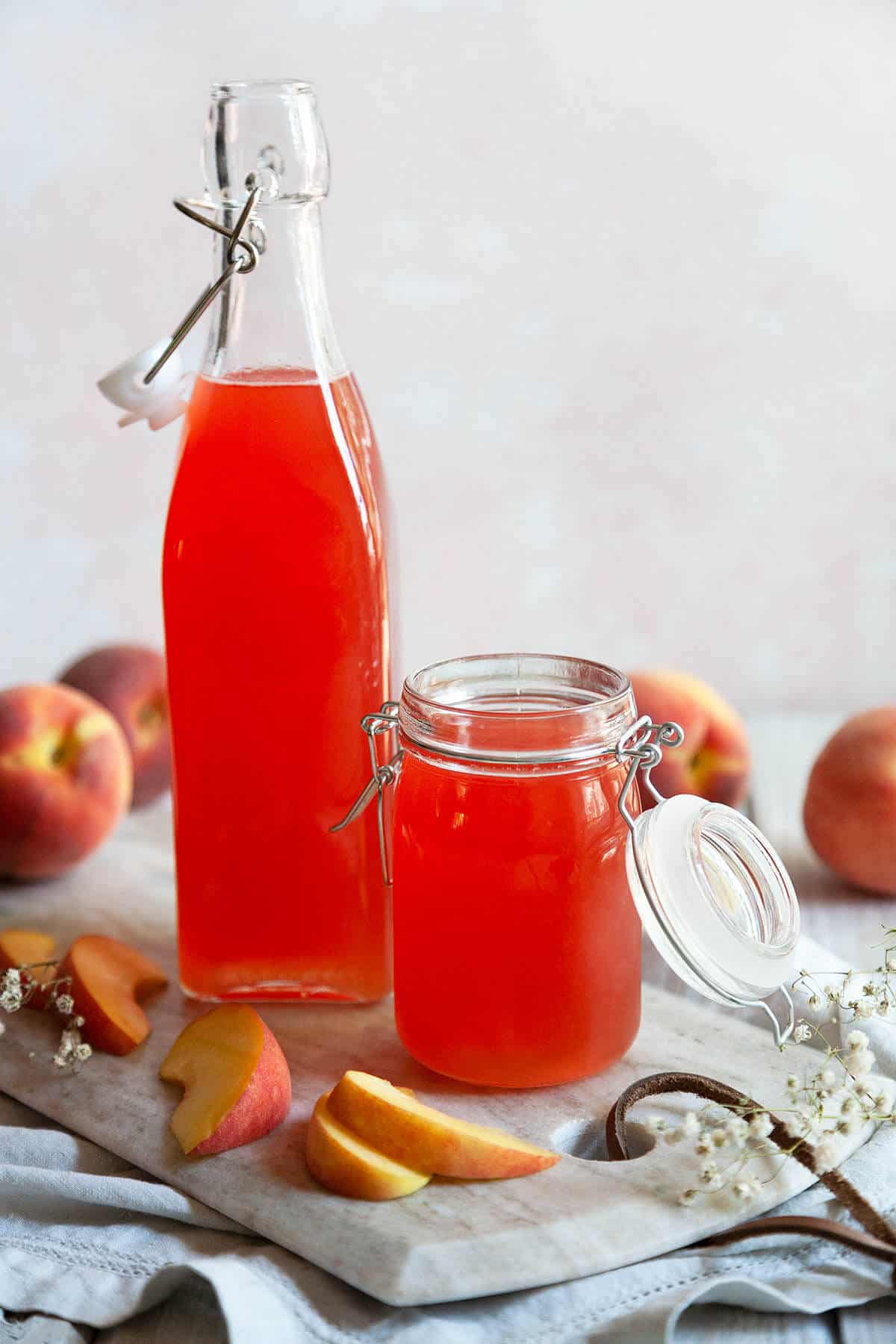
    a bottle and a jar of peach syrup

    🧺 How to Store

    Storing: Store in an airtight container, such as a glass bottle or a mason jar, in the refrigerator for up to 2 weeks.

    Freezing: Peach simple syrup can be frozen into ice cube trays for later use. Thaw in the fridge before using.

    👩🏻‍🍳 Variations:

    • Sugar free Peach Syrup (Skinny Syrup) โ€“ use a granulated sweetener of your choice in place of the sugar. My current faves are Allulose or Lakanto Monk Fruit Sweetener with Erythritol. Lankanto will crystallize as it cools, however Allulose stays smooth.
    • Olive Garden Raspberry Peach Bellini Syrup โ€“ To make Peach Raspberry syrup, use 2 peaches and ยฝ lb raspberries
    • Canned Peach Syrup (Tinned Peach Syrup) โ€“ to make peach syrup with canned peaches, prepare a simple syrup with 1 cup sugar and 1 cup water by bringing it to a boil and letting it simmer on low for 3 minutes. Let cool then add a 15oz can of peaches that have been pureed in a blender.
    • Ginger Peach Syrup โ€“ add 1-2 thin slices of fresh ginger to the peach syrup when simmering
    • Mango Peach Syrup โ€“ substitute the flesh of 1 mango for one of the peaches and simmer to make the syrup.
    • White Peach Syrup โ€“ use white peaches and add an optional teaspoon of vanilla.
    • Peach Apricot Syrup โ€“ substitute 3 apricots for one of the peaches when making the syrup.

    Optional Add-ins

    • Fresh herbs โ€“ add a handful of fresh mint, basil, or rosemary to the pan
    • Warm spices โ€“ a pinch of cinnamon and nutmeg
    • Lemon โ€“ lemon juice or lime juice added at the end lends a bit of tartness
    • Rosewater โ€“ a few drops at the end gives a beautiful floral fragrance that complements the peach
    • Lavender or rose petals โ€“ add a small amount of food grade petals during cooking

    ❓FAQ

    What is peach syrup for?

    Peach syrup is perfect for flavoring drinks such as iced tea, lemonade, sparkling water, cold brew, mocktails, and other beverages. Itโ€™s also great on pancakes, waffles, ice cream, oatmeal, cakes, and desserts.

    What is peach syrup made of?

    Itโ€™s made with peaches, sugar, and water. As the peaches simmer in the sugar syrup, the juices are released into the syrup giving it its peachy flavor and beautiful color.

    How can I thicken my peach syrup?

    If you want a thicker consistency, add a little cornstarch to the syrup and simmer until it becomes a thicker consistency. I find it easier to dissolve the cornstarch into a few tablespoons of the syrup first, then stirring that into the rest of the syrup. Iโ€™d start with abut ยผ to ยฝ teaspoon cornstarch.

    Can I use white peaches to make peach simple syrup?

    Absolutely! White peaches have a very delicate peach flavor and may not be as sweet, so adjust the sugar as necessary.

    Do I need to peel the peaches before simmering for syrup?

    Peeling the peaches is not necessary as the peaches will be strained after simmering.

    Is peach syrup good in coffee?

    Peach syrup adds a sweet, fruity, and slightly acidic flavor to coffee. Itโ€™s particularly good in iced lattes and cold brew.

    Try some of my other flavored simple syrups:

    • Strawberry Syrup
    • Pistachio Syrup
    • Rose Water Syrup

    Recipe

    a bottle and a jar of peach syrup

    How to Make Peach Syrup (Peach Simple Syrup)

    Kelly
    How to make Peach Syrup โ€“ a beautiful, pink-hued Peach Simple Syrup recipe thatโ€™s bursting with the flavor of sweet, fresh peaches.
    Print Recipe Pin Recipe
    Prep Time 5 minutes mins
    Cook Time 20 minutes mins
    Total Time 25 minutes mins
    Course Drinks
    Cuisine American
    Servings 32 servings
    Calories 29 kcal

    Ingredients
      

    • 1 cup sugar
    • 1 cup water
    • 2 - 3 ripe peaches thinly sliced

    Instructions
     

    • Combine the sugar, water, and sliced peaches in a saucepan. Bring to a boil, then let simmer on low for 15-20 minutes, occasionally pressing on the peaches with a wooden spoon to break them up.
    • Let the peaches and syrup cool, then strain through a fine mesh strainer. Pressing too firmly on the peaches will cause the syrup to be cloudy.
    • Pour the peach simple syrup into a bottle or jar and refrigerate until chilled (or up to a week).

    Notes

    • Storing: Store in an airtight container, such as a glass bottle or a mason jar, in the refrigerator for up to 2 weeks.
    • Freezing: Peach simple syrup can be frozen into ice cube trays for later use. Thaw in the fridge before using.

    Nutrition

    Serving: 1tablespoonCalories: 29kcalCarbohydrates: 7gProtein: 0.1gFat: 0.05gSaturated Fat: 0.002gPolyunsaturated Fat: 0.01gMonounsaturated Fat: 0.01gSodium: 2mgPotassium: 13mgFiber: 0.2gSugar: 7gVitamin A: 36IUVitamin C: 0.4mgCalcium: 1mgIron: 0.04mg
    Keyword peach syrup, simple syrup
    Tried this recipe?Let us know how it was!

    Rambutan vs Lychee: A Comprehensive Comparison Guide

    July 9, 2023 by Kelly 2 Comments

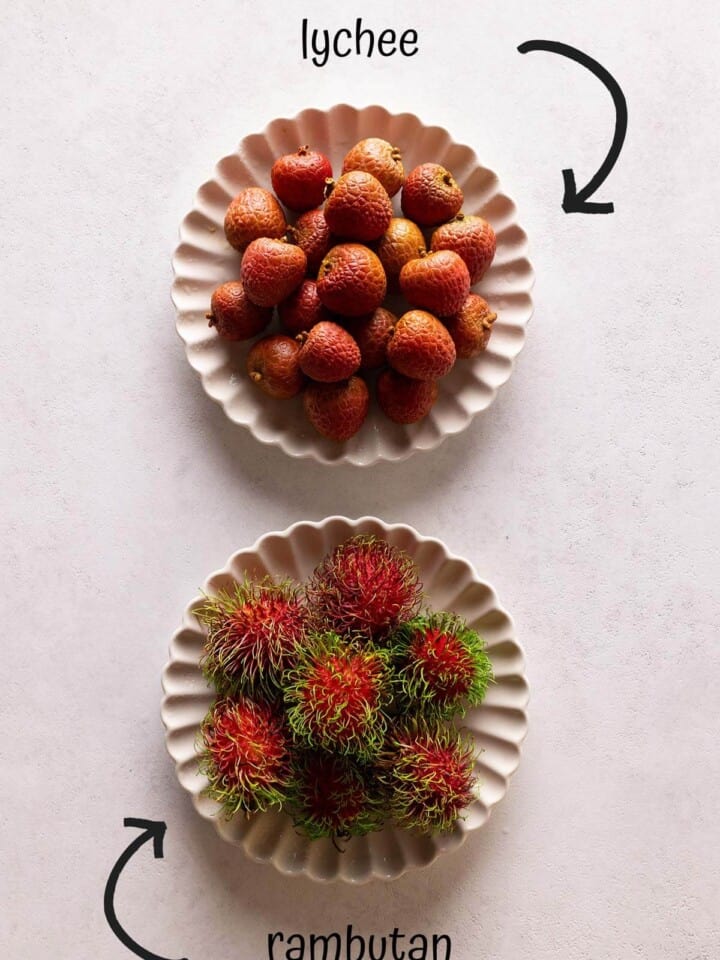
    a plate of rambutan and a plate of lychee

    Rambutan vs Lychee - Rambutan and lychee are two tropical fruits often compared for their similar appearances and taste profiles. In this article, weโ€™ll explore their similarities and differences, covering their appearance, taste, and culinary uses. 

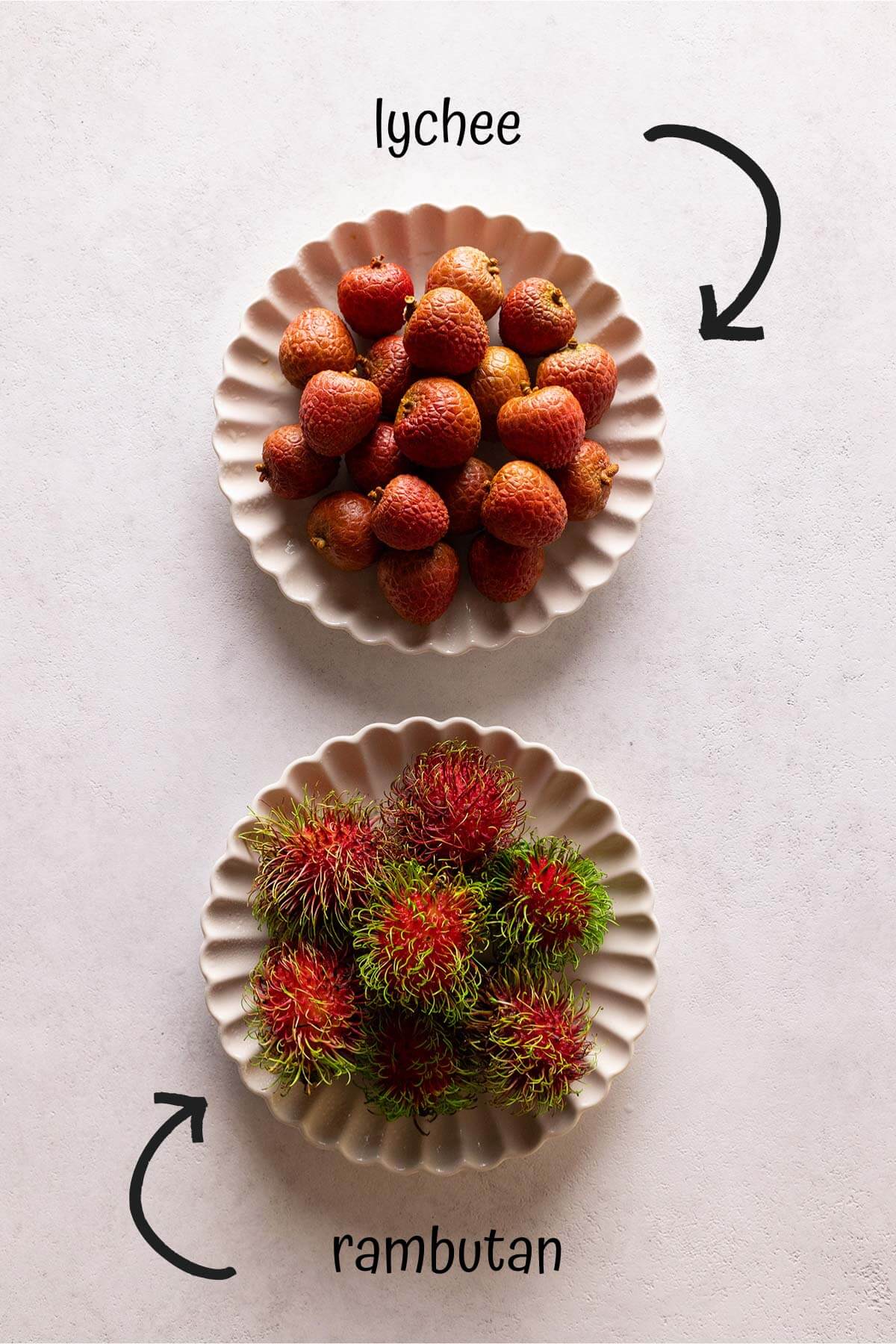
    a dish of lychee and a dish of rambutan

    Jump to Section

    • Rambutan vs Lychee: Whatโ€™s the difference?
    • Origins and Distribution
    • Physical Appearance
    • Taste and Flavor
    • Culinary Uses and Recipes
    • Propagation and Cultivation
    • Lychee vs Rambutan vs Longan: Another similar fruit
    • Frequently Asked Questions

    Rambutan vs Lychee: Whatโ€™s the difference?

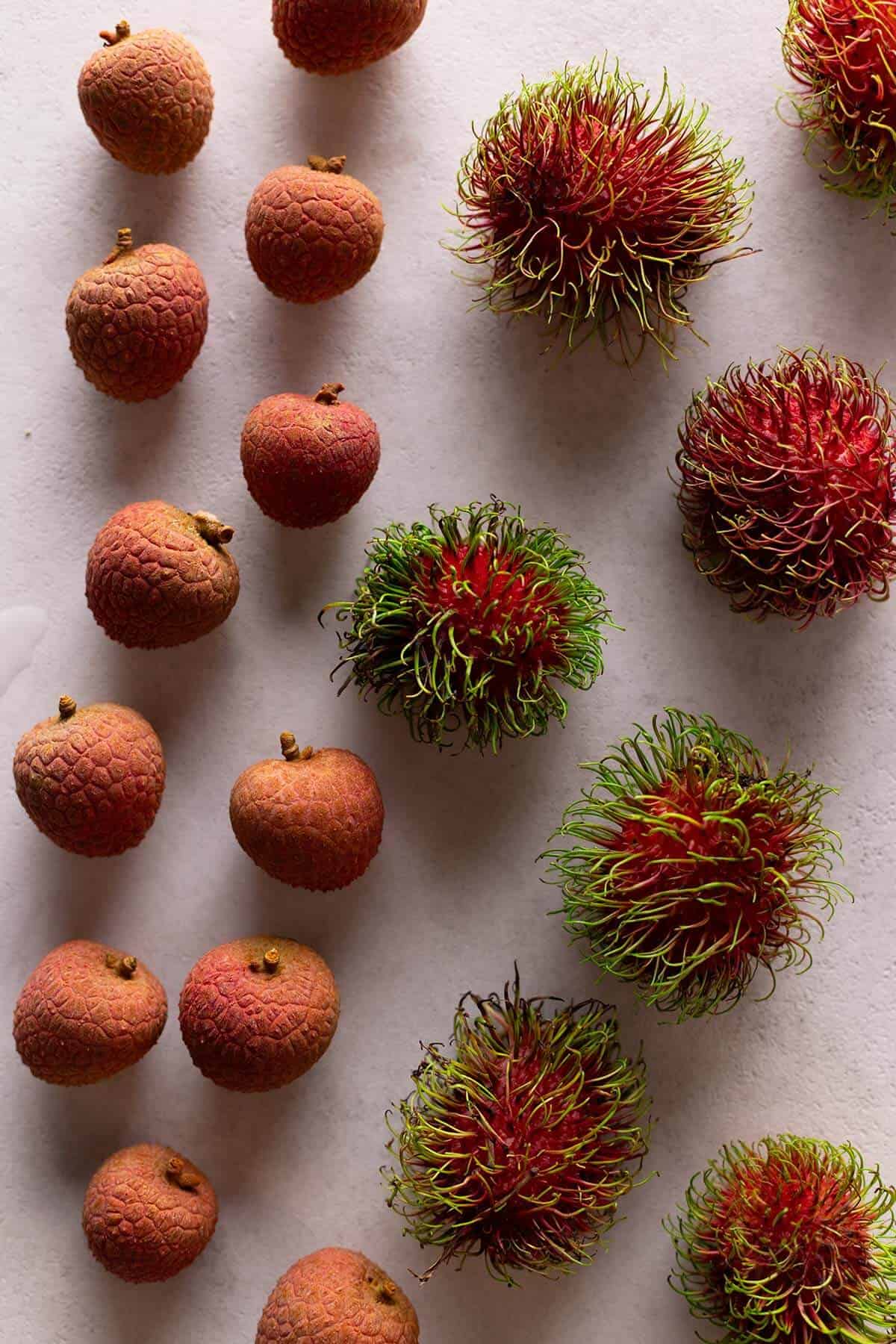
    While both fruits originate from Southeast Asia, they offer distinct characteristics that can make it easy to distinguish one from the other. The outer skins of these fruits are the most apparent difference, as rambutan has a red exterior with long, flexible hairs, while lychee features a pinkish-red shell with small, scaly bumps. Their sizes differ as well, with lychee being approximately half the size of the golf ball-sized rambutan.

    When it comes to taste, rambutan has a sweet and creamy flavor that sets it apart from lychee, which has a more sweet and tart taste, often likened to that of a red grape. Both fruits feature white, juicy flesh and are enjoyed for their refreshing qualities in hot tropical climates. 

    lychee and rambutan side by side

    Origins and Distribution

    Rambutan and lychee are both tropical fruits belonging to the Soapberry family (Sapindaceae). Both fruits have similar origins and distribution patterns in Asia.

    Rambutan, native to Southeast Asia, originates from countries such as Malaysia, Indonesia, and Thailand. In the 13th to 15th centuries, Arab traders introduced the fruit to East Africa, specifically to Zanzibar and Pemba. Later, in the 19th century, the Dutch brought rambutans from Indonesia to Suriname in South America. Today, rambutan is also cultivated in other regions, including India, Hawaii, and Australia.

    Lychee has its roots in Southern China and was first cultivated in the Guangdong and Fujian provinces. Eventually, the fruit reached Southeast Asia and India, and records of lychee cultivation date as far back as the Tang Dynasty. The lychee tree, also known as Litchi chinensis, thrives in subtropical regions extending beyond China and can now be found in countries like Thailand, Malaysia, and even Hawaii.

    Physical Appearance

    Although rambutan and lychee may look quite similar, there are differences in their external appearance.

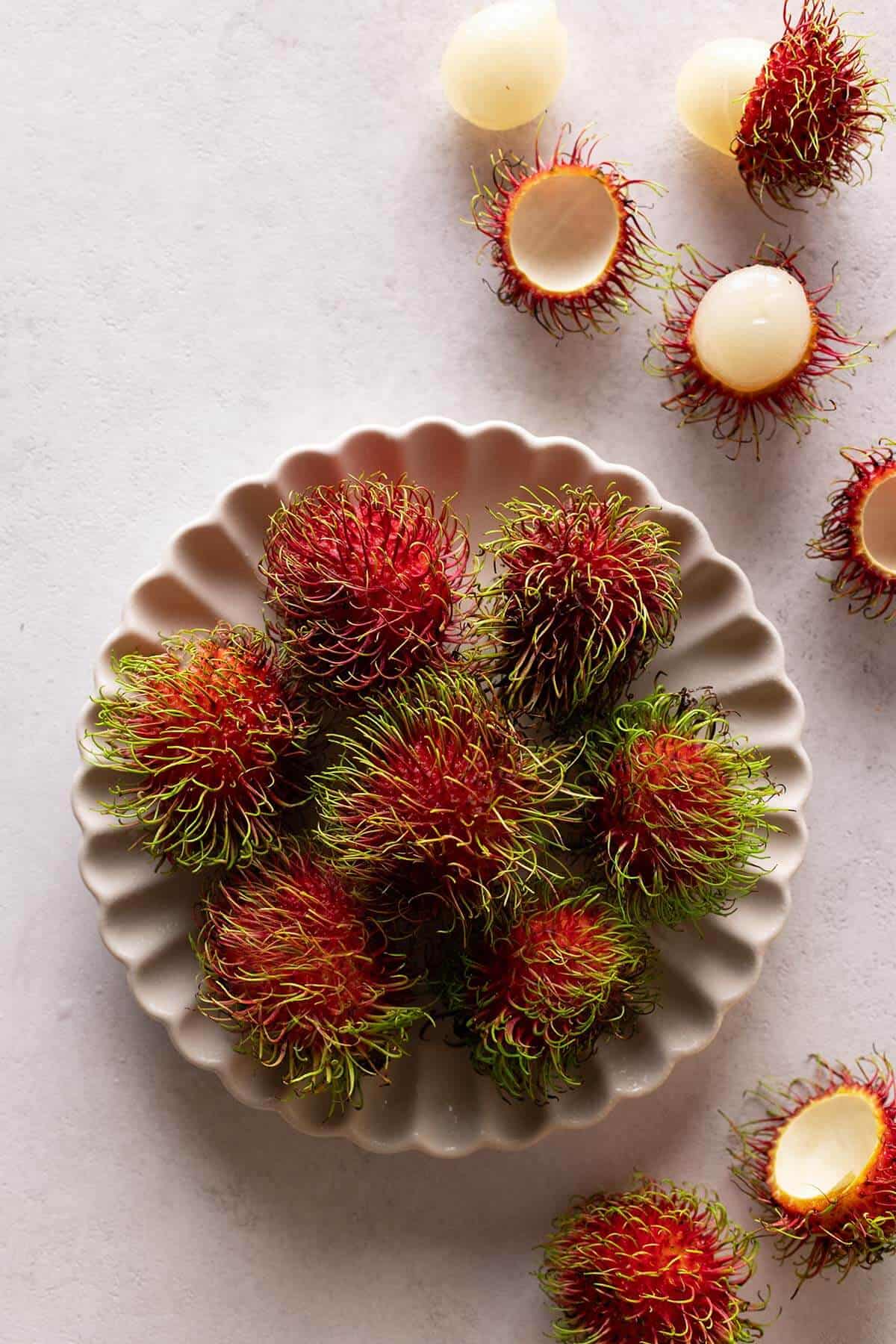
    The rambutan is a round fruit, approximately the size of a golf ball. Its most distinguishing feature is its red outer skin covered in hair-like prongs, which are colored somewhere between neon green and orange. These flexible, electric hairs give the rambutan a unique and eye-catching appearance.

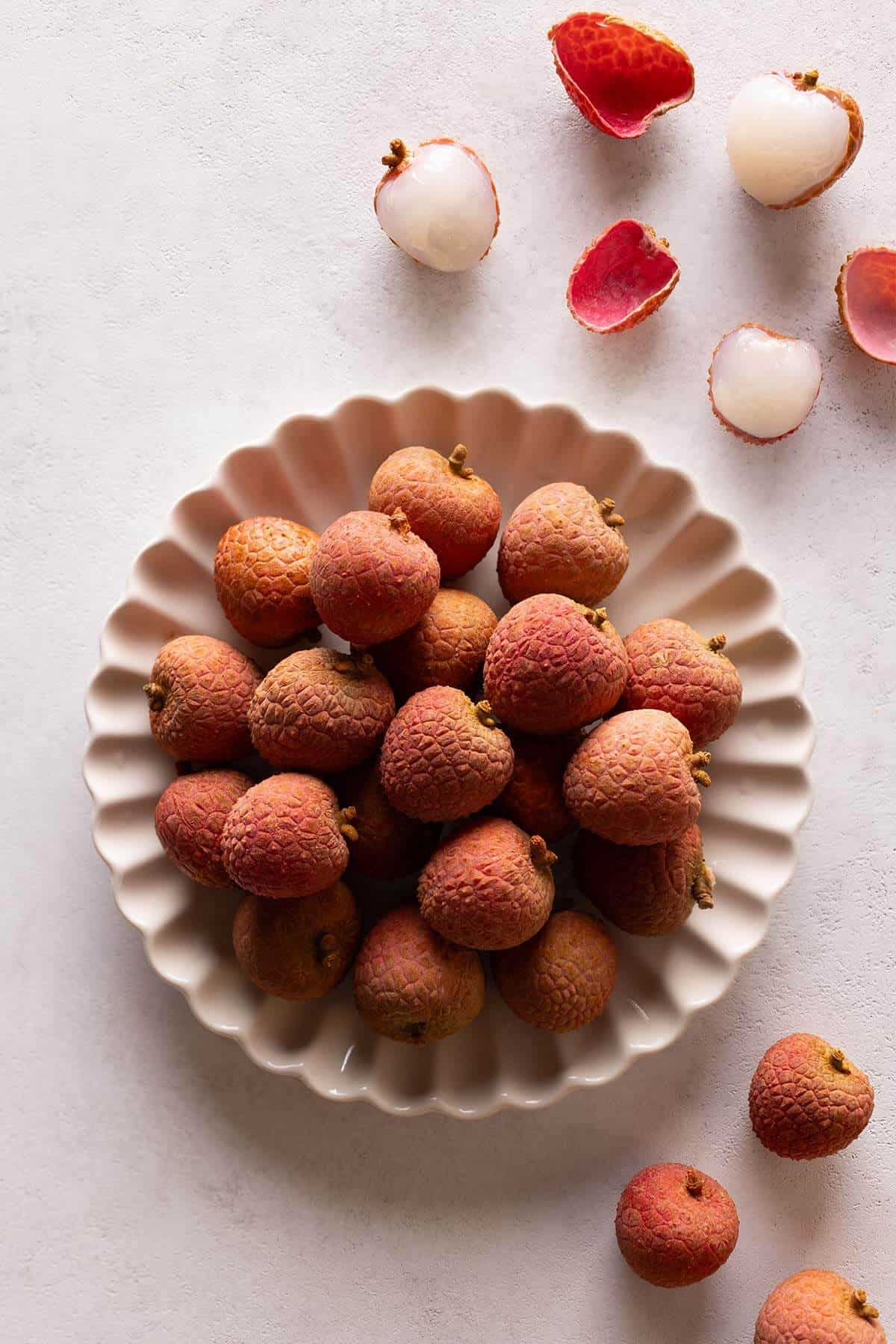
    On the other hand, the lychee is slightly smaller than the rambutan. Its outer layer is also red, but instead of hairy prongs, it has small scaly bumps. The lychee's external peel resembles the texture of a lizard's skin, which sets it apart from the rambutan.

    Both fruits have smooth, white, juicy flesh and an inner seed, however, the texture of the rambutanโ€™s flesh is firmer and slightly less juicy than the lychee.

    a dish of rambutan with some peeled rambutan beside the dish
    Rambutan

    Taste and Flavor

    Rambutan and lychee are both tropical fruits that offer unique flavors and textures. While each fruit has a distinct taste, they do share some similarities.

    Rambutan has a sweet and creamy taste, often compared to dragon fruit. Its flavor is rich, with a hint of floral notes that make it appealing to many palates. The white flesh of the rambutan is juicy and tender, contributing to its enjoyable eating experience. Learn more about rambutan and how to eat it here. https://foodtasia.com/rambutan/

    On the other hand, lychee offers a sweet and tart taste, with some people comparing the flavor to that of a red grape. Lychee is known for its bright and refreshing characteristics, which make it an ideal fruit to enjoy on a warm day. The crisp texture of lychee's white flesh is similar to watermelon, further enhancing its refreshing qualities.

    In terms of floral taste, lychee is often considered to have more pronounced floral notes than rambutan. These notes complement the fruit's overall sweetness and contribute to its unique flavor profile. While rambutan also contains floral undertones, they are more subtle and blend seamlessly with the fruit's creaminess. 

    Rambutan showcases a sweet and creamy flavor, while lychees offer a sweet and slightly sour taste, similar to red grapes. This contrast in flavors contributes to the unique experience each fruit provides, making them even more intriguing for those who enjoy trying new exotic produce.

    Culinary Uses and Recipes

    Rambutan and lychee are popular choices when it comes to adding an exotic touch to various dishes and beverages. Both fruits offer unique flavors and textures, making them suitable for a range of recipes in Asian cuisine and beyond.

    How to Eat and Prepare

    Rambutan's taste is often described as sweet and slightly tangy, with a texture similar to a grape. To enjoy rambutan, use a sharp knife to cut a small slit in the skin and gently peel it away, revealing the fruit's tender flesh. Lychee, on the other hand, has a delicately sweet flavor and also a texture that resembles a peeled grape. To prepare lychee, crack the shell open with your fingers or a knife and remove the outer layer to expose the fruit. Both fruits have an inedible seed in the center, so be sure to discard it before consuming.

    These exotic fruits can be incorporated into a variety of dishes, such as fruit salads, smoothies, and desserts. Rambutan and lychee are also common ingredients in Asian cuisine; they can be found in dishes like stir-fries, salads, and rice dishes.

    Drinks and beverages

    Rambutan and lychee are both versatile additions to beverages, juices, and other drinks. They can be used to balance the sweetness and acidity in beverages. The exotic flavors of these fruits make them ideal for creating unique beverages and mocktails, such as a lychee soda or a rambutan-infused mojito.  Their subtle, flexible taste that makes it relatively easy to mix them with other tropical fruits such as pear, banana, mango. 

    Lychee juice and syrups are also available for incorporating the fruit's flavor into drinks such as Boba teas, which often include lychee as one of the flavor options.

    Desserts and Sweets

    Rambutan and lychee have become popular ingredients in various desserts and sweets around the world. Their unique taste profiles add an exotic touch to classic dishes like fruit salads, cakes, and tarts. They are frequently used in creating frozen treats such as sorbet, ice cream, and frozen yogurt.

    Aside from their use in traditional desserts, the fruits can also be found in unconventional sweets like decorative dragon fruit bowls or boba tea with lychee-flavored bubbles. These exotic fruit desserts not only look visually appealing but also deliver a burst of flavor, making them an exciting choice for any sweet tooth.

    a dish of lychee with some peeled lychee beside the dish
    Lychee

    Propagation and Cultivation

    Tropical and Subtropical Climates

    Both rambutan and lychee trees thrive in tropical and subtropical regions. These fruit trees require a warm, humid climate to grow and produce fruit. They can be sensitive to temperature fluctuations, especially frost, which can damage or kill the trees.

    Lychee Tree

    Lychee trees are predominantly propagated by seeds or air layering. They prefer well-drained soils and perform best in slightly acidic soils with a pH of around 6 to 7. Lychees need a mildly cool, dry period during winter, followed by a warm and humid growing season to produce fruit. They are grown commercially in many subtropical areas such as Australia, Brazil, southeast China, India, Indonesia, Israel, Madagascar, Malaysia, Mauritius, Mynamar, Pakistan, South Africa, Taiwan, Thailand, Vietnam, parts of Europe, and in North America in Mexico and the US (Florida, Hawaii, and California) 

    Rambutan Tree

    Rambutan trees, on the other hand, can be propagated through seedling and vegetative propagation. They grow well on hilly terrain and prefer deep, clay loam or rich sandy loam soil that contains rich organic matter and well-draining capabilities. 

    Rambutan trees require a tropical climate without a pronounced dry season and plenty of rainfall to grow optimally. The fruit originated in the Malaysianโˆ’Indonesian region and shares a close relationship with lychee and longan in the Sapindaceae family. It is also currently grown in Central America.

    Lychee vs Rambutan vs Longan: Another similar fruit

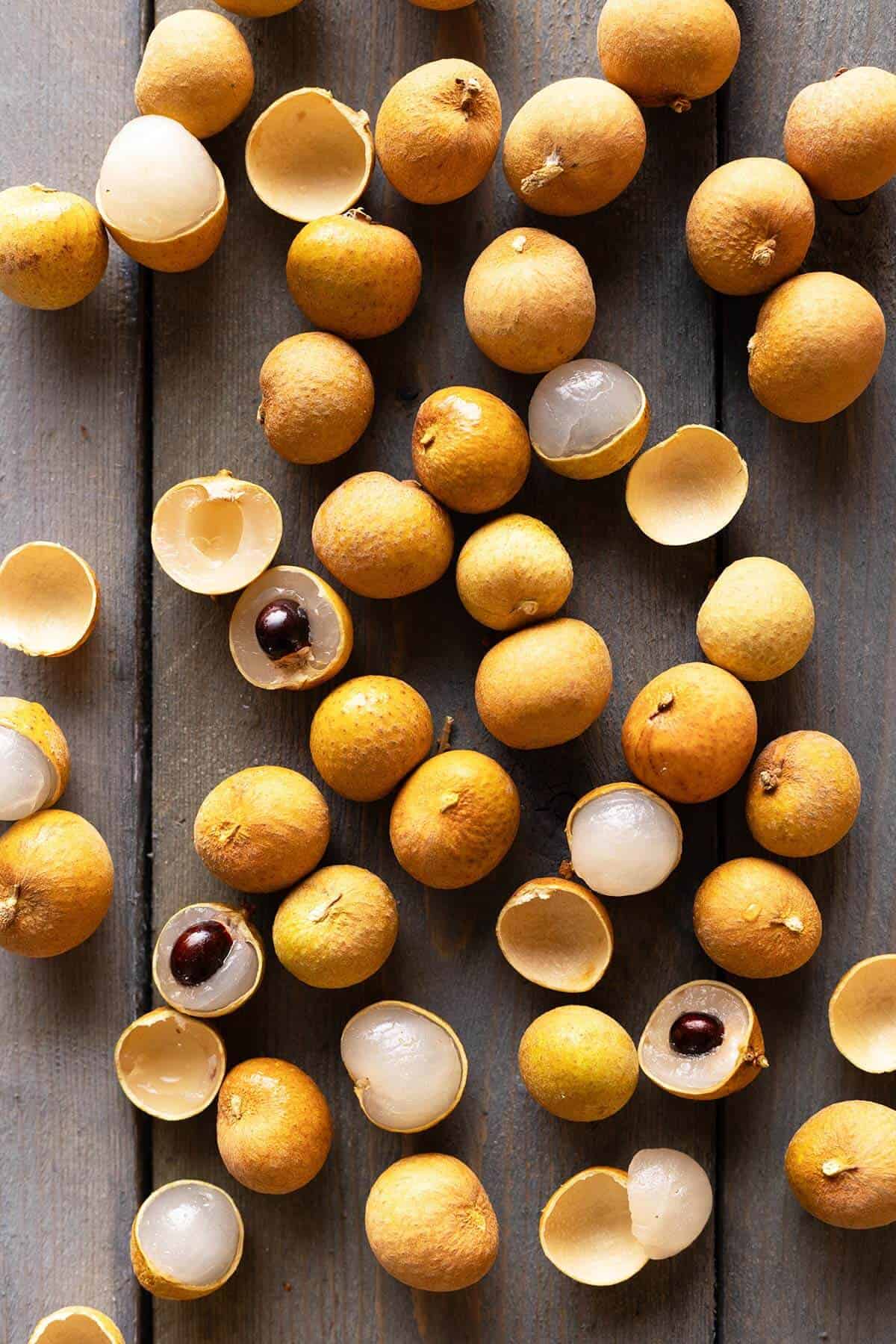
    Longan is another exotic fruit like lychee and rambutan. Longan is native to Southeast Asia, particularly prevalent in countries such as Vietnam, Thailand, and China. This small, round fruit is related to the lychee and is known for its juicy, white flesh and distinctive yellow-brown skin. The longan, often referred to as the "dragon's eye" due to its appearance, has been consumed and appreciated for centuries in Asia. Learn more about Longan and how to eat it here.

    longan fruit on a board showing the interior and exterior

    Frequently Asked Questions

    How do you pronounce lychee?

    In American English, it is most common to hear lychee pronounced asย Lee-chee. In British English,ย Lie-chee, is the most common way that lychee is pronounced. The third pronunciation of lychee,ย Lit-chee, is less common than the previous two and derives from the Latin name for the species,ย Litchi Chinensis.

    How do rambutan and lychee differ in taste?

    Rambutan and lychee are both tropical fruits, but they have some differences in their taste profiles. Rambutan is known for its sweet and creamy taste, while lychee offers a more sweet and tart flavor, similar to a red grape. The flesh of both fruits is white, but their flavors are distinct enough for most individuals to tell them apart when sampled side by side.

    Which one is sweeter, rambutan or lychee?

    While both rambutan and lychee are sweet in taste, it is generally accepted that rambutan has a slightly sweeter and creamier flavor compared to lychee. Lychee's sweetness is balanced by its tartness, giving it a different overall taste experience than rambutan. However, individual preferences may vary, and some people might find lychee's tartness more appealing than the creaminess of rambutan.

    How does the texture of rambutan differ from that of lychee?

    The texture of rambutan and lychee is somewhat similar, as both fruits have soft and juicy white flesh inside. However, there are some differences in their textures. Rambutan flesh tends to be slightly firmer and creamier, while lychee is more fibrous and rubbery. The exterior of the fruits is also quite different; rambutan has a red, hair-like spiny skin, while lychee features a lighter red or pink shell with small scaly bumps.

    How do the culinary uses of rambutan and lychee differ?

    Rambutan and lychee are both used in a wide variety of culinary applications due to their unique flavors and textures. They can be eaten fresh, added to fruit salads, or combined with other ingredients to create flavorful desserts and beverages.

    Rambutan is often paired with creamy and sweet ingredients, such as in ice cream, smoothies, and creamy desserts. Its sweet and creamy taste complements the richness of these dishes nicely. Lychee, on the other hand, has a sweet and tart taste similar to a red grape, making it more suited for use in mocktails, sorbets, and light, refreshing desserts.

    While both fruits can be used in similar ways, their distinct flavors and textures lend themselves to different types of dishes, allowing for versatility and creativity in the kitchen.

    What is Longan and How to Eat It

    July 9, 2023 by Kelly Leave a Comment

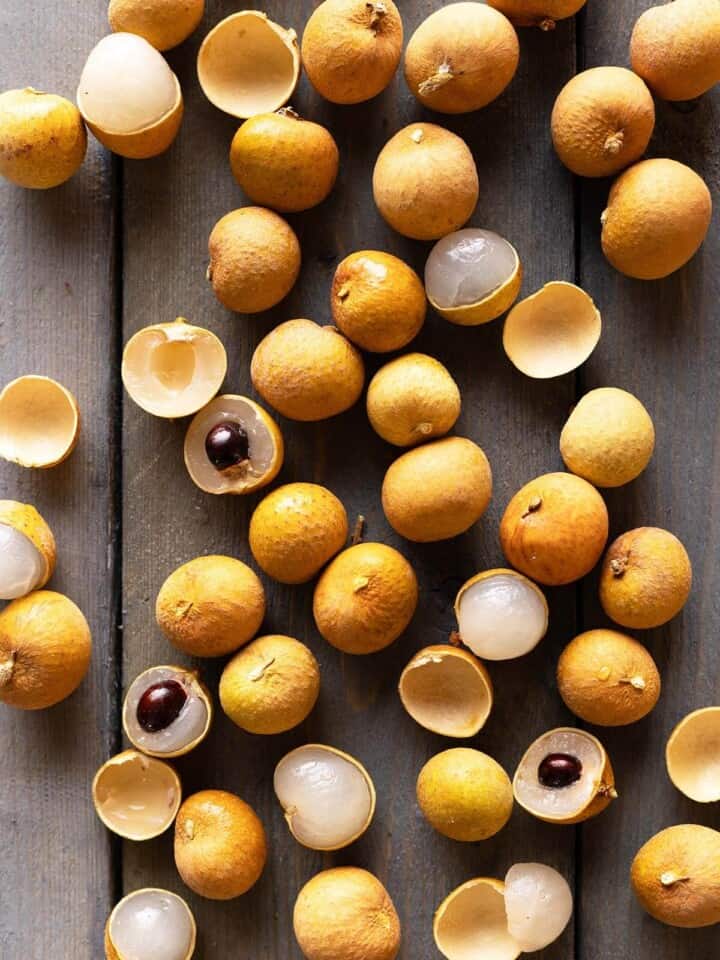
    longan fruit on a board showing the interior and exterior

    Longan is a tropical fruit native to Southeast Asia, particularly prevalent in countries such as Vietnam, Thailand, and China. This small, round fruit is related to the lychee and is known for its juicy, white flesh and distinctive yellow-brown skin. The longan, often referred to as the "dragon's eye" due to its appearance, has been consumed and appreciated for centuries in Asia. Apart from its unique taste, this exotic fruit is packed with health benefits, including its high antioxidant and vitamin C levels.

    longan fruit on a board showing the interior and exterior

    To enjoy longan, the fruit should be first peeled to expose the tender flesh, which can then be eaten raw or used in various culinary applications. Before consuming, be sure to remove the dark, inedible seed at the center of the fruit. Longan can be incorporated into a range of dishes, such as sorbets, jellies, salads, smoothies, desserts, and puddings. For a delightful, refreshing treat on a hot day, consider freezing the whole fruit, shell and all, to add a cool element to your longan consumption experience.

    Jump to Section

    • What Is Longan
    • How to Eat Longan
    • Closely Related Fruits
    • What does it taste like?
    • How to Select and Store
    • Culinary Uses of Longan โ€“ How to Eat Longan Fruit
    • Dried Longan
    • Canned Longan
    • Health Benefits
    • Recipe Ideas
    • Nutrients
    • Traditional Chinese Medicine Uses
    • Frequently Asked Questions

    What Is Longan

    Longan, also known as dragon eye fruit, is a tropical fruit native to Asia, specifically to countries like China, Southeast Asia, and India. The scientific name for this delectable fruit is Dimocarpus longan, and it belongs to the soapberry (Sapindaceae) family. This family comprises other well-known fruits such as lychee, rambutan, and guarana.

    The longan tree is a subtropical evergreen that thrives in tropical and subtropical climates worldwide, particularly in Asian countries. It typically bears fruit in clusters, with each cluster containing several longans. The fruit itself is round to oval in shape, about 22-36 mm in diameter, with a thin, brown, and leathery skin. When the skin is removed, a translucent white flesh is revealed, which is similar in texture to lychee. At the center of the fruit is a shiny black seed, which resembles a dragon's eye, giving the fruit its popular nickname.

    The longan fruit has a unique taste profile and is often described as being sweet and juicy with a hint of muskiness. Despite its rich flavor, it is low in calories and boasts a range of nutritional benefits, such as vitamins, minerals, and antioxidants. Longan is widely available in Asian markets, making it an accessible and delicious addition to many dishes.

    How to Eat Longan

    In order to enjoy the longan fruit, it is best to consume it fresh and raw. Simply peel off the outer skin and remove the black seed within. Longan can also be used in various recipes, such as fruit salads, smoothies, and desserts, or even combined with savory dishes to add an exotic twist. When selecting longan, look for fruits that have a firm yet slightly tender skin, as well as a pleasant fragrance, both indicators of a ripe and flavorful fruit.

    Closely Related Fruits

    Longan fruit is a tropical and subtropical fruit that belongs to the soapberry (Sapindaceae) family. Within this family, there are several fruits that are closely related to longan, fruits like lychee, rambutan, and guarana. These fruits share similarities in their appearance, texture, and taste, making them popular choices in various regions around the world.

    Lychee is another tropical fruit native to China and Southeast Asia, and is quite similar to longan in taste and appearance. The outer shell of the lychee fruit is red and slightly spikey, while the flesh inside is translucent and juicy, with a single large seed. The taste of lychee is sweet, fragrant, and slightly tart, making it a popular choice for a refreshing snack or ingredient in various recipes.

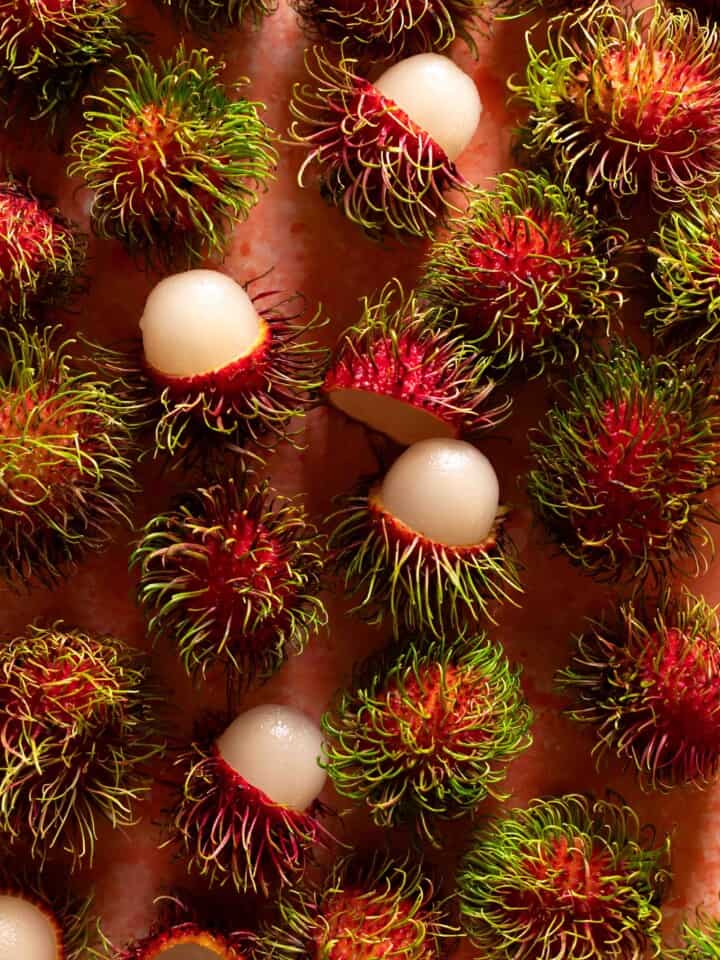
    Rambutan is yet another tropical fruit belonging to the same family, and it is native to Southeast Asia. Rambutan fruit has a unique appearance, with a bright red or yellow skin covered in hair-like spikes. The inner flesh is white and translucent, encasing a single large seed, similar to longan and lychee. Rambutan has a sweet and mildly tangy taste, earning its place as a beloved addition to fruit salads and desserts. Read more about Rambutan and how to eat it here. 

    These related fruits all share a translucent, juicy flesh with a single large seed at the center, and their flavors generally range from sweet to slightly tart. While longan, lychee, and rambutan may appear unique and exotic, they are all part of the broad and diverse soapberry plant family, which includes numerous other interesting fruits and plants. Consuming these fruits can provide various health benefits due to their rich nutritional content, making them a delicious and healthy choice for people around the world.

    What does it taste like?

    Longan fruit is a sweet and juicy tropical fruit native to Southeast Asia. Its unique taste is what sets it apart from other fruits. When it comes to describing the taste of longan, there are multiple tantalizing components that should be mentioned.

    First and foremost, longan fruit is characterized by its sweetness, often compared to that of grapes or lychee fruit. As you bite into the tender, flesh of the fruit, you'll be greeted with a delightful burst of sweetness that lingers on your taste buds. This sweet taste is accompanied by an underlying musk, which adds a depth and dimension to the overall flavor profile.

    Besides its sweetness, the longan fruit also has a juicy consistency. This makes it a refreshing choice for a snack, especially on a hot summer day. The fruit's texture is often described as being similar to that of grapes, with a thin and slightly leathery outer skin that must be removed before consuming the succulent and translucent flesh.

    However, not all longan fruits are exclusively sweet. Some may have a slightly tart taste, balancing out the sweetness of the fruit. This tartness gives the longan a more well-rounded flavor, offering a distinctive and enjoyable taste experience for those who try it.

    The taste of longan fruit can be described as a harmonious blend of sweet, musk, and tart flavors, housed within a juicy, grape-like texture. This unique flavor profile makes it an enjoyable tropical treat that is both refreshing and satisfying.

    How to Select and Store

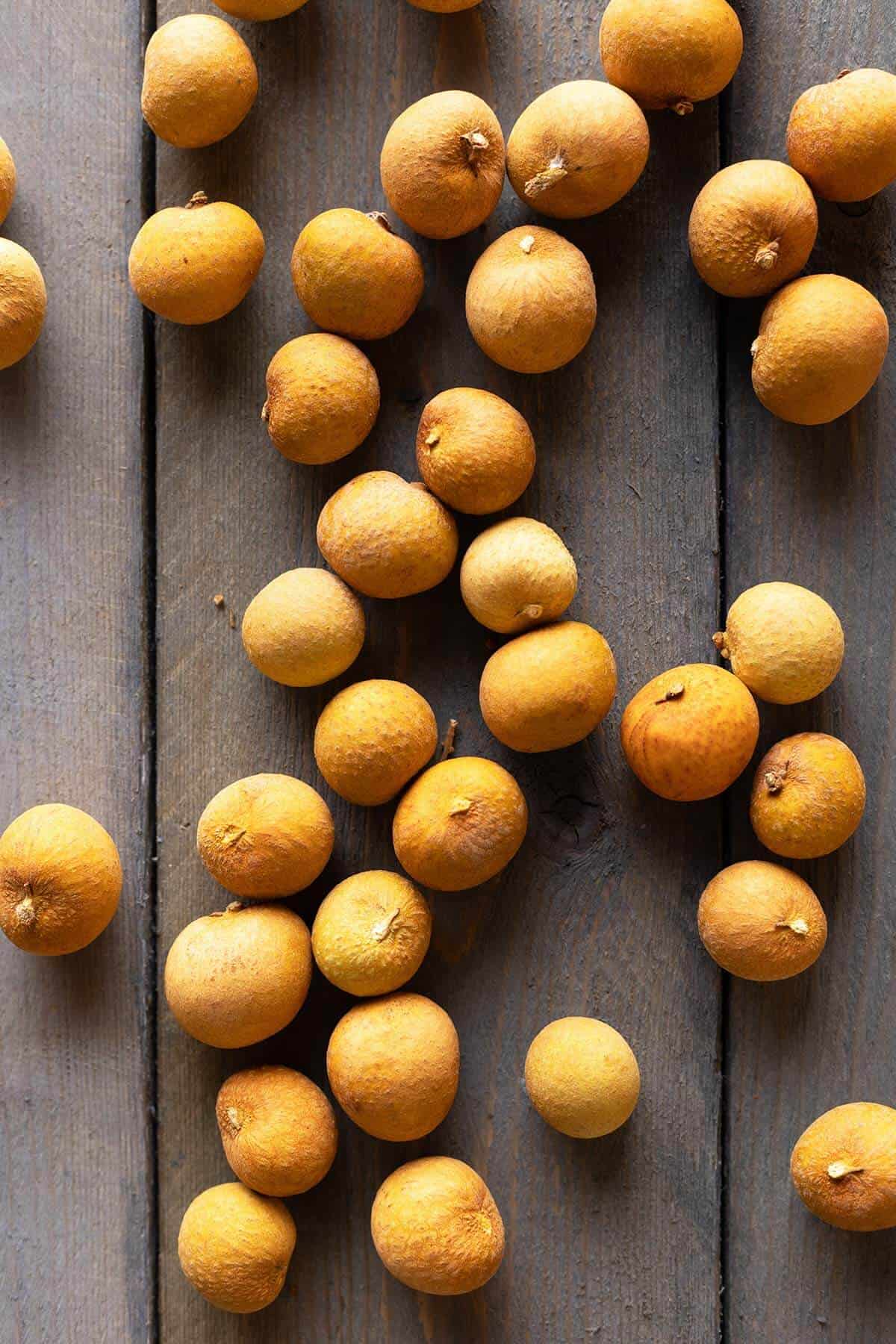
    When choosing fresh longan fruit, look for ones with a smooth and firm yellow-brown skin. The skin should be free from blemishes, dark spots, or signs of mold. The fruit should feel somewhat heavy for its size, indicating that it is full of juicy goodness.

    To store fresh longan, it is best to place the fruit in a breathable bag, such as a paper or mesh bag. Store the bag in the refrigerator, where the longan can last for about a week. It is essential to keep the longan fruit away from moisture, as this will lead to spoilage.

    If you have an abundance of longan and want to preserve it for a longer period, consider freezing the fruit. To do this, first remove the skin and the seeds. Then, place the longan fruit on a tray lined with parchment paper and freeze them until they are solid. Once the fruit is fully frozen, transfer them to an airtight container or a ziplock bag, and store it in the freezer. Frozen longan can last for several months, retaining its quality and flavor.

    When you are ready to enjoy the longan fruit, you can simply take them out of the refrigerator or freezer, let them thaw if necessary, and savor the juicy and delicious taste. 

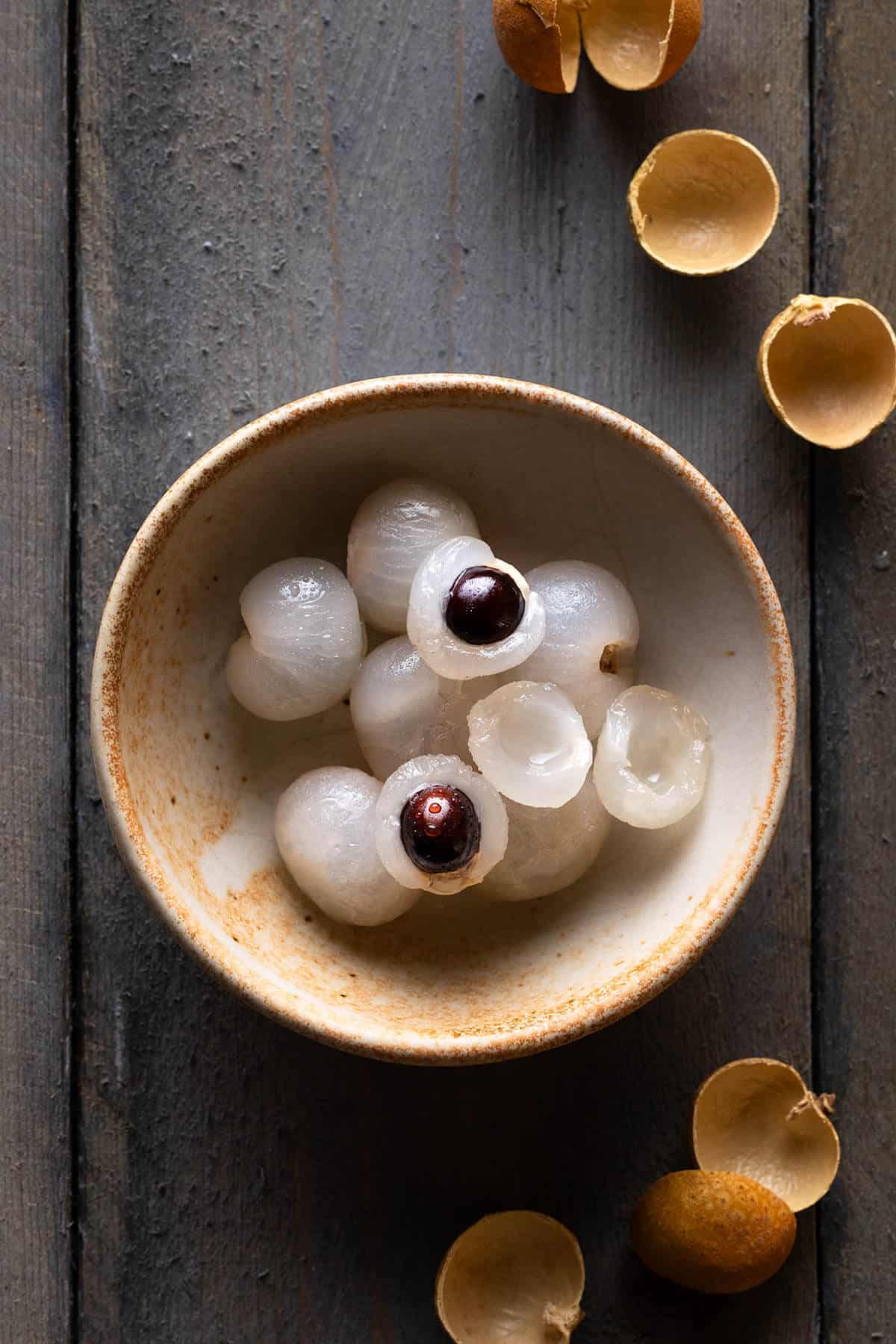
    a bowl of peeled and cut longan fruit

    Culinary Uses of Longan โ€“ How to Eat Longan Fruit

    Longan, a juicy fruit native to Southeast Asia, has gained popularity in various culinary applications. With its sweet and aromatic taste, it complements a wide range of dishes and preparation methods. One common way to enjoy this fruit is by incorporating it into salads and fruit salads, where its flavors can blend with other ingredients harmoniously.

    In liquid form, longan can be used as an addition to smoothies or mixed into cocktails for a tropical twist. The fruit's natural sweetness allows it to be incorporated into jams and jellies without the need for excessive added sugar. Longan's versatile flavor profile makes it suitable for desserts like ice cream and sorbet, adding a touch of exoticism to these sweet treats.

    Longan is also prominent in Asian cuisine, notably in Cantonese dishes, where it can be found in soups and meat recipes. The fruit's unique taste contributes to the depth of flavor in these dishes and is highly regarded by chefs and home cooks alike.

    For a soothing experience, longan can be steeped as tea. Such tea not only offers a delicate, fruity flavor but also has a calming effect, thanks to the soothing properties of the fruit. The inclusion of dried longan in tea blends has been a popular practice for centuries and remains a staple in various Asian cultures.

    Dried Longan

    Dried longan fruit is a popular snack and ingredient in various dishes and beverages, particularly in Southeast Asia and China. When dried, longan fruit can be compared to dates due to their similar texture, sweetness, and usage in recipes.

    To rehydrate dried longan, simply soak the fruit in warm water for a few minutes until it becomes tender. Rehydrated dried longan can be enjoyed on its own as a tasty treat or used in numerous culinary applications. For example, it can be added to desserts, rice dishes, or salads for a unique flavor profile.

    In traditional Chinese medicine, dried longan fruit is often used as a restorative ingredient, promoting relaxation and rejuvenation. One common way to consume dried longan in this context is to use it as a flavoring in tea. Simply add a few pieces of rehydrated longan to a cup of hot water and let it steep for several minutes to release its distinctive and pleasant taste.

    Apart from being a versatile ingredient, dried longan fruit is packed with nutritional goodness. It contains essential vitamins, minerals, and antioxidants that contribute to overall health. Consumed in moderation, dried longan can be a nutritious and enjoyable addition to a balanced diet.

    Canned Longan

    Longan, a tropical fruit native to Southeast Asia, is known for its unique taste and variety of health benefits. It might not be readily available as fresh fruit in some regions, but canned longan can be easily found in supermarket shelves or online stores. This convenient packaging allows longan enthusiasts to enjoy the fruit all-year-round.

    Canned longan maintains much of the fruit's original taste, containing a blend of sweetness and tartness wrapped in its translucent, juicy flesh. Moreover, the canning process preserves the fruit's nutrients, making it an excellent choice for a quick and nutritious snack. Not to mention, it eliminates the need to peel the fruit, making it simpler and more convenient to consume.
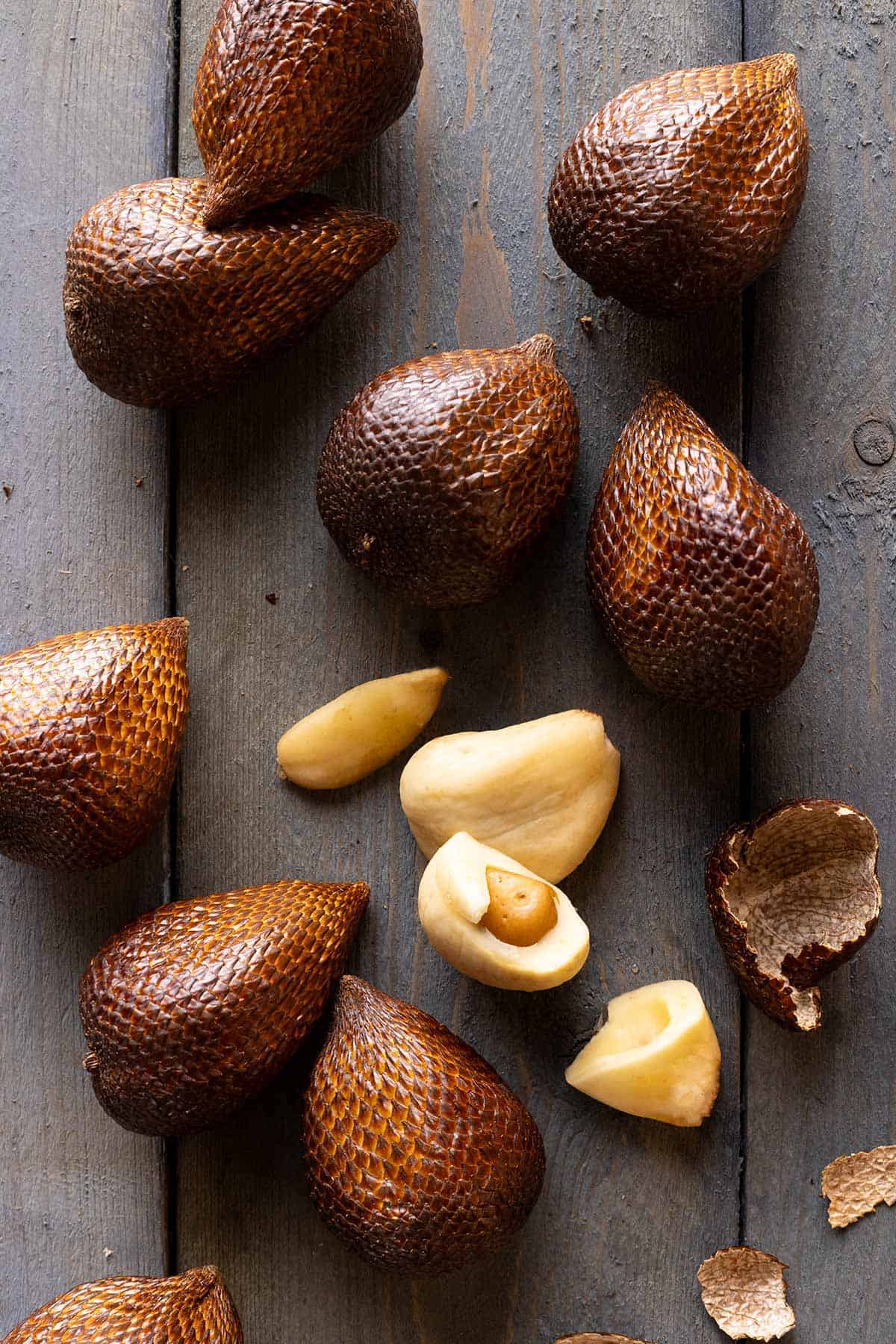
    To enjoy canned longan, remove the fruit from the can and ensure that any residual syrup or liquid is drained. This fruit can be consumed on its own, or incorporated into various recipes like fruit salads, smoothies, or desserts. With canned longan in your pantry, you'll have a versatile ingredient to enhance your dishes while reaping the health benefits this tropical fruit has to offer.

    Health Benefits

    Longan is a tropical fruit that offers numerous health benefits when consumed as part of a balanced diet. Rich in vitamin C, this exotic fruit not only boosts the immune system but also acts as a powerful antioxidant. The presence of antioxidants helps protect the body from free radicals and oxidative stress, which may contribute to the aging process and the development of certain diseases.

    This fruit is also a good source of minerals such as iron and potassium. Iron is essential for maintaining healthy red blood cells and preventing anemia, while potassium helps regulate blood pressure and support heart health. Additionally, longan contains several essential vitamins that contribute to overall well-being.

    Recipe Ideas

    Longan Banana Smoothie - blend 5 peeled and deseeded longan with 1 banana and 1 cup coconut milk

    Fresh Longan Juice - juice longan berries in a juicer or by puree in a blender then strain through a strainer or nut milk bag

    Longan Syrup - Combine 1 cup sugar and 1 cup water in a saucepan and bring to a boil. Turn off heat and add 10 peeled, deseeded, and sliced longans. Let sit for 1 hour. Strain through a fine mesh strainer.

    Nutrients

    Longan is a nutrient-rich fruit with several health benefits mainly due to its vitamin and mineral content.

    One of the most abundant nutrients in longan is vitamin C. This essential vitamin is known for its immune-boosting properties and acts as an antioxidant, helping the body fight off harmful free radicals. Longan is also a good source of B vitamins, including folic acid, which is essential for cell growth and metabolism.

    In terms of minerals, longan contains significant amounts of potassium, which is crucial for maintaining healthy nerve and muscle function. The fruit is also a source of magnesium, phosphorus, and manganese, which contribute to bone health, energy production, and proper cell function. While longan contains lower levels of calcium and iron compared to its other nutrients, they still contribute to the fruit's overall nutritional value.

    According to the USDA, a 100-gram serving of longan provides the following nutrients:

    • Calories: 60 kcal
    • Carbohydrates: 15 g
    • Protein: 1 g
    • Fat: 0 g
    • Fiber: 1 g
    • Vitamin C: 84% of the Daily Value (DV)
    • Potassium: 8% of the DV
    • Magnesium: 4% of the DV
    • Phosphorus: 2% of the DV
    • Iron: 4% of the DV
    • Calcium: 1% of the DV
    longan fruit on a board

    Traditional Chinese Medicine Uses

    Longan, a tropical fruit native to Southeast Asia, has been used in Traditional Chinese Medicine (TCM) for centuries. Its properties and applications in TCM are recognized due to the fruit's various health benefits.

    One of the primary uses of longan in TCM is as a natural remedy for inflammation. The fruit contains anti-inflammatory properties, which can help alleviate inflammation and infection. Longan's high content of polyphenols and antioxidants also helps combat oxidative stress, a process responsible for damaging cells and causing chronic inflammation.

    In TCM, longan is typically utilized for its calming and sleep-inducing effects. The fruit is often prescribed to individuals experiencing insomnia or restlessness, as it is believed to possess natural sedative properties. Additionally, longan is said to improve digestion and reduce gastrointestinal issues, making it a valuable component of TCM treatments.

    Given its versatility, longan has a rich history as an essential ingredient in various TCM formulations for a diverse range of health issues. Overall, the longan fruit's many therapeutic properties make it a valuable component in Traditional Chinese Medicine, offering natural relief for an array of conditions, from inflammation to sleep disorders.

    Frequently Asked Questions

    Where can I buy Longan fruit?

    Look for longan in the produce section of your grocery store or supermarket. Theyโ€™re also available in specialty produce stores, and you can often find them in Chinatown produce stalls.

    How can I prepare and eat longan?

    To prepare longan fruit for consumption, first peel the thin, leathery outer shell by using your fingers or a knife. Then remove the seed, which is located in the center of the fruit. Longan can be eaten fresh, added to fruit salads, smoothies, desserts, or even frozen for a refreshing treat.

    Are there any side effects of eating longan?

    While longan is generally safe for consumption, excessive intake can lead to indigestion or diarrhea. It is always best to enjoy this fruit in moderation to avoid any potential gastrointestinal discomfort.

    What are the nutritional benefits of longan fruit?

    Longan is a nutrient-rich fruit, packed with vitamins and minerals. It is particularly high in antioxidants and vitamin C, which helps support a healthy immune system. Additionally, it contains vitamin B2, potassium, magnesium, and other essential nutrients that contribute to overall health and wellness.

    Longan vs Lychee - What is the difference between longan and lychee?

    Longan and lychee are both exotic fruits native to Southeast Asia and belong to the same family, Sapindaceae. However, they have distinct differences in taste and appearance. Longan has a smoother, brownish exterior and a translucent flesh, while lychee has a textured red shell and a similar translucent interior. In terms of flavor, longan is typically less sweet than lychee, with a subtle floral taste.

    How does the taste of longan compare to other fruits?

    Longan possesses a unique flavor profile that is both sweet and slightly floral. The fruit's taste has been compared to a combination of pear and fresh lychees, but with a more delicate, subtle flavor. Its juicy, translucent flesh is enjoyed by many for its refreshing taste.

    Where is longan grown?

    Mayanmar (Burma), southern China, southwest India, Sri Lanka, Indochinese peninsula Distribution: China, Taiwan, Thailand, Mayanmar, Cambodia, Vietnam, Laos, India, Australia, Kenya, Central and South America countries, and South Africa. In the United States longan is grown in Hawaii, California, and southern Florida. 

    Can I grow a longan tree at home?

    Growing a longan tree at home is possible, but the plant requires specific conditions to thrive. Longan trees are best suited for tropical and subtropical climates, with plenty of sunlight and well-draining soil. If you live in an area with a suitable climate, it is possible to grow a longan tree in your yard. Keep in mind that these trees can grow quite large, so ample space is necessary for optimal growth.

    What is Rambutan and How to Eat It

    July 8, 2023 by Kelly 2 Comments

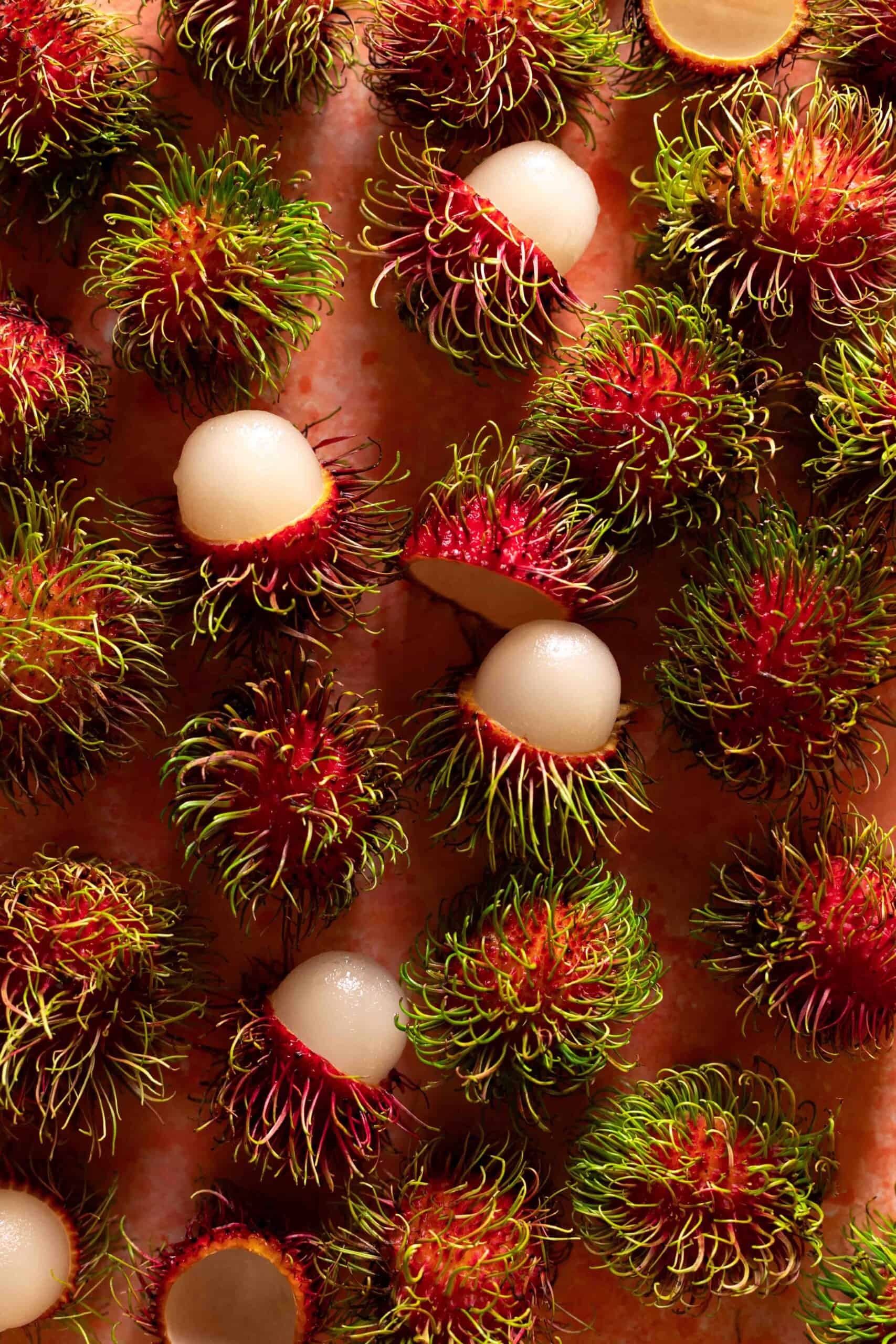
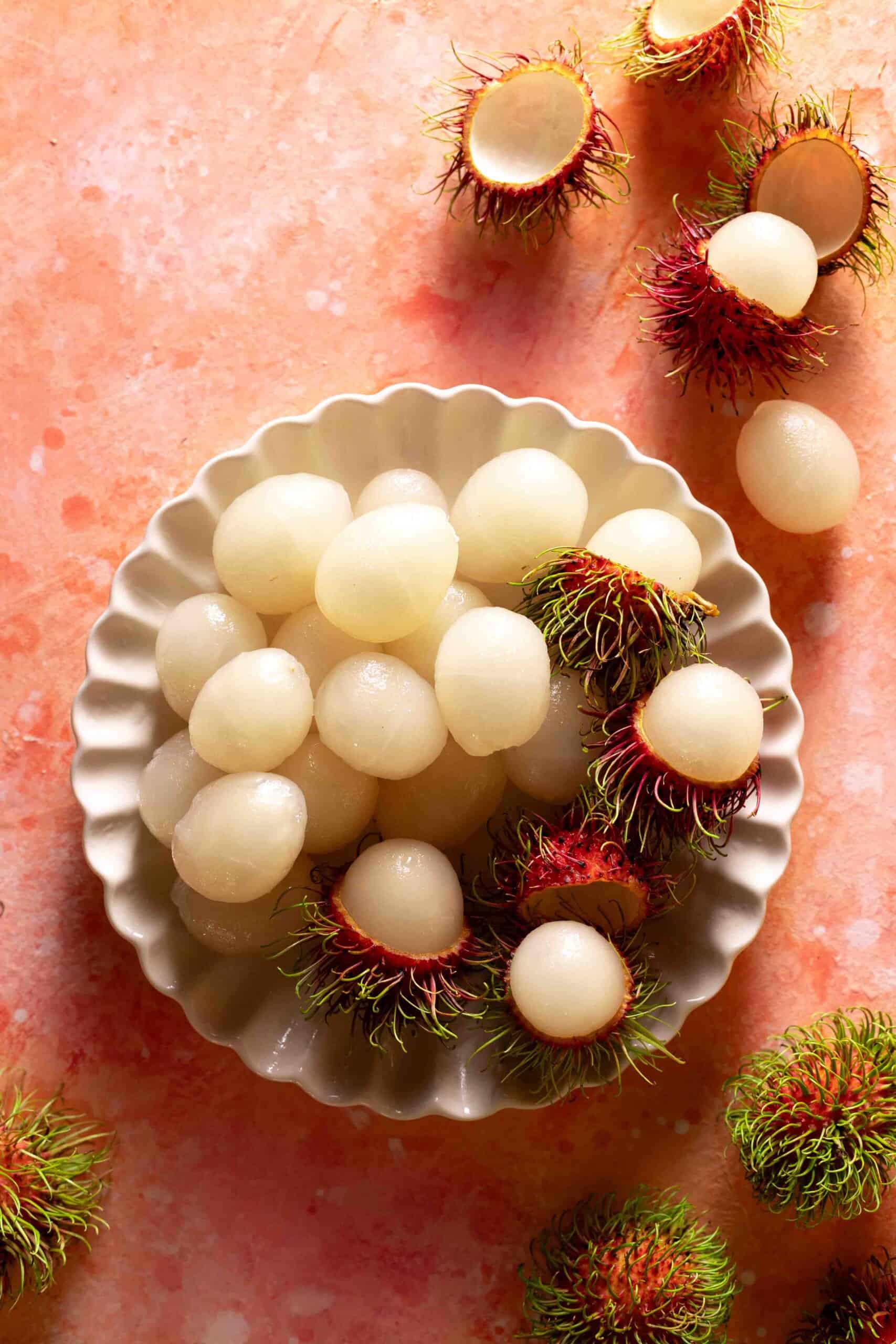
    fresh rambutan whole and peeled

    Rambutan, an exotic fruit native to Southeast Asia, has gained popularity worldwide for its unique appearance and delicious taste. Resembling a hairy lychee, this tropical, spiky fruit boasts a juicy, sweet flavor that appeals to many fruit lovers. Although rambutan may look a bit intimidating at first due to its spiky exterior, learning how to eat it is quite simple and opens up a world of culinary possibilities.

    fresh rambutan whole and peeled

    Jump to Section

    • What is Spiky Fruit?
    • What is Rambutan Fruit?
    • What does Rambutan Taste Like?
    • Selecting and Storing
    • How to Eat
    • Culinary Uses
    • Safety and Precautions
    • Frequently Asked Questions

    What is Spiky Fruit?

    Spiky fruits, known for their unique appearance and often underrated flavors, have been gaining popularity in recent years. These exotic fruits, covered in a range of spikes, thorns, and protrusions, can seem intimidating at first, but once their exterior is carefully navigated, they reveal a delightful and often exotic taste. A variety of spiky fruits can be found across the globe, each with different characteristics, flavors, and nutritional benefits.

    One noteworthy spiky fruit is the rambutan, native to Southeast Asia and easily recognizable by its hairy, red, and green exterior.

    What is Rambutan Fruit?

    Rambutan is a tropical, pink fruit that comes from the Nephelium lappaceum tree. This tree belongs to the Sapindaceae family, also known as the soapberry family. The fruit itself is native to Southeast Asia, primarily in countries such as Malaysia and Indonesia, where it thrives in tropical climates.

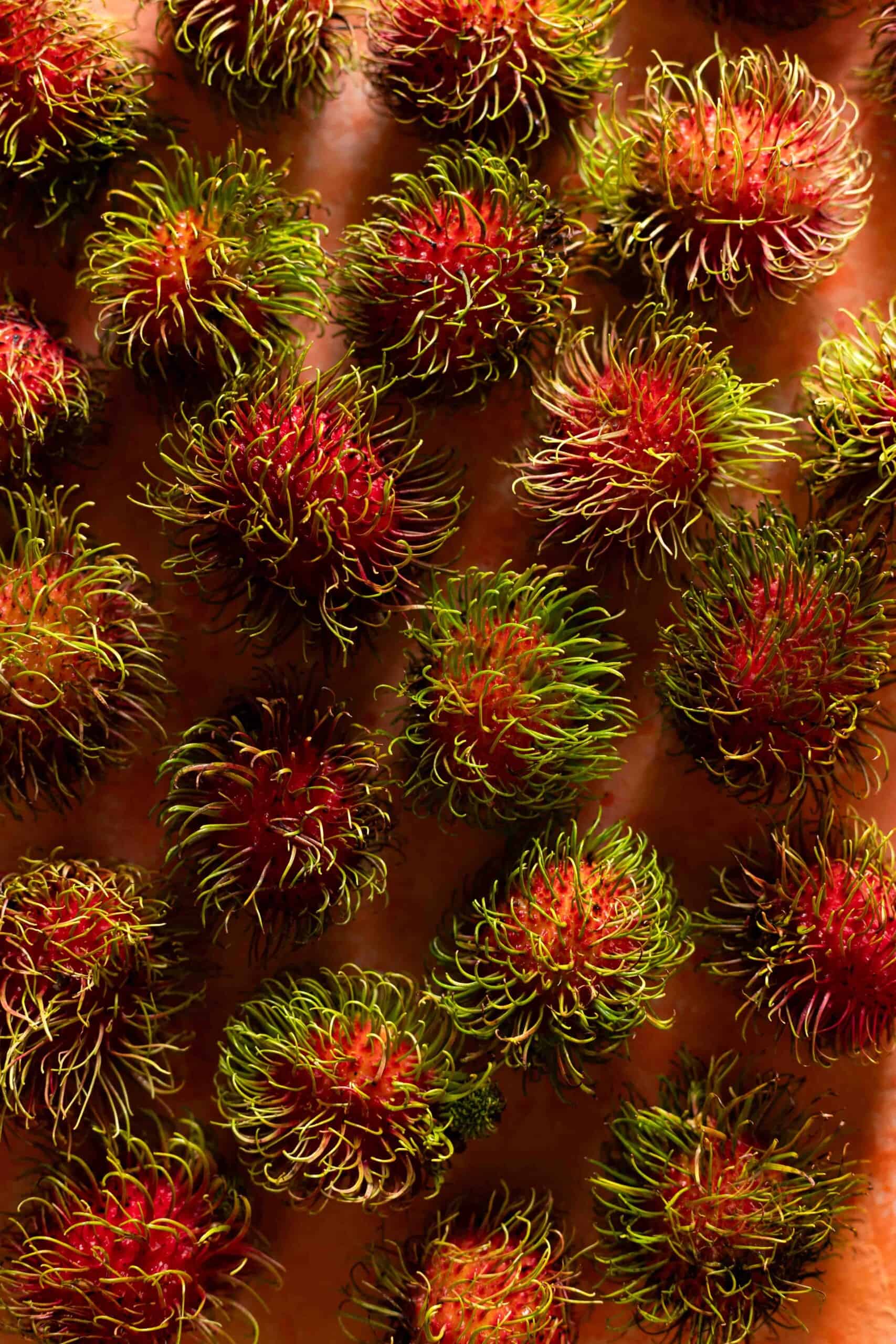
    The rambutan fruit is quite distinctive due to its unique appearance. It is oval or round in shape, covered in hair-like spines. These spines are green when the fruit is freshly picked and turn black as the fruit ripens. The fruit's skin can vary in color from red, orange, to yellow. Inside, the rambutan has a juicy, sweet, and somewhat translucent white flesh, which is usually eaten fresh. A large, inedible seed lies at the center of the fruit.

    Being a tropical fruit, rambutan is well-adapted to grow in regions with high humidity and temperatures. It flourishes in well-drained, deep, and fertile soil, making it an ideal crop for various Southeast Asian countries. Besides Malaysia and Indonesia, rambutan is also cultivated in countries like Thailand, the Philippines, and Vietnam as well as in Central America for export into the United States. .

    Rambutan is a nutritious fruit, rich in essential nutrients like vitamin C, copper, and manganese. It is a popular ingredient in various dishes, desserts, and beverages in Southeast Asian cuisine. The fruit is often consumed fresh or used as an ingredient to add a distinct, sweet, and tropical flavor to a variety of dishes. Its unique appearance and delightful taste have made rambutan a beloved fruit throughout the region and beyond.

    fresh rambutan whole and peeled

    What does Rambutan Taste Like?

    Rambutan is juicy and refreshing tender flesh and a sweet and creamy taste, often compared to dragon fruit. When ripe, the fruit has a sweet, honey-like taste with notes of berries, citrus, and lime. It is much sweeter than other fruits like apples or strawberries. The fruit is also slightly tart, which gives it a unique flavor profile. Its flavor is rich, with a hint of floral notes that blend seamlessly with the fruit's creaminess. 

    Selecting and Storing

    When choosing rambutan, opt for ripe fruit, which will have red, orange, or yellow skin. Freshly picked rambutans have green hair-like spines, but don't worry if they have turned black, as the fruit will still be good for a few days. Rambutans can be found in the produce section of grocery stores and supermarkets.

    To ensure the rambutan stays fresh, it's essential to store them properly. If you're not planning to consume them immediately, rambutans can be stored in a refrigerator for up to two weeks. Place them in a plastic bag to maintain their freshness. A perforated plastic bag can be used to allow proper airflow, helping to prevent spoilage.
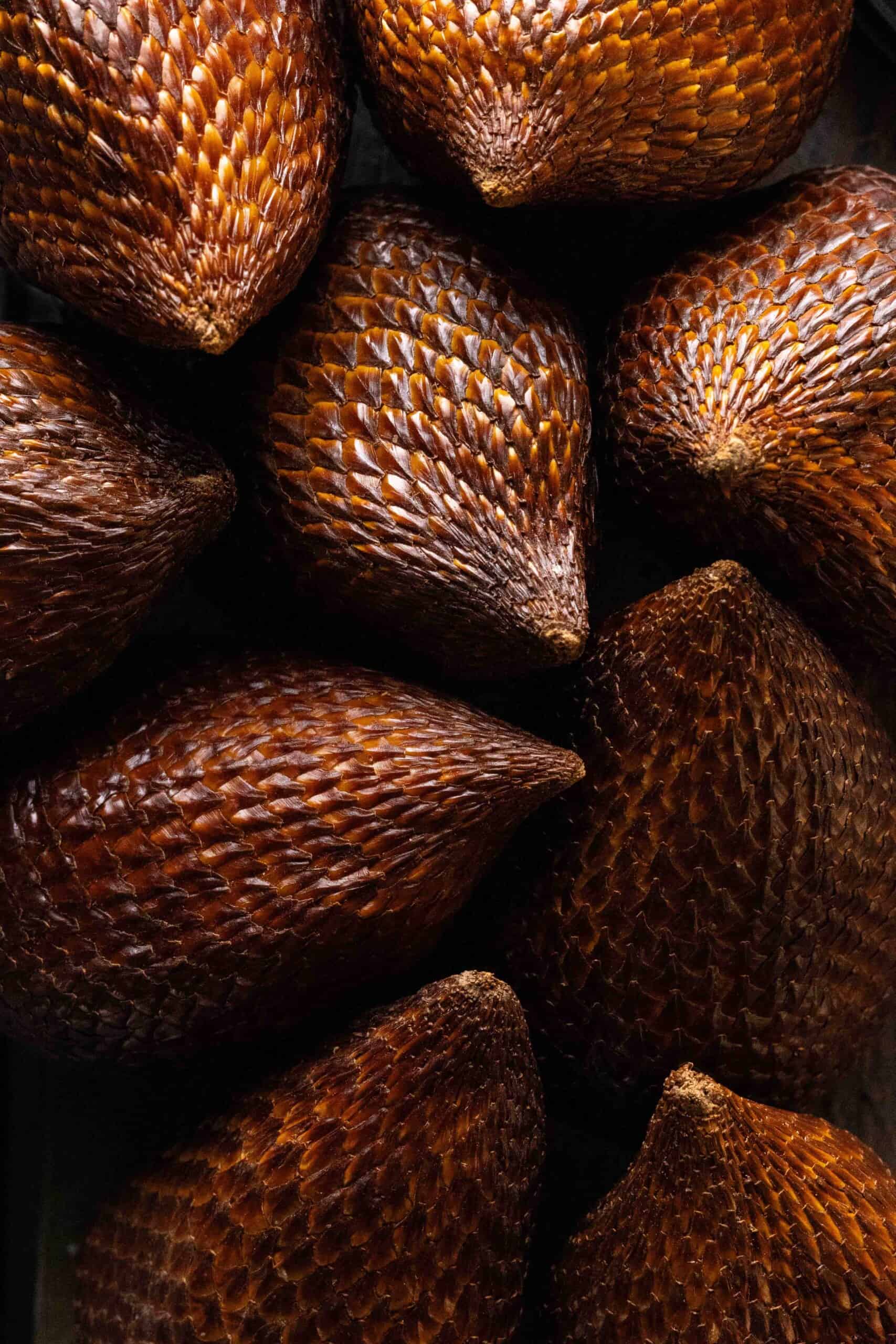
    After purchasing, you may notice the rambutan's outer surface is wet, so it's crucial to keep it dry before storing. A damp rambutan can encourage the growth of mold and reduce its shelf life. Rinse the rambutan only when you're ready to eat it, as washing beforehand could cause it to deteriorate faster.

    Remember that proper storage is vital in preserving the flavor and texture of the rambutan, so always keep it in a cool and dry place, away from heat and moisture.

    How to Eat

    Rambutan is a tropical fruit known for its unique appearance and delicious taste. Here are some steps on how to enjoy this exotic fruit.

    How to tell if it's ripe

    First, ensure that you have selected a ripe rambutan. A ripe rambutan will have a bright red, orange, or yellow skin with green spines or hairs. If the spines have turned partially black, the fruit is past its prime but still edible.

    How to cut and peel a rambutan

    Before eating, give the rambutan a quick rinse under the tap to remove any dirt or debris. To open the fruit, use a paring knife and carefully slice through the peel, using light pressure. Make sure not to exert too much force, as you want to slice only through the peel and leave the interior rambutan flesh intact.

    Once you have made a slit in the skin, hold the rambutan firmly and gently peel away the outer layer, revealing the juicy white flesh inside. The flesh of the rambutan is the edible part of the fruit and can be enjoyed on its own or added to various dishes.

    It is important to note that the rambutan has a seed or pit in the center, which should be avoided while eating the fruit. Simply use your fingers or a fork to separate the flesh from the seed and discard the seed.

    Rambutan can be eaten fresh, added to fruit salads, tropical cocktails, smoothies, juices, or even used as an ingredient in savory dishes like curry. 

    fresh rambutan whole and peeled

    Culinary Uses

    Rambutan is a unique and nutritious fruit, often compared to the likes of longan fruit, lychee fruit, and grape due to its sweet and creamy nature. There are many creative uses for rambutan in various recipes, ranging from refreshing fruit salads to delectable desserts.

    One delicious way to enjoy rambutan is by incorporating it into a fruit salad. Simply peel the fruit, remove the seed, and mix it with other fruits such as longan, lychee, or even more common fruits like apples or oranges. The combination of flavors, textures, and colorful appearance make rambutan a great addition to any salad.

    Incorporating rambutan into desserts is another popular option. Its natural sweetness and creamy texture make it an excellent topping or ingredient in recipes such as ice cream, sorbet, yogurt, smoothies, and fruit-based jellies and jams. You can also use rambutans as a substitute in any recipe that calls for lychees. 

    Rambutan can also be made into a juice by juicing it in a juice machine or a blender. It can also be made into a simple syrup by simmering it with sugar and water, then straining and adding to sparkling drinks, lemonade, tea, or boba. 
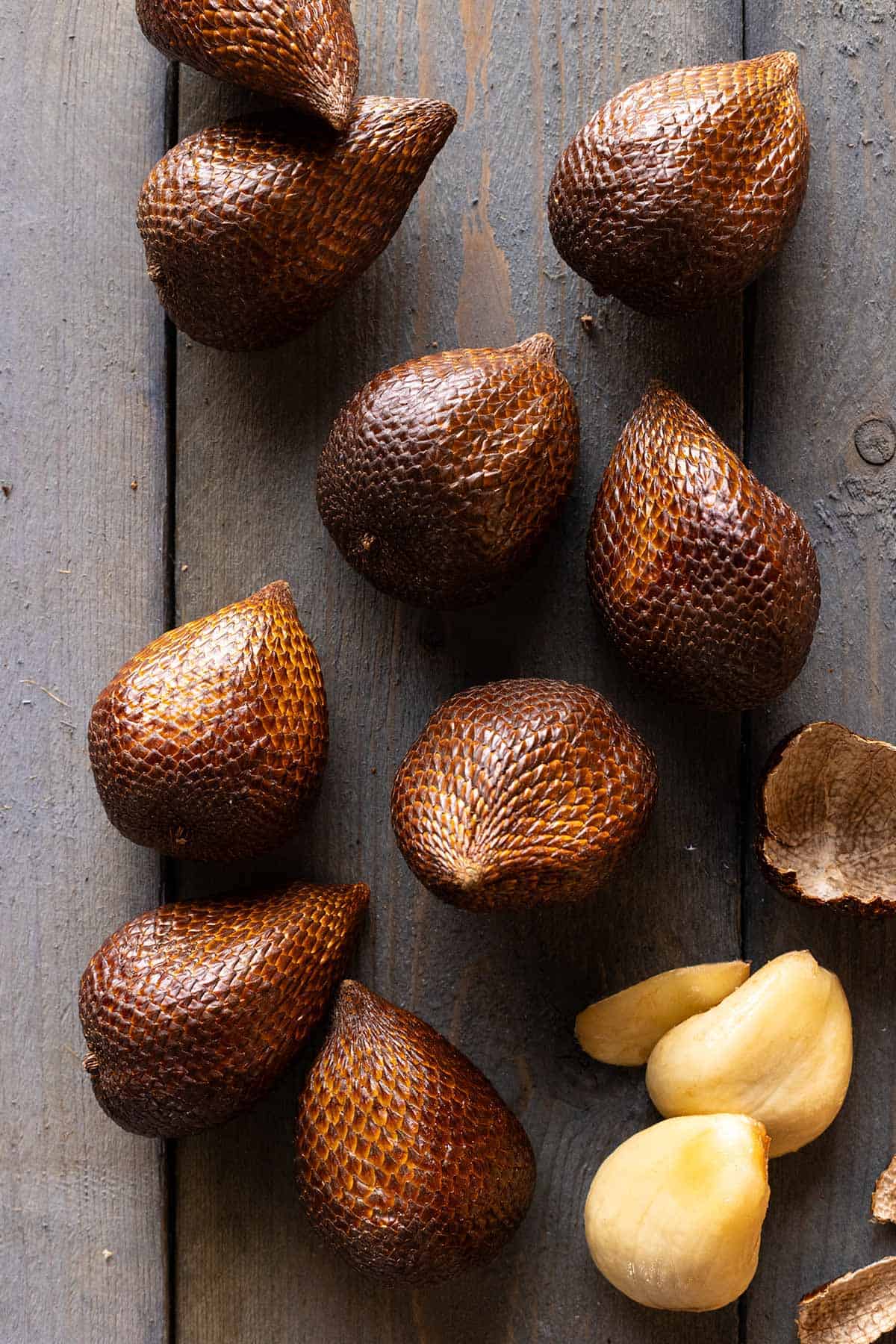
    For those looking to enjoy rambutan's unique flavor with a bit of savory flare, adding it to curries is a great idea. The fruit can be diced and added to the mix of vegetables and spices for a delightful contrast in flavor profiles. Its subtle sweetness and creamy texture can help to balance out the spiciness of a good curry, while still maintaining the dish's overall richness.
    Safety and Precautions

    Rambutan is a delicious tropical fruit that is generally safe to eat, but there are a few safety concerns and precautions that you should be aware of before consuming it.

    Firstly, while the fruit itself is edible, the outer skin is not. Make sure to remove the skin before eating the rambutan, as it can cause irritation if ingested. This can be done by cutting a slit in the skin and peeling it away from the fruit. It's also crucial to remove the large seed found in the center of the rambutan, as it is inedible and can cause choking if accidentally swallowed.

    It's important to be cautious of bacteria that may be present on the rambutan's skin. Thoroughly washing the fruit before peeling it can help reduce the risk of ingesting harmful bacteria. Also, be mindful of the storage conditions to prevent spoilage and potential infections. Store rambutans in a cool, dry place and ensure that they are consumed within a few days of purchase.

    Frequently Asked Questions

    How to remove rambutan seed and skin?

    After removing the rind of the rambutan, you will find the white flesh surrounding a seed. To remove the seed skin, simply use your fingers to gently squeeze and separate the flesh from the seed. You can also use a paring knife to carefully separate them.

    How to tell if rambutan is ripe?

    A ripe rambutan has a vibrant red, orange, or yellow color with green spines. As the fruit ripens, the spines turn black, but the fruit remains good for a few days. To ensure you are selecting a ripe rambutan, choose one that has a firm texture and rich color.

    Where can I buy rambutan?

    Look for rambutan in the produce section of your grocery store or supermarket. Theyโ€™re also available in specialty produce stores, and you can often find them in Chinatown produce stalls.

    How long do rambutans last? 

    Rambutans will only keep for a day or two at room temperature. Wrap them in a breathable plastic bag and refrigerate to preserve them a few days longer,

    When is rambutan in season?

     Rambutan is a seasonal fruit, and its availability depends on the location and climate. In general, rambutan is in season during the summer months, from May to September. However, the exact season can vary depending on the location and growing conditions. For example, in Hawaii, rambutan is typically in season from May to August, while in Indonesia, the season can start as early as March and last until November. 

     Is rambutan lychee?

     Rambutan and lychee are both unique fruits from the soapberry family (Sapindaceae). Their inner fruits share a similar appearance and they are eaten in similar ways after removing the outer skin.

     While both fruits have bumpy pinkish-red skin, rambutan also has flexible, electric orange and green hairs, lychee does not. Lychees are also about half the size of rambutans and they both have distinct flavors. Rambutan is sweet, tart, and creamy, while lychee flesh tends to be both crisper and brighter with a floral taste. Read more on Rambutan vs Lychee here.

    Snake Fruit (Salak): What is it and how to eat it

    July 7, 2023 by Kelly Leave a Comment

    snake fruit - whole fruit and peeled and cut

    Jump to Section

    • What is Snake Fruit (Salak)
    • Origin and Distribution
    • Physical Characteristics
    • What does Snake Fruit Taste Like?
    • Nutritional Profile
    • Culinary Uses
    • How to Eat
    • Frequently Asked Questions

    What is Snake Fruit (Salak)

    Snake fruit, also known as salak, is a tropical fruit that is native to Indonesia, but is also grown in other countries in Southeast Asia. It gets its name from the scaly, brown skin that covers the fruit, which resembles a snake's skin. The fruit is small, about the size of a fig, and has a sweet and sour taste with a crunchy texture.

    snake fruit - whole fruit and peeled and cut

    Origin and Distribution

    Salak sprouts in clusters off of the base of the palm tree that belongs to the Arecaceae family. It is native to Java and Sumatra in Indonesia, but is also cultivated in other regions of Indonesia as a food crop. The fruit naturalizes in the island of Bali, Lombok, Timor, Maluku, and Sulawesi. Salak is also grown in Thailand, Malaysia, and the Philippines. There are two popular snake fruit plants harvested: Salak sidempuan (Salacca sumatrana Becc.) and Salak pondoh (Salacca zalacca). 

    Physical Characteristics

    Salak fruit is oval-shaped and about the size of a fig, with a distinct tip and a reddish-brown scaly skin that is tough and hard to peel. The skin is made up of small, triangular scales that overlap each other, giving the fruit a unique appearance. Inside the skin, there are three lobes (resembling cloves of garlic) that contain a white, juicy flesh with a seed in the center of each lobe.

    What does Snake Fruit Taste Like?

    Snake fruit flesh has a sweet and sour taste similar to a combination of apple, banana, and pineapple. It has a crisp texture, like an apple, but is much more complex in its flavors. 

    Nutritional Profile

    Salak is a low-calorie fruit that is rich in nutrients. Snake fruit is called the Fruit of Memory in Indonesia because it is rich in potassium and pectin, both important nutrients for brain health and development. According to Organic Facts, 100 grams of salak contains the following nutrients:

    • Calories: 82
    • Carbohydrates: 21.7 grams
    • Dietary Fiber: 2.6 grams
    • Protein: 0.6 grams
    • Fat: 0.1 grams
    • Vitamin C: 8.4 mg
    • Iron: 0.6 mg
    • Potassium: 400 mg

    It is also a good source of antioxidants and has been shown to have anti-inflammatory properties.

    snake fruit - whole fruit

    Culinary Uses

    Most snake fruit is eaten fresh but it can also be candied, pickled, juiced, canned, dried, fried into chips, boiled with sugar into a sweet spread, or made into syrup. The fruit is often used in desserts, such as fruit salads, smoothies, pies, and ice creams. It can also be used in savory dishes, such as stir-fries and curries.

    One popular way to use salak is to make a jam or preserve. The fruit is cooked with sugar and water until it becomes a thick, sweet spread. This jam can be used as a topping for toast, pancakes, or waffles.

    Another popular way to use snake fruit is to make a beverage. The fruit can be blended with ice and water to make a refreshing drink. It can also be mixed with other fruits, such as mango or pineapple, to create a flavorful smoothie.

    How to Eat

    Snake fruit has a crunchy texture and a sweet, tangy flavor that makes it a popular snack. Here are the steps to choosing, preparing, and eating snake fruit.

    Choosing the Right Snake Fruit

    When choosing snake fruit, look for fruits that are firm and have a bright, uniform color. Avoid fruits that have soft spots, bruises, or blemishes on the skin. The fruit should also have a fragrant aroma that is sweet and slightly musky.

    Preparation Steps

    To prepare snake fruit, start by washing it thoroughly under running water. Then, use a sharp knife to cut off the top and bottom of the fruit. Next, make a shallow cut along the length of the fruit and peel off the skin against the grain of the scales. Be careful when peeling the skin, as the fruit has sharp, needle-like spikes that can be prickly.

    Once the skin is removed, you will see three lobes of fruit inside. The yellow-white lobes of pulp have a very fine, film-like layer that can also be cleaned away, almost like peeling a boiled egg, and removing this coating can actually remove some of the astringent taste.Remove the seeds from the fruit by gently pulling them out with your fingers. The seeds are inedible and are usually discarded. Once the seeds are removed, the fruit is ready to eat.

    Eating Methods

    There are several ways to eat the edible parts of the fruit. One popular method is to eat it raw, as a snack. Simply bite into the fruit and chew the flesh, being careful not to bite down on the seeds. Another way to eat it is to slice it thinly and add it to salads or fruit bowls. The fruit can also be used to make jams, jellies, and other sweet treats.

    In Indonesia, it is often served with a mixture of salt and sugar. To enjoy it this way, sprinkle a little salt and sugar onto the fruit before eating. This will enhance the flavor and balance the sweetness of the fruit.

    snake fruit - whole fruit and peeled

    Frequently Asked Questions

    Is it safe to eat snake fruit?

    The flesh can be eaten and has an astringent, sweet flavor. However, the outer skin and the seeds are inedible.

    How do you eat snake fruit?

    To eat snake fruit, first, you need to peel off the hard outer skin. Then, you can eat the juicy flesh inside.

    Can snake fruit be eaten raw?

    Yes, snake fruit can be eaten raw. It is usually eaten fresh, and the flesh is sweet and slightly acidic. Some people also use it in salads, desserts, and smoothies.

    What is the English name for salak fruit?

    Salak fruit is also known as snake fruit because of its scaly exterior. The fruit is native to Indonesia, Malaysia, and Brunei, and it is also grown in Thailand, the Philippines, and some parts of India.

    What are the benefits of snake fruit?

    Snake fruit is a good source of vitamins C and A, fiber, and antioxidants. It is also low in calories and high in potassium, which can help regulate blood pressure. Some studies suggest that snake fruit may have anti-inflammatory and anti-cancer properties, but more research is needed to confirm these benefits.

    How to tell if snake fruit is ripe?

    Ripe snake fruit should have a firm texture and a sweet aroma. The skin should be dry and not too hard or too soft. If the fruit is too soft, it may be overripe, and if it is too hard, it may not be ripe enough.

    Where can you buy snake fruit?

    Snake fruit is usually available in Asian markets or specialty fruit stores. You can also find it online or in some supermarkets.

    Quick and Easy Kung Pao Beef - Better than Takeout!

    February 28, 2023 by Kelly 6 Comments

    dish with kung pao beef

    Kung Pao Beef - a spicy, flavorful Chinese takeout dish that makes a great weeknight dinner. With crispy stir-fried beef, roasted peanuts, crunchy veggies, and chili peppers in a spicy, tangy sauce. This quick and easy recipe is made with everyday ingredients and ready in under 30 minutes!

    dish with kung pao beef

    Jump to Section

    • What is Kung Pao Beef?
    • What does it taste like?
    • Ingredients
    • Whatโ€™s in Kung Pao Sauce
    • How to make Kung Pao Beef
    • Tips
    • FAQ
    • Other Asian-Inspired Recipes Youโ€™ll Love
    • Recipe
    • Quick and Easy Kung Pao Beef

    What is Kung Pao Beef?

    Kung Pao Beef is a spicy, stir-fried Chinese restaurant dish made with strips of beef, peanuts, vegetables, and chili peppers. The classic chicken dish - Kung Pao Chicken โ€“ is a Chinese takeout favorite originating in the Sichuan province of south-western China. Here in this Szechwan style beef dish, weโ€™re substituting thin slices of beef for the chicken.

    Kung Pao Beef is a dry stir-fry, which means it doesnโ€™t have tons of sauce. With this intensely flavored sauce, a little goes a long way.

    What does it taste like?

    This Kung Pao Beef recipe is sweet, sour, and savory with a spicy kick and BIG flavors! You can make it as mild or as spicy as you like. The peanuts give it a rounded, nutty flavor. Sichuan peppercorns (optional here) give the dish its signature tingle of heat

    dish with kung pao beef

    Ingredients

    • Beef โ€“ thin slices of flank steak are combined with soy sauce, cornstarch, and a little baking soda. This is called โ€œvelvetingโ€ the beef. The baking soda makes the beef extra tender and the cornstarch coats it so when itโ€™s stir-fried in a hot pan, it forms a crispy crust.
    • Veggies โ€“ celery and green onion are traditional in Kung Poa Beef, but I like to add chunks of red bell pepper for extra color and flavor.
    • Peanuts โ€“ roasted, unsalted peanuts give the dish itโ€™s crunch and nutty flavor. I use salted peanuts if thatโ€™s what I have on hand. Just try to rub off some of the salt in a dish towel.
    • Sichuan pepper โ€“ (Szechuan pepper) the ingredient in Kung Pao sauce that gives it its characteristic mouth-numbing lemony, spicy flavor. You can grind your own peppercorns or find it pre-ground. Iโ€™ve listed this as optional as it can be harder to find and my family prefers the dish without it.  
    • Chili peppers โ€“ dried, red chili peppers. I use arbol chilies.  For a less spicy dish, use whole chili peppers and just avoid eating them. They do add flavor so donโ€™t leave them out. For a spicier dish, cut the chilies in half and de-seed them or chop them in ยผ inch pieces. The inner membranes will be exposed to the sauce giving it more heat.
    • Ginger and garlic
    • Kung Pao sauce โ€“ everything is tossed in a delicious sweet, spicy, and tangy sauce
    ingredients for kung pao beef

    Whatโ€™s in Kung Pao Sauce

    • Soy sauce โ€“ I use low sodium soy sauce so the dish isnโ€™t too salty
    • Cornstarch โ€“ to thicken the sauce
    • Rice vinegar โ€“ Chinese black vinegar is traditionally used. You can also use regular white or balsamic vinegar
    • Brown sugar
    • Sesame oil
    • Chicken broth
    • Hoisin sauce โ€“ for an extra layer of flavor

    How to make Kung Pao Beef

    Have everything ready before you start. Once you start cooking, this dish comes together fast!

    Marinate the beef

    Combine the thinly sliced beef, cornstarch, soy sauce, and baking soda until the beef is evenly coated. Let marinate while you prepare the rest of the ingredients.

    2 bowls showing how to marinate and velvet the beef strips

    Mix the sauce

    Whisk the soy sauce and cornstarch together in a small bowl until smooth. Then mix in the rest of the sauce ingredients.

    a bowl of kung pao sauce and a skillet with the beef strips being cooked

    Stir fry the beef

    In a wok or large skillet, heat 1 tablespoon canola oil over high heat until almost smoking. The pan should be very hot to sear the beef and give it a crispy exterior without overcooking it. Working in batches so the pan is not overcrowded, add half of the beef to the pan and stir fry until slightly crispy on both sides, about 3-4 minutes. Remove from pan and repeat with the second half of the beef.

    Stir fry the veggies

    Heat ยฝ tablespoon of oil in the pan over high heat. Add the celery, red bell peppers, and white parts of the onion and stir fry until tender crisp, about 1-2 minutes. Remove from pan.

    3 pans showing the vegetables being stir fried, the aromatics being stir fried, and the sauce being made

    Cook the aromatics, chilies, and the sauce

    Heat the last ยฝ tablespoon oil in the pan over medium-high heat. Add the garlic, ginger, dried chilies, and Sichuan pepper, if using, and stir fry for 1 minute. Stir in the sauce and bring to a boil. It will begin to thicken almost immediately.

    two pans showing the stir fry being mixed together

    Stir in the cooked beef, veggies, peanuts, and green onion and allow to heat through, about 1 minute.

    Serve over rice.

    Tips

    • Velveting tenderizes the beef โ€“ the marinade coats the beef and makes it tender. If time allows let it marinate for an hour, but even 10-15 minutes while you prepare the rest of the ingredients is good.
    • Cook the beef in a smoking hot pan โ€“ so you get a crispy exterior without overcooking it.
    • Stir fry the veggies until crisp-tender โ€“ just enough to soften them and bring out their flavor. They will keep their color and texture better as they will continue to cook and soften in the sauce.
    • Know your spice level โ€“ keeping the dried red chilies whole adds flavor to the dish but not much heat. For more heat, you can slice them in half and remove the seeds, or chop them into ยผ inches pieces. While Sichuan pepper is traditional in this dish, my family doesnโ€™t like it so I leave it out.
    • Serve immediately after cooking while the veggies are still brightly colored and tender-crisp.
    dish with kung pao beef

    FAQ

    What Is the Difference between Kung Pao Beef and Mongolian Beef?

    Kung Pao Beef has a tangy, sweet, and spicy sauce with red chili peppers and Sichuan pepper. Mongolian Beef is savory and sweet, but without the spiciness.

    How do Chinese restaurants get their beef so tender?

    Velveting the beef with cornstarch and baking soda tenderizes the beef.

    How many calories are in Kung Pao Beef?

    There are about 409 calories in each serving (โ…™ of the recipe).

    Other Asian-Inspired Recipes Youโ€™ll Love

    • Hunan Beef
    • Hunan Chicken
    • Sweet and Sour Chicken
    • Honey Sriracha Chicken
    • Crab Rangoon

    Recipe

    dish with kung pao beef

    Quick and Easy Kung Pao Beef

    Kelly
    Kung Pao Beef - a spicy, flavorful Chinese takeout dish that makes a great weeknight dinner. With crispy stir-fried beef, roasted peanuts, crunchy veggies, and chili peppers in a spicy, tangy sauce.ย 
    5 from 2 votes
    Print Recipe Pin Recipe
    Prep Time 15 minutes mins
    Cook Time 10 minutes mins
    Total Time 25 minutes mins
    Course 30 Minute Meals
    Cuisine Asian
    Servings 6 servings
    Calories 403 kcal

    Ingredients
      

    For the marinade:

    • 1 ยฝ lbs flank steak thinly sliced
    • 2 tablespoons low sodium soy sauce
    • 2 tablespoons cornstarch
    • ยผ teaspoon baking soda

    For the Kung Pao Sauce:

    • ยผ cup low sodium soy sauce
    • 1 tablespoon cornstarch
    • โ…“ cup rice vinegar *see note
    • 4 tablespoons brown sugar
    • 4 teaspoons sesame oil
    • ยฝ cup water or low sodium chicken broth
    • 2 tablespoons hoisin sauce

    For the stir fry:

    • 3 tablespoons canola oil divided
    • 2 bell peppers red or green, cut into bite sized pieces
    • 2 ribs celery sliced
    • 1 bunch green onions white and green parts separated, cut into ยพ" pieces
    • 1 tablespoon garlic minced
    • 1 tablespoon ginger minced
    • 1 teaspoon ground Sichuan peppercorns optional
    • 6 - 10 dried red arbol chili peppers whole or cut in half and deseeded (*see note)
    • ยฝ cup dry-roasted peanuts

    Instructions
     

    • Have everything ready before you start. Once you start cooking, this dish comes together fast!

    Marinate the beef

    • Combine the thinly sliced beef, cornstarch, soy sauce, and baking soda until the beef is evenly coated. Let marinate while you prepare the rest of the ingredients.

    Mix the sauce

    • Whisk the soy sauce and cornstarch together in a small bowl until smooth. Then mix in the rest of the sauce ingredients.

    Stir fry the beef

    • In a wok or large skillet, heat 1 tablespoon canola oil over high heat until almost smoking. The pan should be very hot to sear the beef and give it a crispy exterior without overcooking it. Working in batches so the pan is not overcrowded, add half of the beef to the pan and stir fry until slightly crispy on both sides, about 3-4 minutes. Remove from pan and repeat with the second half of the beef.

    Stir fry the veggies

    • Heat ยฝ tablespoon of oil to the pan over high heat. Add the celery, red bell peppers, and white parts of the onion and stir fry until tender crisp, about 1-2 minutes. Remove from pan.

    Cook the aromatics, chilies, and the sauce

    • Heat the last ยฝ tablespoon in the pan over medium-high heat. Add the garlic, ginger, dried chilies, and Sichuan pepper, if using, and stir fry for 1 minute. Stir in the sauce and bring to a boil. It will begin to thicken almost immediately. Stir in the cooked beef, veggies, peanuts, and green onion and allow to heat through, about 1 minute.

    Notes

    ยทย ย ย ย ย  Chinese black vinegar is traditionally used. I've used rice vinegar here. You can also use regular white or balsamic vinegar.
    ยทย ย ย ย ย  Using whole chili peppers will keep the sauce mildly spicy. For more heat, cut the chilies in half and deseed them or chop them into ยผ inch pieces

    Nutrition

    Calories: 403kcalCarbohydrates: 22gProtein: 30gFat: 22gSaturated Fat: 4gPolyunsaturated Fat: 5gMonounsaturated Fat: 11gTrans Fat: 0.03gCholesterol: 68mgSodium: 835mgPotassium: 698mgFiber: 3gSugar: 12gVitamin A: 1479IUVitamin C: 53mgCalcium: 62mgIron: 3mg
    Keyword kung pao beef
    Tried this recipe?Let us know how it was!

    Easy Pumpkin Fudge Recipe (Video)

    October 9, 2022 by Kelly 16 Comments

    pumpkin fudge squares stacked on a plate

    This Easy Pumpkin Fudge recipe makes a creamy and delicious fudge with the warm cozy flavors of pumpkin and spice. The perfect homemade holiday candy and no-bake treat for fall and Thanksgiving!

    pumpkin fudge squares stacked on a plate

    Jump to Section

    • The BEST Pumpkin Fudge recipe!
    • Ingredients
    • How to make
    • Tips for success
    • FAQ
    • More Pumpkin Recipes:
    • Recipe
    • Easy Pumpkin Fudge Recipe

    The BEST Pumpkin Fudge recipe!

    After testing several recipes, this pumpkin spice fudge with marshmallow crรจme is definitely my favorite.

    • Pumpkin Pie Fudge has the perfect fudgy texture
    • Yummy pumpkin flavor โ€“ This pumpkin pie fudge has a full half-cup of pumpkin puree. Many other recipes have only 2 tablespoons of pumpkin, giving them very little actual pumpkin flavor
    • Cozy pumpkin spice โ€“ just the right amount of pumpkin pie spice enhances the pumpkin flavor without overwhelming it
    • Easy to make
    • Perfect for snacking, parties, and gifting
    • Makes an excellent hostess gift for holiday get togethers
    • The perfect homemade holiday candy and no-bake treat for fall and Thanksgiving!
    a stack of pumpkin fudge on a rack

    Ingredients

    ingredients for pumpkin fudge in bowls: white chocolate chips, sugar, brown sugar, marshmallow creme, pumpkin, pecans, butter, and salt
    • Pumpkin puree โ€“ be sure to use 100% pure pumpkin and NOT pumpkin pie mix
    • Pumpkin pie spice โ€“ either store bought or homemade (which is super easy to make at home!)
    • Sugar โ€“ granulated sugar and brown sugar
    • Evaporated milk
    • Butter
    • White chocolate โ€“ bars or white chocolate chips
    • Marshmallow crรจme โ€“ I use Kraft Jet Puffed
    • Pecans โ€“ for crunch and flavor. You can stir them in the fudge or sprinkle them on top
    • Vanilla
    • Salt โ€“ a pinch of salt enhances the flavor โ€“ my secret ingredient for all things sweet

    How to make

    • Start by lining a 9 x 9-inch baking pan with foil.
    • Combine sugar, brown sugar, evaporated milk, pumpkin, butter and pumpkin spice in a saucepan.
    • Bring to a boil over medium heat, stirring constantly. Continue boiling, stirring constantly, for until a candy thermometer reaches 234ยฐF (soft-ball stage), about 10-12 minutes
    a pan showing the base ingredients of pumpkin fudge: sugar, brown sugar, evaporated milk, pumpkin, pumpkin spice, and butter and another pan showing that mixture boiling
    • Remove from heat and quickly stir in white chocolate, marshmallow crรจme, nuts, vanilla, and salt.
    • Stir vigorously for 1 minute or until chocolate is melted and marshmallow crรจme is thoroughly combined.
    a pan showing the added ingredients of white chocolate chips, chopped pecans, and marshmallow creme to a base of boiled sugar and butter and a pan showing the mixing of those ingredients
    • Immediately pour into prepared pan.
    • Cool on wire rack until completely cooled (room temperature), about 2 hours.
    pouring pumpkin fudge mixture into a foil lined pan and a pan of pumpkin fudge
    • Tightly cover and refrigerate.
    • To cut, lift from pan; remove foil. Cut into 1-inch pieces. Makes about 3 pounds.

    Tips for success

    • Line pan with aluminum foil. Do this first before you start boiling the fudge. You want to get it stirred and into the pan as quick as you can before it starts to set.
    • Have the white chocolate, marshmallow crรจme, pecans, vanilla, and salt all measured and ready to stir into the fudge immediately after it reaches 234ยฐF.
    • Follow the directions carefully
    • Let cool to room temperature before refrigerating so condensation doesnโ€™t form and drip on top of fudge.

    FAQ

    What is pumpkin fudge made of?

    Pumpkin fudge is made of pumpkin puree, pumpkin pie spice, granulated sugar, brown sugar, evaporated milk, butter, white chocolate chips, marshmallow crรจme, pecans, and vanilla.

    Is evaporated milk or condensed milk better for fudge?

    Different recipes are formulated on either evaporated or sweetened condensed milk. The best one to use is the one the recipe calls for. This recipe uses evaporated milk because the sugar is being added separately and is being boiled to a certain temperature so that the fudge sets properly.

    Why use evaporated milk in fudge?

    Evaporated milk is more stable than fresh milk which prevents it from curdling as it boils until it reaches 234ยฐF. It also allows you to use the exact amount and type of sugar you choose, unlike sweetened condensed milk.

    How far in advance can you make fudge?

    Fudge can be made several weeks in advance and stored in the refrigerator or freezer.

    Do you refrigerate fudge to set?

    Yes, refrigerating fudge allows it to set quicker and makes it easier to slice into neat pieces.

    Can I substitute cream for evaporated milk in fudge?

    Itโ€™s best to use what the recipe calls for.  Fudge can be temperamental and each recipe is developed to set with the proper consistency.

    How do you cut fudge neatly?

    Refrigerate the fudge until it is set, then use a heavy knife to cut it into squares. Greasing the knife helps prevents sticking. Donโ€™t use a wet knife, it makes the sugar dissolve.

    How do you store fudge?

    Store fudge in an airtight container in the refrigerator for up to 2 weeks.  To keep the fudge from drying out, I prefer to leave it uncut until ready to serve.

    Can you freeze fudge?

    Yes, fudge can be frozen. Wrap the uncut fudge in plastic wrap then put it in a large Ziploc freezer bag. Freeze for up to 2 months. To thaw, set out on counter at room temperature.

    pumpkin fudge squares beside a small bowl of pumpkin puree

    More Pumpkin Recipes:

    • The BEST Pumpkin Pie Recipe
    • Pumpkin Streusel Muffins
    • Homemade Pumpkin Puree
    • Pumpkin Puree vs Canned Pumpkin
    • Pumpkin Cheesecake
    • Best Ever Pumpkin Bread
    • Homemade Pumpkin Pie Spice
    • Pumpkin Chocolate Chip Muffins
    • Pumpkin Crunch Cake
    • Pumpkin Cinnamon Rolls
    • Chipotle Roasted Pumpkin Chowder
    • Pumpkin Butter
    • Pumpkin Spice White Hot Chocolate

    Recipe adapted from Libbyโ€™s

    Recipe

    pumpkin fudge squares stacked on a plate

    Easy Pumpkin Fudge Recipe

    Kelly
    This Easy Pumpkin Fudge recipe makes a creamy and delicious fudge with the warm cozy flavors of pumpkin and spice.
    5 from 4 votes
    Print Recipe Pin Recipe
    Prep Time 5 minutes mins
    Cook Time 15 minutes mins
    2 hours hrs
    Total Time 2 hours hrs 20 minutes mins
    Course Dessert
    Cuisine American
    Servings 64 1-inch pieces
    Calories 111 kcal

    Ingredients
      

    • 2 cups granulated sugar
    • 1 cup packed light brown sugar
    • โ…” cup evaporated milk 5oz can
    • ยฝ cup pumpkin puree
    • 2 teaspoons pumpkin pie spice
    • ยพ cup butter 1 ยฝ sticks
    • 12 oz white chocolate chips 2 cups
    • 7 oz marshmallow crรจme
    • 1 cup chopped pecans
    • 1 ยฝ teaspoons vanilla extract
    • ยฝ teaspoon salt

    Instructions
     

    • Line a 9 x 9-inch baking pan with foil.
    • Combine sugar, brown sugar, evaporated milk, pumpkin, butter and pumpkin spice in a saucepan.
    • Bring to a boil over medium heat, stirring constantly. Continue boiling, stirring constantly, for until a candy thermometer reaches 234ยฐF (soft-ball stage), about 10-12 minutes.
    • Remove from heat and quickly stir in white chocolate, marshmallow crรจme, nuts, vanilla, and salt.
    • Stir vigorously for 1 minute or until chocolate is melted and marshmallow crรจme is thoroughly combined.
    • Immediately pour into prepared pan.
    • Cool on wire rack until completely cooled (room temperature), about 2 hours.
    • Tightly cover and refrigerate until set.
    • To cut, lift from pan; remove foil. Cut into 1-inch pieces. Makes about 3 pounds.

    Notes

    • I use Kraft Jet Puffed Marshmallow Creme
    • Makes 64 1-inch squares, about 3 pounds

    Nutrition

    Calories: 111kcalCarbohydrates: 16gProtein: 1gFat: 5gSaturated Fat: 3gPolyunsaturated Fat: 1gMonounsaturated Fat: 2gTrans Fat: 0.1gCholesterol: 8mgSodium: 44mgPotassium: 40mgFiber: 0.2gSugar: 15gVitamin A: 373IUVitamin C: 0.2mgCalcium: 23mgIron: 0.1mg
    Keyword pumpkin fudge
    Tried this recipe?Let us know how it was!

    Easy, Homemade Pico de Gallo Recipe (Fresh Tomato Salsa)

    October 4, 2022 by Kelly 12 Comments

    bowl of fresh pico de gallo and chips

    Everyone loves this easy, homemade Pico de Gallo recipe with fresh tomatoes, onion, jalapeรฑo, cilantro, and lime juice. Made in just 10 minutes, itโ€™s the perfect fresh and flavorful topping for all of your favorite Mexican dishes!

    bowl of fresh pico de gallo and chips

    Jump to Section

    • What is Pico de Gallo?
    • Why youโ€™ll love this recipe:
    • Whatโ€™s the difference between pico de gallo and salsa?
    • Meaning and Pronunciation
    • Ingredients
    • How to Make
    • Tips
    • How to make in advance and leftovers
    • Uses
    • Mix-ins and variations:
    • More Mexican recipes for you to love:
    • Recipe
    • Easy, Homemade Pico de Gallo Recipe (Fresh Tomato Salsa)

    What is Pico de Gallo?

    Pico De Gallo is a popular Mexican salsa that's loaded with fresh tomatoes, onion, jalapeno, cilantro, and lime juice. Also known as Salsa Mexicano, Salsa Fresca, or Salsa Cruda, this fresh, chunky tomato dip makes the perfect party appetizer and is excellent over tacos, burritos, carne asada nachos, flautas, quesadillas, or served with tortilla chips.

    Why youโ€™ll love this recipe:

    • Quick and Easy โ€“ Only a few ingredients are needed, and it takes only 10 minutes to make
    • Perfect make ahead party appetizer for game day
    • Adds a fresh, healthy, low calorie boost of flavor to any Mexican meal
    • Favorite way to use up garden grown tomatoes
    • A great recipe for Cinco de Mayo
    • Easy to adapt to your spice level - We add jalapeno for a spicy kick but you can leave it out for a milder pico.
    • Versatile โ€“ Serve it with tacos, burritos, nachos, quesadillas, on top of grilled chicken or fish, or just enjoy it with tortilla chips!
    bowl of fresh pico de gallo and chips

    Whatโ€™s the difference between pico de gallo and salsa?

    Pico de gallo shares the same basic ingredients as traditional red salsa, but they have different preparation methods.

    While salsa can refer to cooked or fresh mixtures, Pico de gallo always uses fresh.

    Pico de gallo uses fresh, raw ingredients. It adds a fresh and zesty flavor as well as a chunky, chopped salad-like texture, with each chopped ingredient distinctly visible.

    While some salsa recipes use the diced ingredients as is, others process the ingredients into more of a purรฉe before serving. Salsa often contains roasted or stewed tomatoes and has a more liquid consistency.

    Meaning and Pronunciation

    What does pico de gallo mean?

    The Spanish phrase โ€œpico de galloโ€ (pronounced PEE-koh dษ™ GUY-yoh) translates to โ€œroosterโ€™s beakโ€ in English.

    Ingredients

    pico de gallo ingredients: tomato, jalapeno, onion, cilantro, and lime
    • Tomatoes โ€“ red, ripe tomatoes are essential to making the best pico de gallo. Roma tomatoes or plum tomatoes are a good option because they have less seeds and a lower water content. Use only the tomato flesh and leave out the seedy pulp, you donโ€™t want the pico to be watery. Out of season, you can use cherry tomatoes or grape tomatoes that tend to have good flavor year-round.
    • Onion - white onions or yellow onions (whatever you have on hand)
    • Jalapeno โ€“ jalapeno adds a spicy kick to the pico. The ribs and seeds carry the most heat in peppers, so we are going to remove them but you can always add in some seeds later. For a mild version you can use peppers or substitute a green bell pepper.
    • Cilantro โ€“ there are no substitutes for chopped, fresh cilantro in this recipe. (Parsley is not a good substitute here.)
    • Fresh lime juice โ€“ juice from freshly squeezed limes has the best flavor
    • Salt

    How to Make

    1. Cut the vegetables into small dice
    2. In a medium serving bowl, combine the chopped tomatoes, onion, jalapeรฑo, cilantro, lime juice, and salt.
    3. Let marinate for about 15 minutes
    4. Taste and add more salt if needed.

    Tips

    *Use the most flavorful, red, ripe tomatoes you can find. The pale, tasteless supermarket variety wonโ€™t do. Since itโ€™s such a simple recipe, the pico will only be as good as the quality of your ingredients, and the tomatoes are the star here.  The best tomatoes for pico de gallo are plum or roma tomatoes. Out of season, quartered cherry or grape tomatoes tend to have more flavor.

    *Chop your ingredients by hand into small, evenly-sized pieces so the vegetables keep their texture and there will be flavor in every bite. Processing them in a food processor makes more of a soupy salsa.

    *Let your pico de gallo salsa rest before serving. Marinating for about 15 minutes before serving allows the salt to draw moisture out of the ingredients so their flavors blend.

    Some recipes call for letting the mixture rest for several hours or overnight. I find this dilutes the flavors and makes the vegetables too soft.

    In his book, โ€œAuthentic Mexican,โ€ Rick Bayless says that a fresh salsa like pico de gallo is at its best for an hour or two, after which you loose a bit of crunch and the flavor of the onion can start to take over the salsa.

    *Serve with a slotted spoon. The salt will draw a lot of moisture out of the tomatoes so the longer the pico rests after tossing with the lime juice and salt, the more liquid will accumulate in the bowl. Serving the pico with a slotted spoon or even a fork will leave the liquid behind so your food doesnโ€™t get soggy.

    *Use gloves when seeding and chopping the jalapenos. Your eyes will thank you when you rub them later.

    How to make in advance and leftovers

    You can prep this fresh salsa ahead of time and store it in the fridge overnight. My favorite way of doing this is to combine the vegetables, but not stir in the lime juice and salt until closer to serving time so the dip doesnโ€™t get too watery.

    For maximum flavor, use your fresh salsa the day itโ€™s made. If you have leftovers, store in an airtight container in the refrigerator for a day or two max.

    Uses

    You can use pico de gallo in the same way youโ€™d use salsa. Itโ€™s a flavorful and refreshing condiment welcome on all of your favorite Mexican dishes.

    pan of steak nachos

    Serve fresh pico de gallo with:

    • Tacos
    • Nachos
    • Quesadillas
    • Enchiladas
    • Flautas and Taquitos
    • Burritos and burrito bowls
    • Tostadas
    • Huevos rancheros
    • Chilaquiles
    • Or serve it as a dip with tortilla chips!

    Mix-ins and variations:

    Change up the flavor profile by stirring in one of these fresh fruits or vegetables.

    • Mango
    • Peaches
    • Pineapple
    • Strawberries
    • Green or red bell pepper
    • Serrano peppers (if you like it extra spicy!)
    • Cucumber
    • Sweet corn
    • Avocado
    • Jicama
    • Black beans
    • Chopped cooked shrimp

    More Mexican recipes for you to love:

    • Carne Asada Nachos
    • Easy Chicken Flautas (Taquitos)
    • Homemade Refried Beans
    • Beefy Bean and Cheese Quesadillas
    • Quick and Easy Enchilada Sauce
    • Avocado Crema
    • Mangonada
    • Homemade Taco Seasoning

    Recipe

    bowl of fresh pico de gallo

    Easy, Homemade Pico de Gallo Recipe (Fresh Tomato Salsa)

    Kelly
    Everyone loves this easy homemade Pico de Gallo recipe with fresh tomatoes, onion, jalapeรฑo, cilantro, and lime juice. Made in just 10 minutes, itโ€™s the perfect fresh and flavorful topping for all of your favorite Mexican dishes!
    5 from 4 votes
    Print Recipe Pin Recipe
    Prep Time 10 minutes mins
    Total Time 10 minutes mins
    Course Appetizer
    Cuisine Mexican
    Servings 6 servings
    Calories 23 kcal

    Ingredients
      

    • 1 lb tomatoes (3-4 medium), diced
    • 1 medium onion (1 cup chopped)
    • 1 jalapeno pepper ribbed, seeded and finely minced
    • ยฝ cup cilantro chopped
    • 2 tablespoons lime juice from 1 lime
    • ยฝ teaspoon salt or to taste

    Instructions
     

    • In a medium serving bowl, combine the chopped tomatoes, onion, jalapeรฑo, cilantro, lime juice, and salt.
    • Let marinate for about 15 minutes
    • Taste and add more salt if needed.

    Notes

    • Chop your ingredients by hand into small, evenly-sized pieces so the vegetables keep their texture and there will be flavor in every bite. Processing them in a food processor makes more of a soupy salsa.
    • Let your pico de gallo salsa rest before serving. Marinating for about 15 minutes before serving allows the salt to draw moisture out of the ingredients so their flavors blend.

    Nutrition

    Calories: 23kcalCarbohydrates: 5gProtein: 1gFat: 0.2gSaturated Fat: 0.03gPolyunsaturated Fat: 0.1gMonounsaturated Fat: 0.03gSodium: 199mgPotassium: 225mgFiber: 1gSugar: 3gVitamin A: 748IUVitamin C: 16mgCalcium: 14mgIron: 0.3mg
    Keyword fresh salsa, pico de gallo
    Tried this recipe?Let us know how it was!

    Please let me know how you like this recipe in the comments! Iโ€™m excited to hear how you serve your pico de gallo, and please share any tips you might have.

    • « Previous Page
    • 1
    • 2
    • 3
    • 4
    • …
    • 25
    • Next Page »
    Kelly Shaban

    Hi there! My name is Kelly Shaban. Here youโ€™ll find delicious, trusted recipes with easy step-by-step photos and videos. Read More About Me

    Game Day Favorites

    • plate of lemon ricotta pasta
      One-Pot Lemon Ricotta Pasta with Arugula
    • This Creamy Lemon Artichoke Pasta with Chicken, red peppers, and parsley has a bright, delicate lemon flavor in a creamy, garlicky parmesan sauce. An easy and flavorful one dish meal. Restaurant quality in under 30 minutes. #pasta #artichoke #quick #easy #chicken #dinner #creamy #redpepper #lemon #under30minutes #datenight
      Creamy Lemon Artichoke Pasta with Chicken
    • The BEST thick and chewy Sugar Cookie Bars with vanilla buttercream frosting. Quick and easy to make bar cookies recipe! #dessert #homemade #fromscratch
      Frosted Sugar Cookie Bars Recipe
    • a slice of mango cheesecake with a bite taken out
      The BEST Mango Cheesecake
    • Chocolate Cream Pie is the ultimate creamy, dreamy, decadent dessert. With an Oreo cookie crust, a velvety smooth chocolate custard filling, and billows of whipped cream, this Chocolate Cream Pie will leave you swooning! #chocolate cream pie #chocolate #pie #dessert #best #homemade #no bake #recipe #from scratch #oreo #video
      Chocolate Cream Pie {VIDEO}
    • Incredibly moist and so delicious! This is my favorite Carrot Cake recipe โ€“ a super moist and tender Carrot Cake bursting with flavor from pineapple and coconut, topped with the most heavenly cream cheese frosting. #easy #best #recipe #healthy #homemade #cupcakes #decoration #pineapple #creamcheesefrosting #dessert #spring #easter
      Favorite Carrot Cake
    • Lemon Blueberry Cheesecake Bars - rich, creamy cheesecake with flecks of lemon zest and studded with juicy blueberries on a shortbread crust. All the deliciousness of cheesecake in a quick and easy bar.
      Lemon Blueberry Cheesecake Bars
    • Double Glazed Blueberry Lemon Pound Cake - A moist, tender pound cake, infused with the bright and sunny flavor of lemon, bursting with sweet juicy blueberries, and topped with two (2!) glazes - one vibrant and tangy, one creamy and sweet.
      Double Glazed Blueberry Lemon Pound Cake

    Popular Posts

    • Classic Lasagna - layers of silky smooth, creamy parmesan bรฉchamel sauce, a slow simmered Bolognese meat sauce, sheets of pasta, and lots of mozzarella cheese make this the Worldโ€™s Best Lasagna recipe.
      Classic Lasagna Recipe (VIDEO)
    • Creamy Tuscan Chicken Pasta is loaded with the flavors of the Mediterranean โ€“ sundried tomato, baby spinach, garlic, red pepper, and parmesan. Itโ€™s super quick and easy. A restaurant quality dish on the table in under 30 minutes. #pasta #recipe #recipeeasyfast #chicken #chickenrecipes #chickendinner #chickendishes #easy #easyrecipe #easydinner
      Creamy Tuscan Chicken Pasta
    • Old-fashioned Chicken and Dumplings - soft, pillowy dumplings and tender chicken in a rich, flavorful broth. With both made from scratch and quick and easy versions. Truly comfort food at its finest!
      Old Fashioned Chicken and Dumplings
    • piece of chocolate lasagna with a bite taken out
      Chocolate Lasagna (Quick and Easy No-Bake Dessert) + Video
    • Italian Pignoli Cookies
      Easy Italian Pignoli Cookies Recipe (with VIDEO)
    • peanut butter fudge stacked on a plate
      Easy Peanut Butter Fudge Recipe (VIDEO)

    Footer


    as featured in

    buzzfeed logo
    greatest logo
    yummly logo
    huffpo logo
    foodista logo
    taste of home

    Accessibility Privacy Policy About Subscribe

    • Facebook
    • Instagram
    • Pinterest

    Copyright ยฉ 2023

    As an Amazon Associate I earn from qualifying purchases.